Publication Index

Google Scholar · DBLP

Journal articles, conference papers and preprints, organized by year. Venue metrics link to their sources.

69 records

2026

Fig. 3 · Source · IEEE copyright

Vision–Language Foundation Models · Knowledge Graph Reasoning · Ophthalmic Image Interpretation

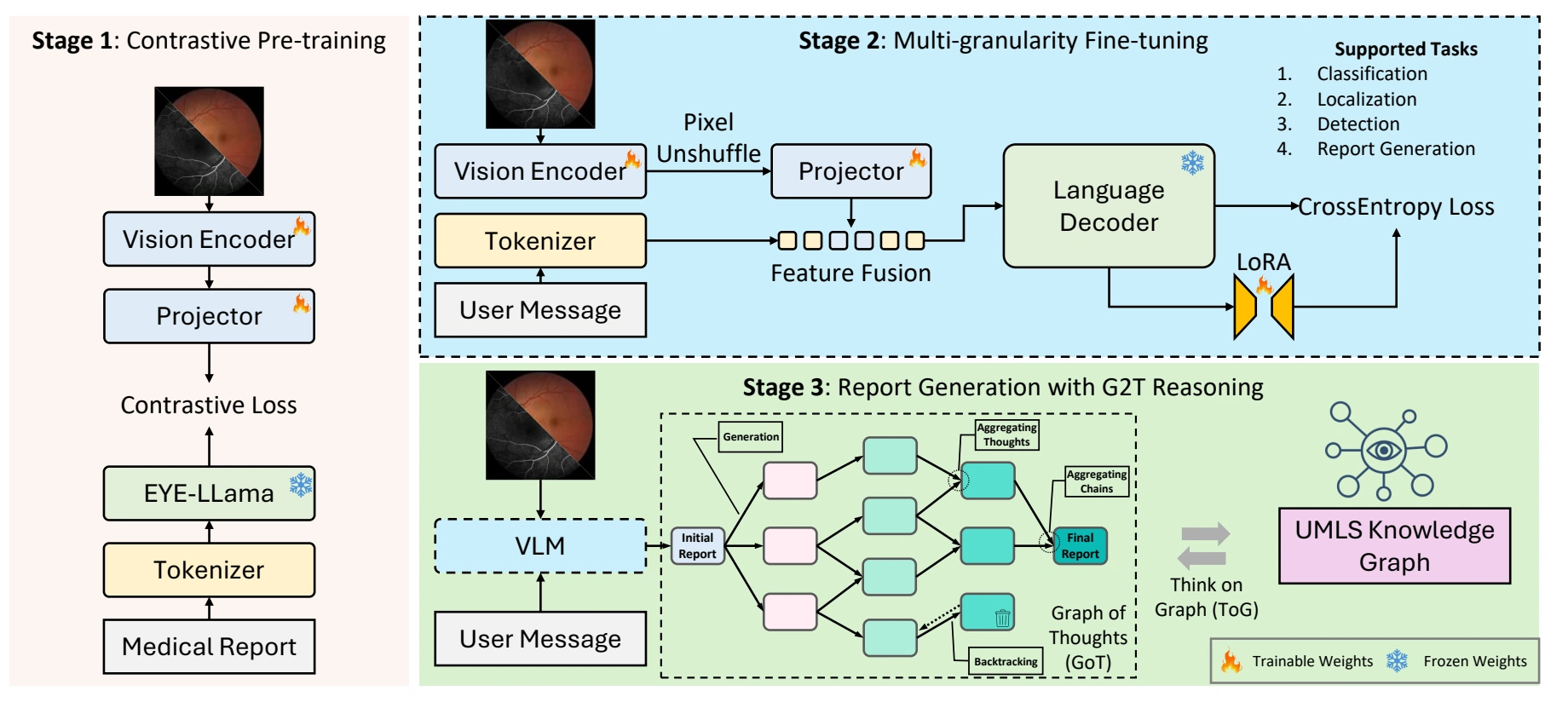
EyeGraph: A Multi-granularity Medical Vision-Language Foundation Model with Knowledge Graph Reasoning for Ophthalmic Interpretation

Zhiyuan Cai*, Yiwei Ren*, Yixiang Liu, Jialin Li, Yijin Huang, Pujin Cheng, Li Lin, Danli Shi, Mingguang He, Hao Chen, Xiaoying Tang

EyeGraph trains one vision–language model for image-level diagnosis, anatomical localization, and report generation using the IT-Retinal instruction dataset. At inference, G2T retrieves relationships from the UMLS knowledge graph and uses them to improve factual consistency in generated reports.
IEEE Transactions on Medical Imaging 2026 (JIF 12.4)PaperCode
Fig. 1 · Source

Self-Supervised Pretraining · Masked Complementary Modeling · Multimodal MRI Segmentation

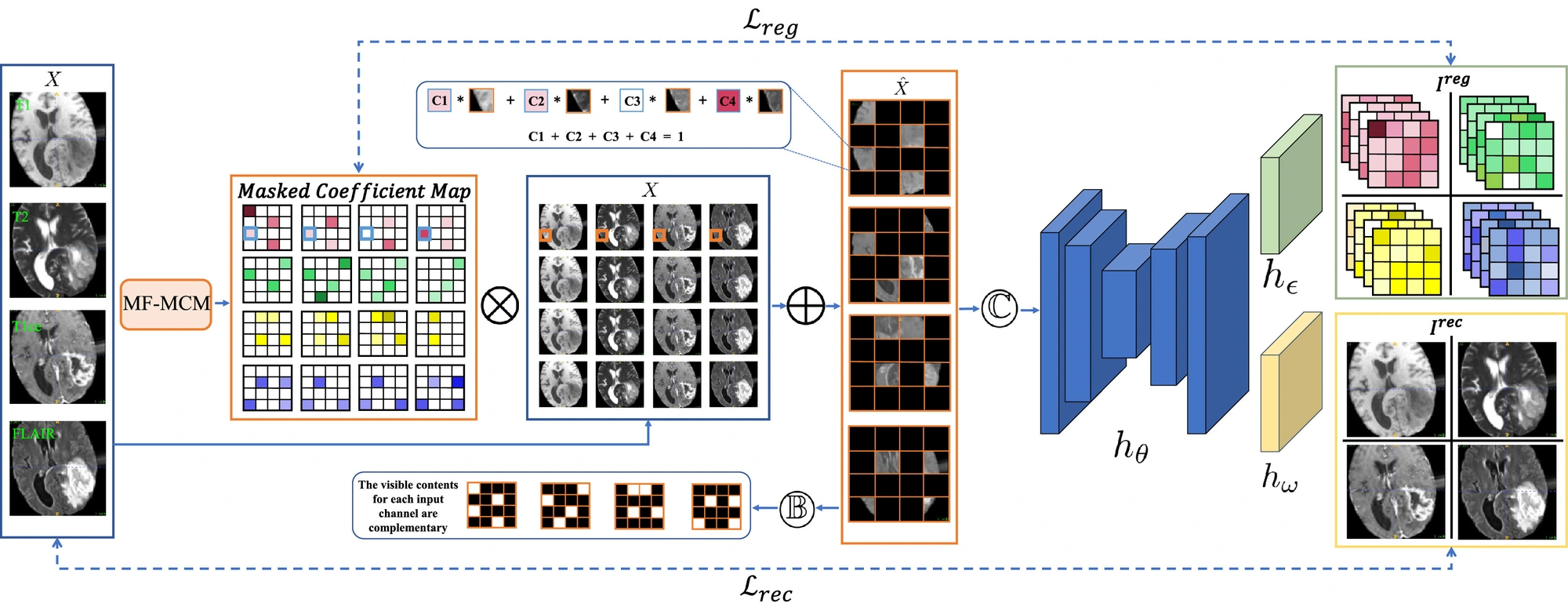
Modality fusion and masked complementary modeling based pre-training for brain tumor segmentation

Jianwen Liang*, Li Lin*, Junyan Lyu, Pujin Cheng, Xiaoying Tang Co-first author

MF-MCM mixes brain MRI sequences and masks complementary regions across the resulting channels. Reconstructing the original sequences and regressing their mixing coefficients trains the encoder to exploit cross-modal information. Transfer is evaluated across five datasets, including experiments with limited labels or missing sequences.

Information Fusion 2026 (JIF 17.4)PaperCode
Fig. 2 · Source · IEEE copyright

Hierarchical Prompting · Bidirectional Consistency Learning · Multi-Granularity Segmentation

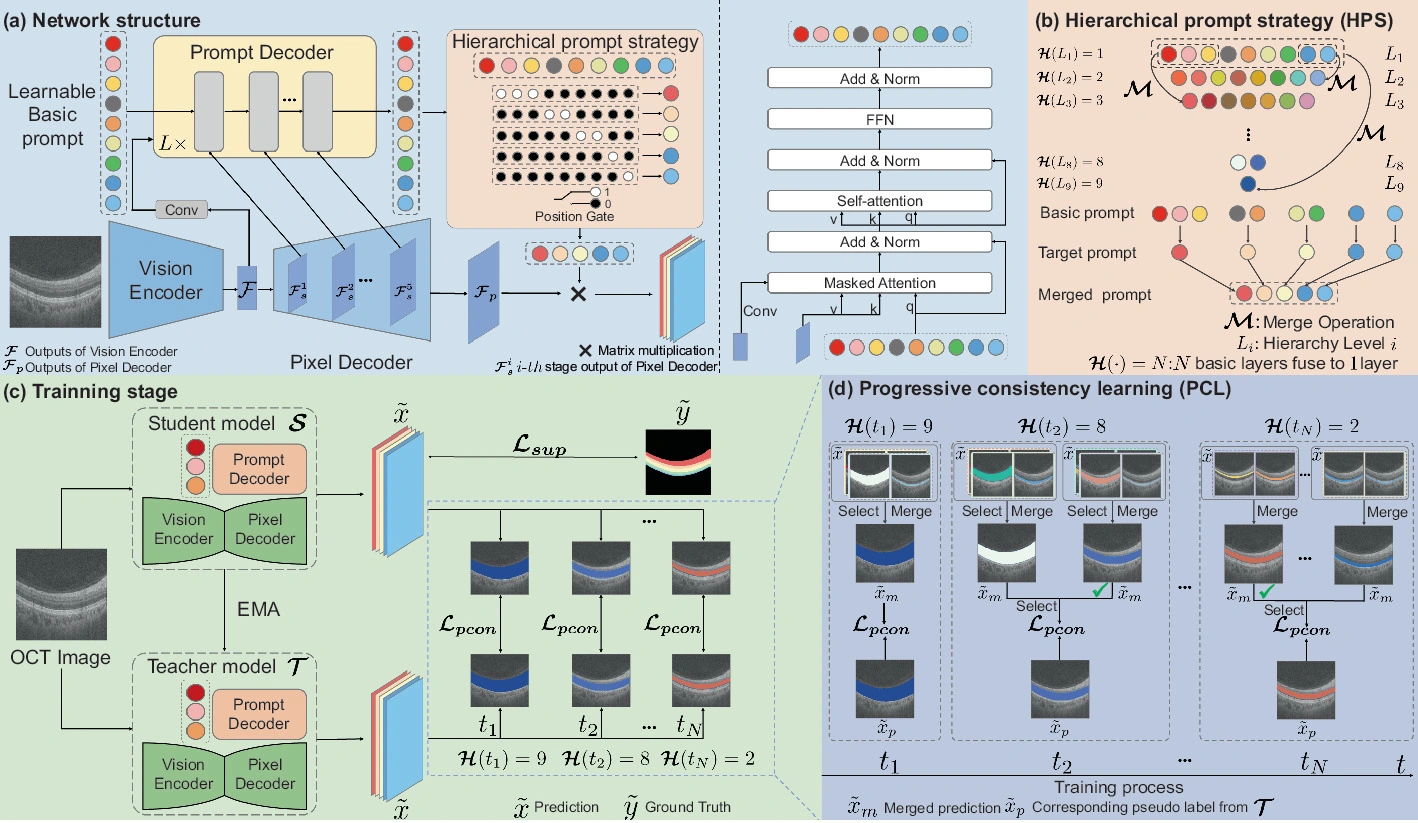
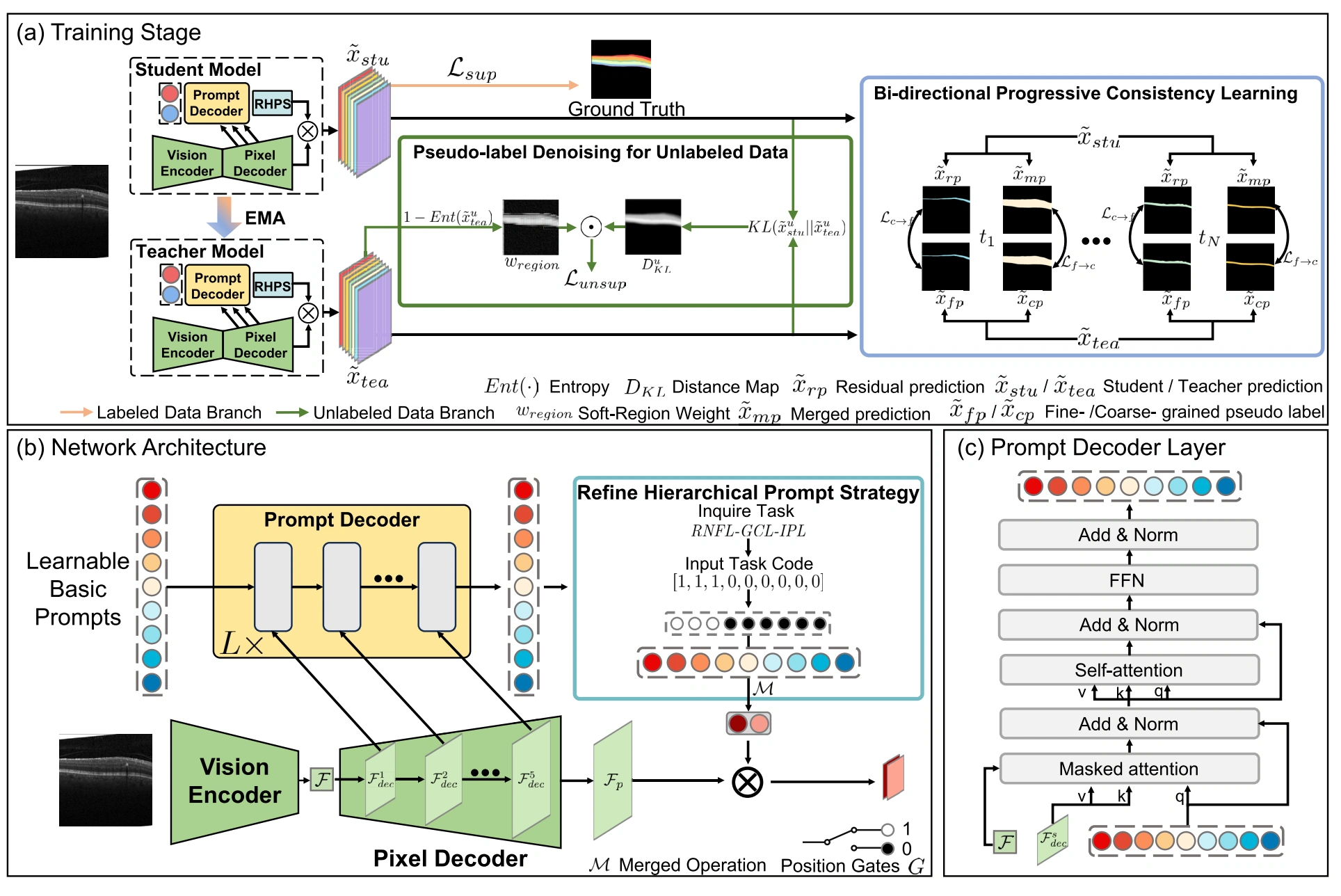
UniOCTSeg++: Refined Hierarchical Prompt Strategy and Bi-Directional Progressive Consistency Learning for Universal Retinal Layer Segmentation in OCT

Jian Zhong*, Li Lin*, Kenneth K. Y. Wong, Xiaoying Tang† Co-first author

UniOCTSeg++ addresses variation in retinal layer definitions by encoding anatomical hierarchies in paired foreground and background prompts and enforcing bidirectional consistency between fine and coarse predictions. On HROCT-Bench, the model approaches fully supervised performance using 30% of the labeled data alongside unlabeled scans.

IEEE Transactions on Medical Imaging 2026 (JIF 12.4)PaperCode
Fig. 6 · Source · CC BY-NC-ND 4.0

Vision Foundation Models · Volumetric OCT · Patient-Level Diagnostic Workflows

Full end-to-end diagnostic workflow automation of 3D OCT via foundation model-driven AI for retinal diseases

Jinze Zhang*, Jian Zhong*, Li Lin*, Jiaxiong Li*, Ke Ma, Naiyang Li, Meng Li, Yuan Pan, Zeyu Meng, Mengyun Zhou, Shang Huang, Shilong Yu, Zhengyu Duan, Sutong Li, Honghui Xia, Juping Liu, Dan Liang, Yantao Wei, Xiaoying Tang†, Jin Yuan†, Peng Xiao† Co-first author

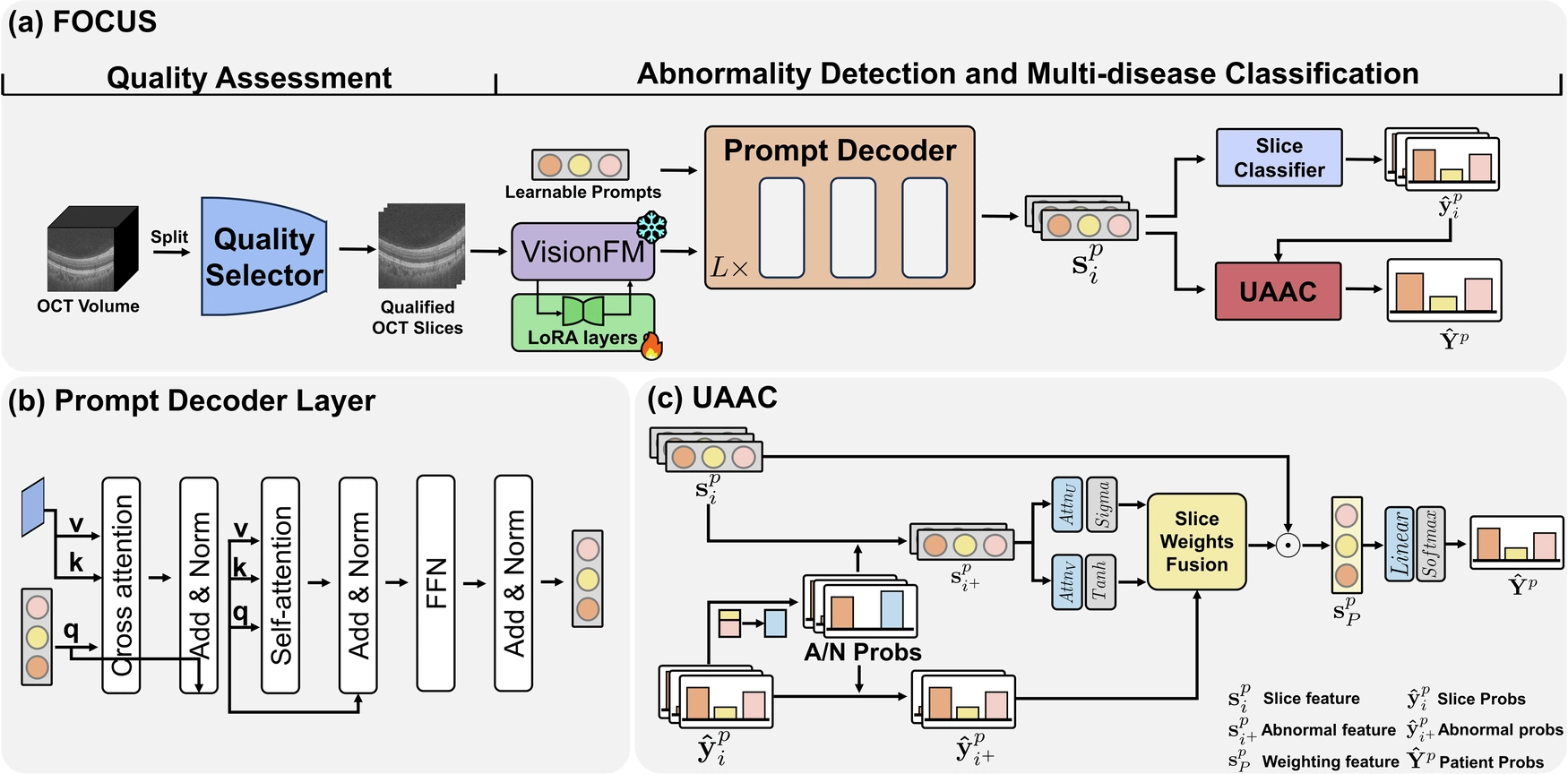
FOCUS integrates slice quality assessment with a fine-tuned VisionFM backbone for abnormality detection and disease classification. Attention-weighted aggregation of abnormal slices yields patient-level diagnoses. In external validation on 1,345 patients across four centers, the pooled patient-level F1 was 94.05%.

npj Digital Medicine 2026 (JIF 18.0)PaperarXiv
Fig. 4 · Source · CC BY 4.0

Multi-Agent Deliberation · Multimodal Clinical Data · Guideline-Based Evaluation

An agentic multidisciplinary framework for diabetic retinopathy treatment planning

Tingting Shen, Zhiyuan Cai, Pujin Cheng, Li Lin, Meng Tian, Honghui Xia, Zhihao Jiang, Ting Zhang, Yantao Wei, Zhaoyang Wang, Jin Yuan, Wenjun Xu, Xiaoying Tang

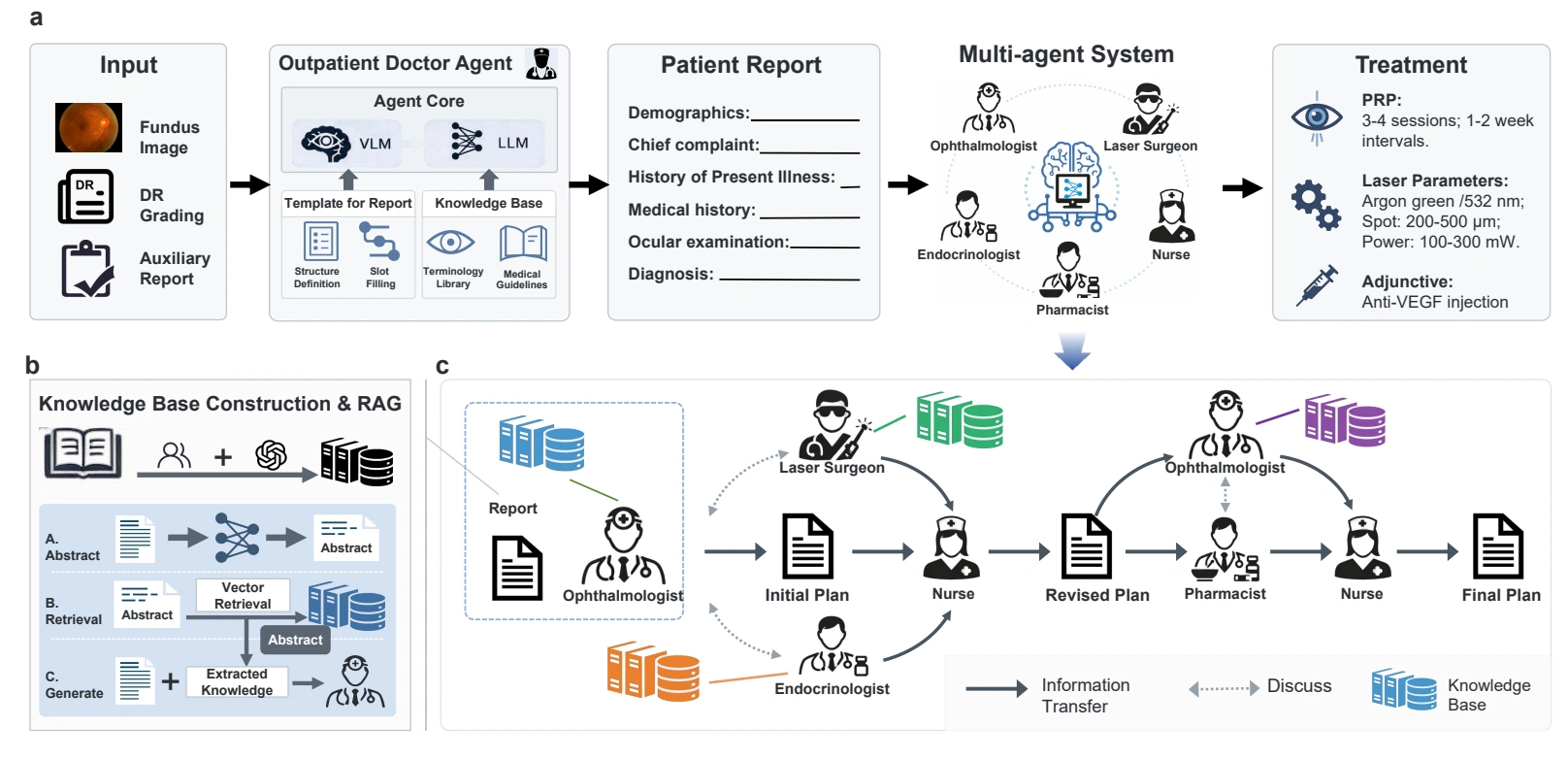
DRAgent frames diabetic retinopathy treatment planning as deliberation among specialty-specific agents using fundus images and clinical records. The preprint contributes a linked treatment-planning dataset and evaluates the resulting recommendations with guideline checks, clinician review, and specialist-agent ablations.

Research Square 2026PreprintResearch SquareCode
Fig. 2 · Source · IEEE copyright

Phase-Conditioned Diffusion · Context-Aware Fusion · Multiphase CT Segmentation

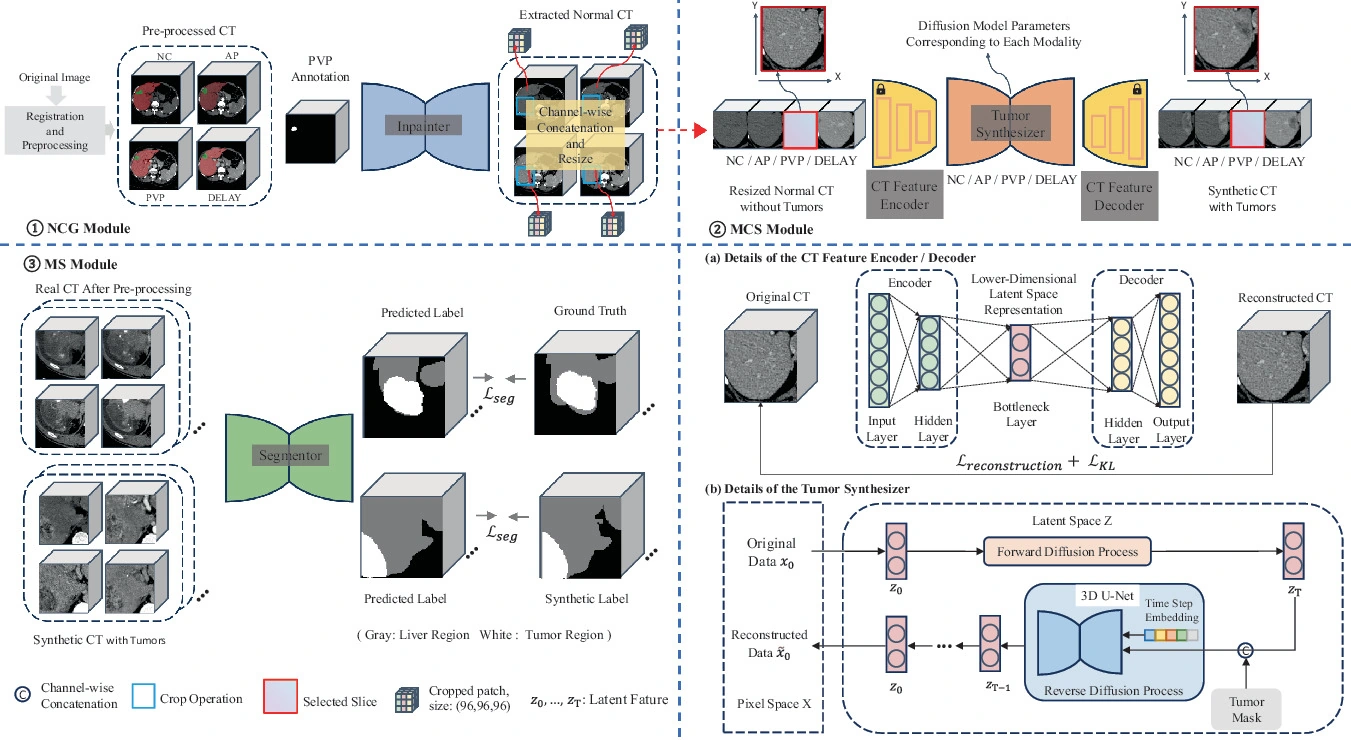
SynLiTS: Phase Prompting-Driven Diffusion Synthesis and Context-Aware Fusion for Unaligned Liver Tumor Segmentation

Shiyun Chen*, Li Lin*, Zhicheng Jin*, Pujin Cheng, Jianjian Chen, Haidong Zhu, Kenneth K. Y. Wong, Xiaoying Tang† Co-first author

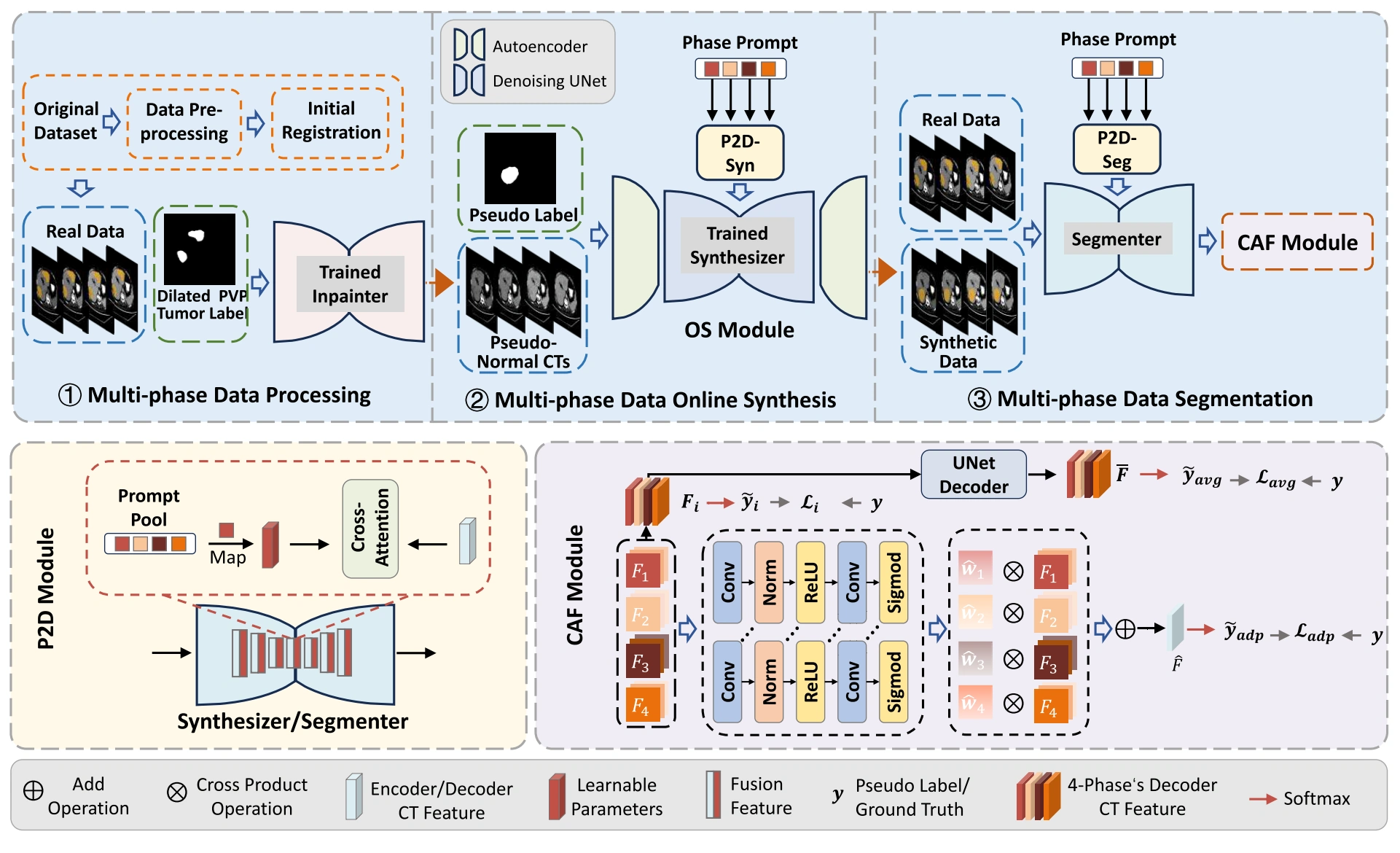
SynLiTS synthesizes liver tumors at matched locations across CT phases using phase-conditioned diffusion. A context-aware segmentation model learns from both the aligned synthetic data and real scans with residual misalignment. The study also introduces MPLiTS, a real multiphase liver tumor dataset.

IEEE Transactions on Medical Imaging 2026 (JIF 12.4)Paper
Fig. 3 · Fig. 1 · CC BY 4.0

Long-Tailed Recognition · Tail-Class Synthesis · Class-Balanced Contrastive Learning

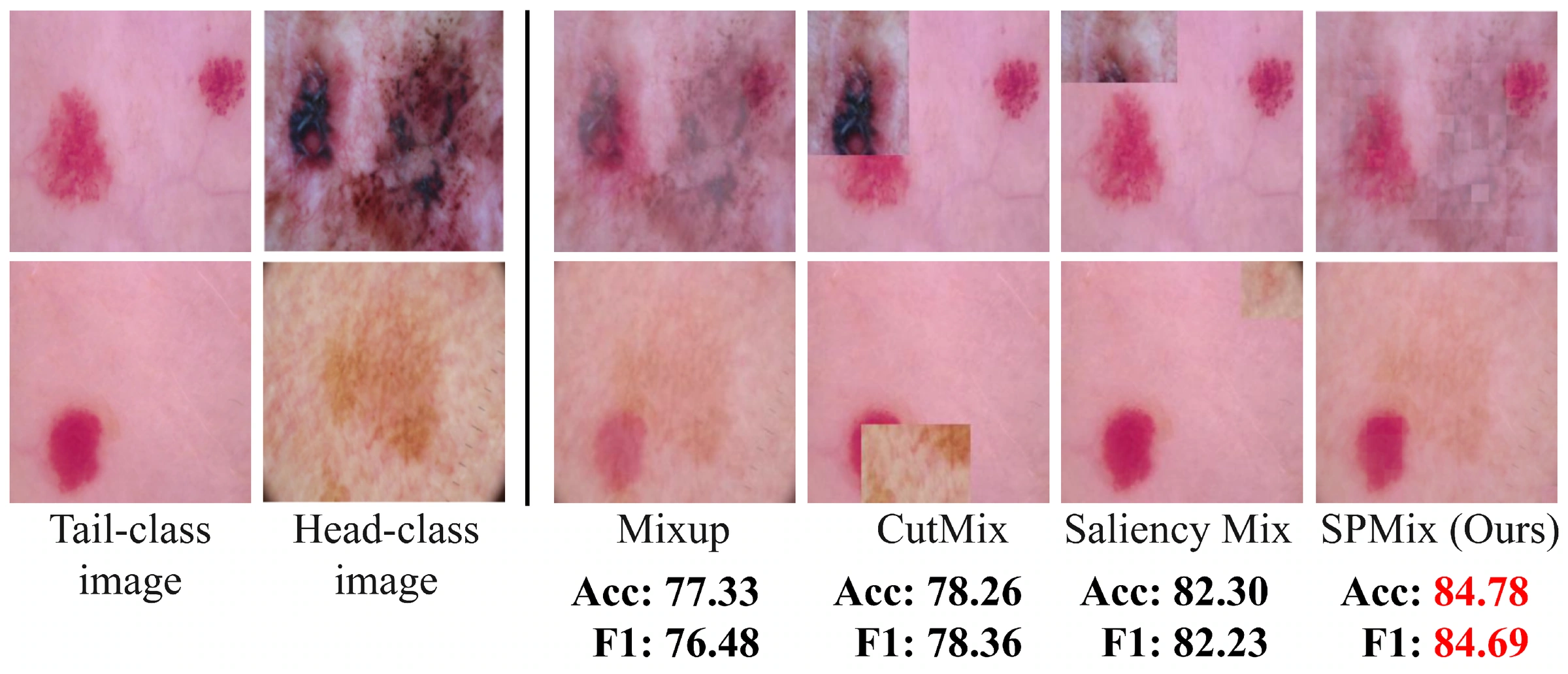
TailBoost: Tail-Synthetic Learning for Boosting Long-Tailed Skin Cancer Image Classification

Tianyunxi Wei, Yijin Huang, Li Lin, Pujin Cheng, Xiaoying Tang

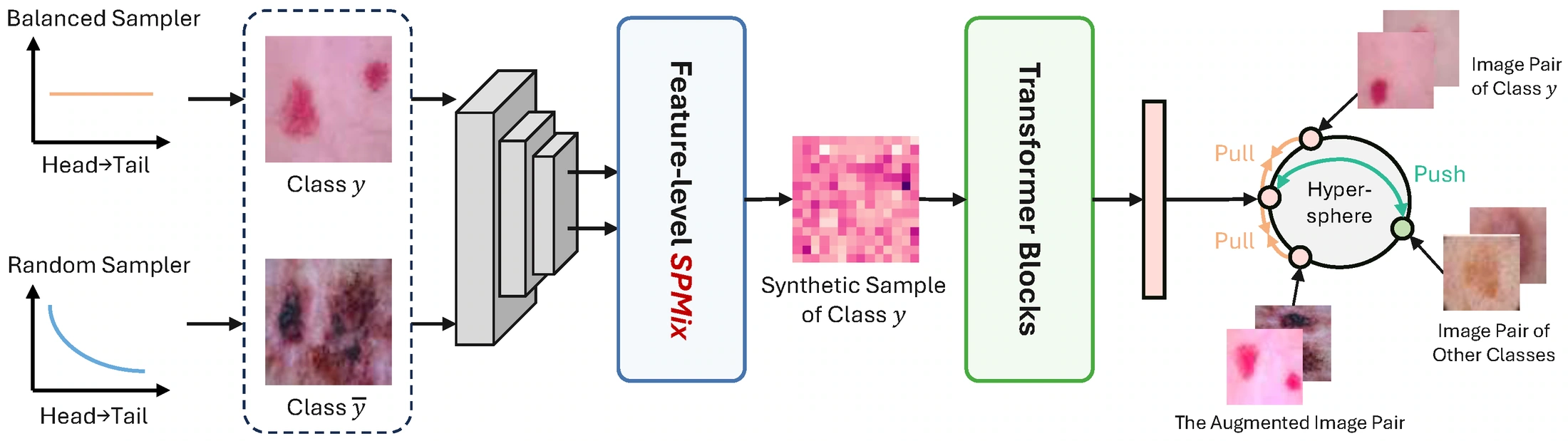
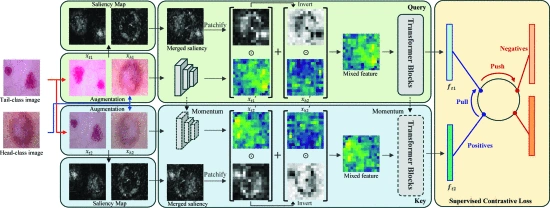
TailBoost combines lesion-preserving synthesis with class-balanced representation learning for long-tailed skin lesion recognition. Saliency maps guide the construction of minority-class examples from common and rare cases, while center rebalancing modifies the supervised contrastive objective. The study evaluates the combination on three skin lesion datasets.

Sensors 2026 (JIF 4.0)PaperCode
Fig. 1 · Source · IEEE copyright

Annotation-Free Learning · Fourier-Domain Synthesis · Cerebrovascular Segmentation

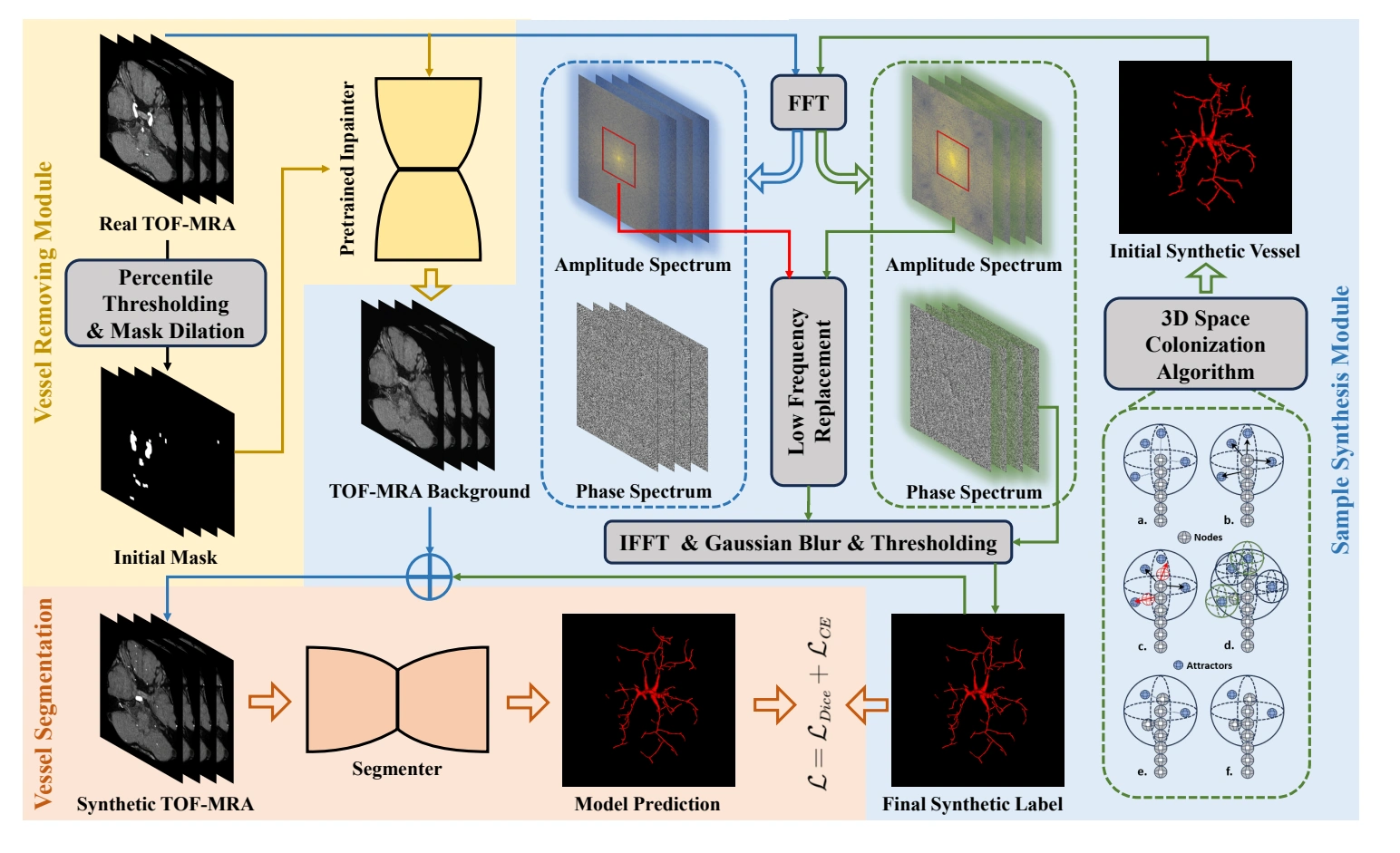
Annotation-Free Cerebrovascular Segmentation: A Synthetic Data Paradigm for TOF-MRA Segmentation

Juntao Chen, Pengxiao Xu, Li Lin, Pujin Cheng, Xiaoying Tang

This annotation-free approach generates branching vascular trees and blends them into vessel-suppressed TOF-MRA backgrounds in the Fourier domain. Synthetic image–mask pairs provide dense supervision for cerebrovascular segmentation, and the trained model is evaluated on real scans.

IEEE ISBI 2026Paper
Fig. 1 · Source · IEEE copyright

Anatomical Priors · Diffusion-Based CT Synthesis · PET Attenuation Correction

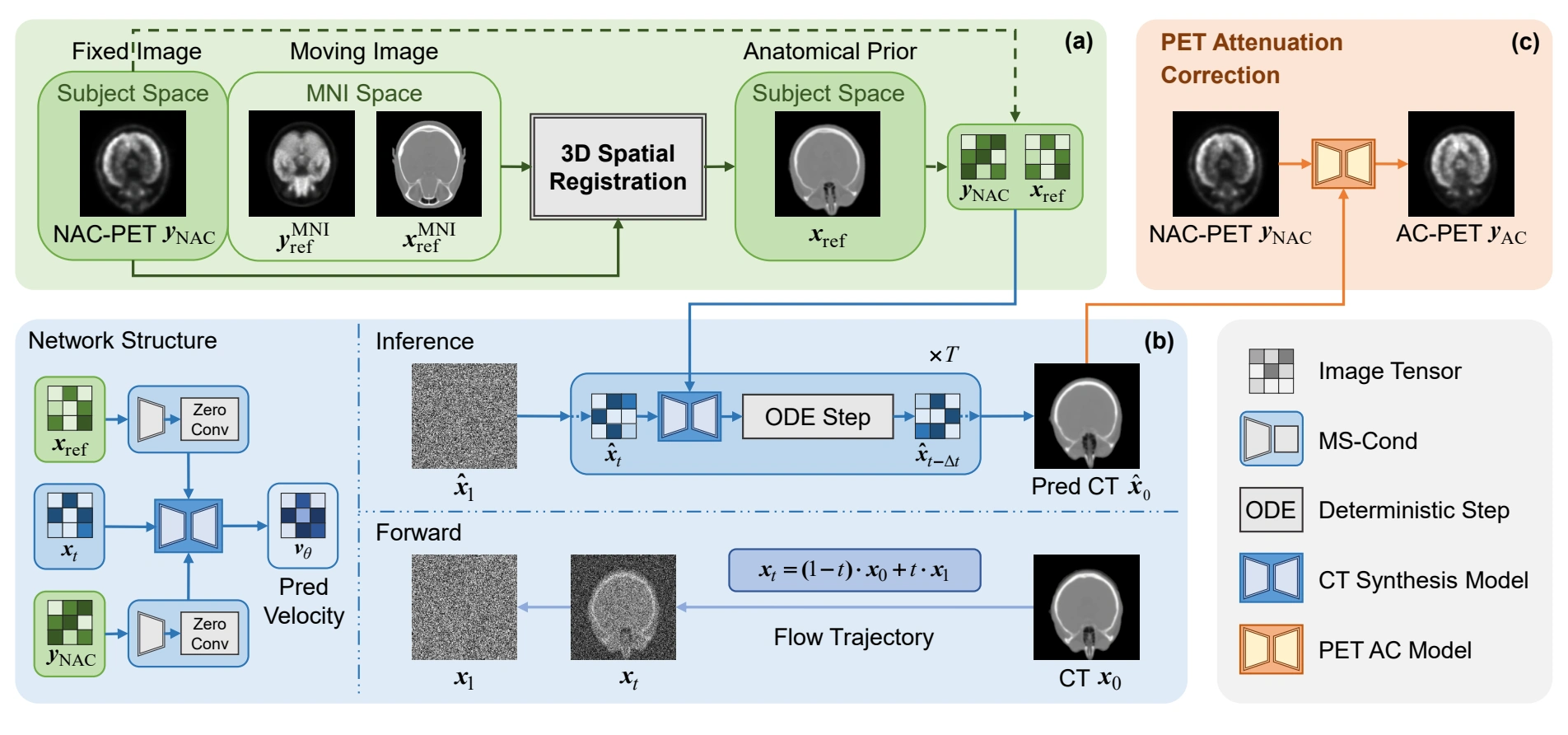
DAPS: Diffusion-Based and Anatomical Prior-Guided CT Synthesis for PET Attenuation Correction

Chen Huang, Pujin Cheng, Li Lin, Zheng Gu, Xiaoying Tang

DAPS deformably aligns a brain template and uses the resulting anatomical prior to guide diffusion-based CT synthesis from uncorrected PET. A correction network combines the synthetic CT with the original PET. The pipeline is evaluated on two public PET/CT datasets.

IEEE ISBI 2026Paper
Fig. 1 · Source · IEEE copyright

Semi-Supervised Learning · Reliability-Aware Mutual Learning · Multi-Granularity OCT Segmentation

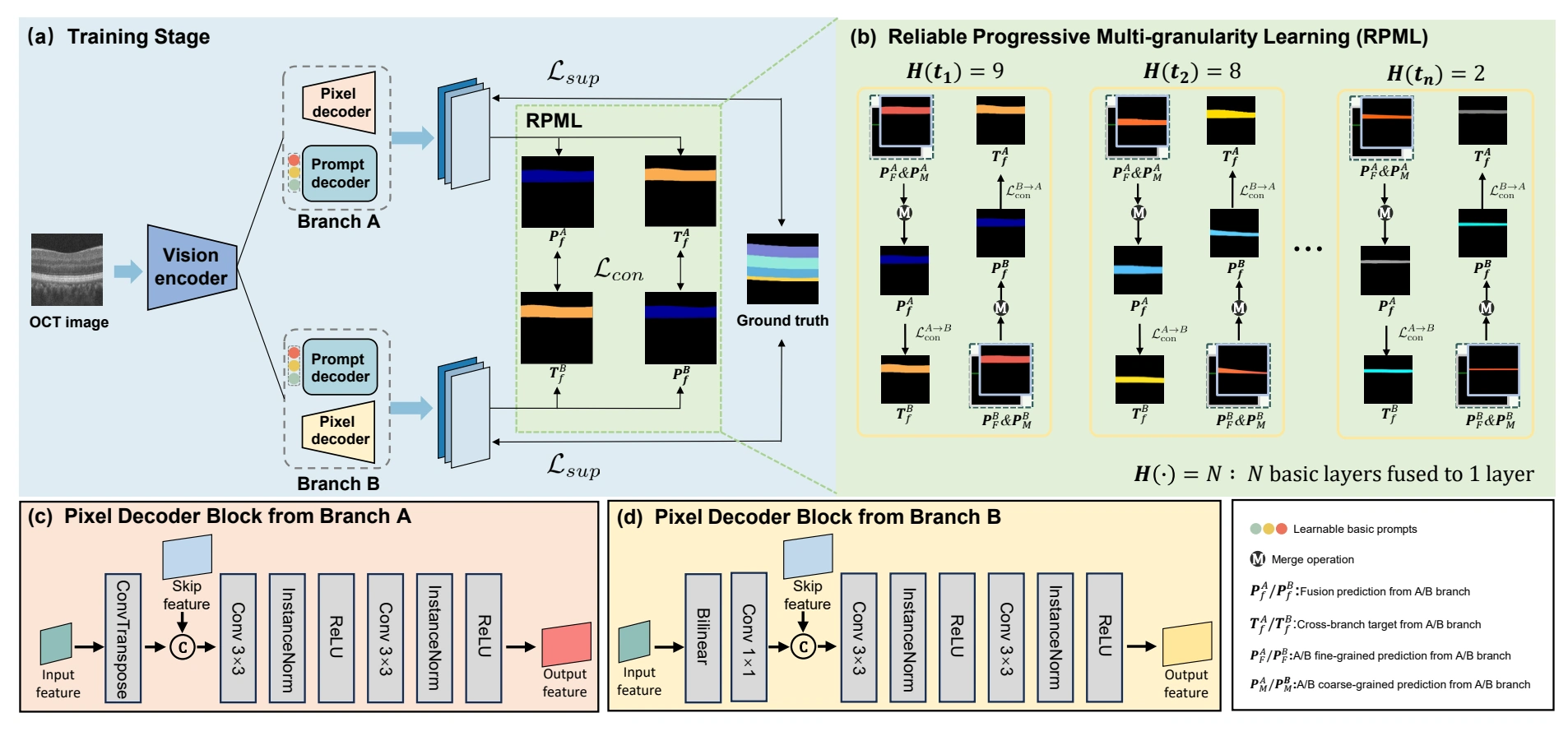
LUMOS: Universal Semi-Supervised OCT Retinal Layer Segmentation with Hierarchical Reliable Mutual Learning

Yizhou Fang*, Jian Zhong*, Li Lin*, Xiaoying Tang† Co-first author

LUMOS uses unlabeled OCT scans alongside annotations drawn at different anatomical granularities. Hierarchical prompts condition two decoders, and region-level reliability weights the pseudo-labels exchanged across annotation levels. Evaluation spans six OCT datasets.

IEEE ISBI 2026PaperarXiv
Fig. 2 · Source · IEEE copyright

Multi-Species 3D Reconstruction · Taxon-Aware Modeling · Diffusion-Based Data Synthesis

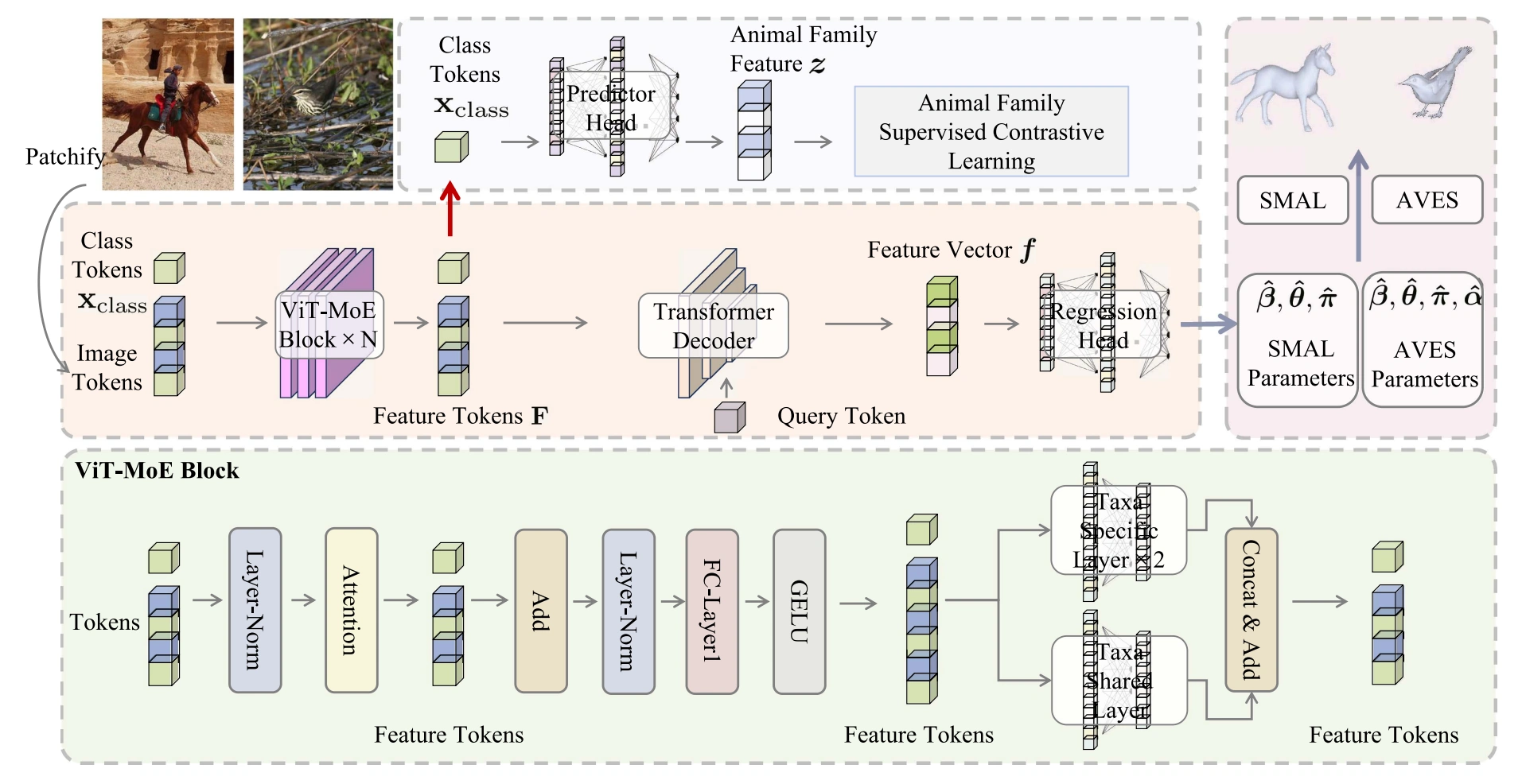
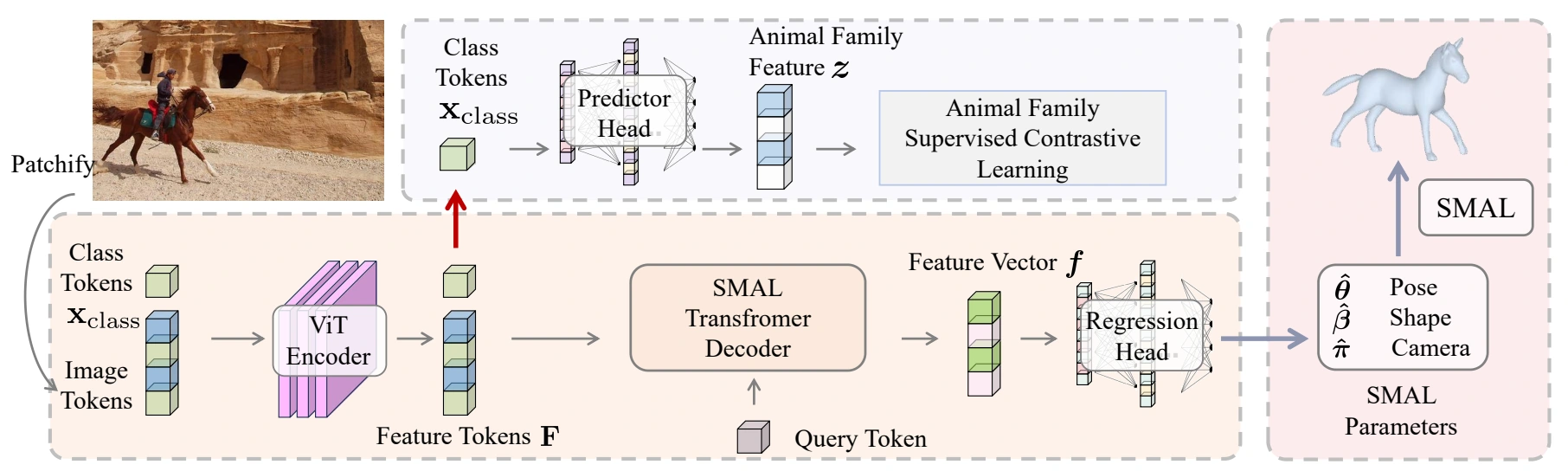
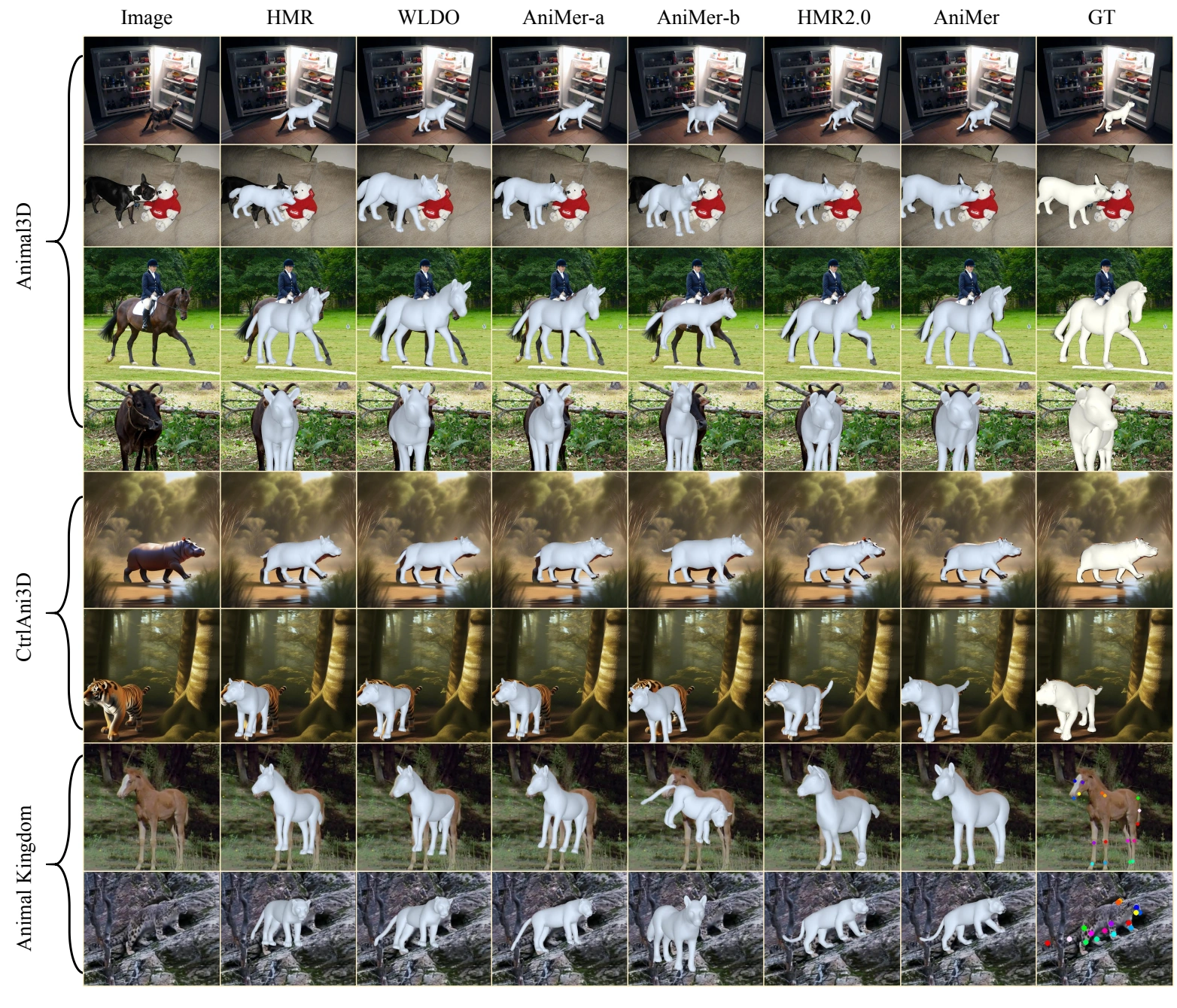
AniMer+: Unified Pose and Shape Estimation Across Mammalia and Aves via Family-Aware Transformer

Liang An*, Jin Lyu*, Li Lin, Pujin Cheng, Yebin Liu, Xiaoying Tang

AniMer+ learns one model for 3D pose and shape reconstruction across quadrupedal mammals and birds by combining shared Transformer layers with taxon-specific experts. Diffusion-generated training sets add pixel-aligned 3D annotations, and evaluation includes the out-of-domain Animal Kingdom benchmark.
IEEE Transactions on Pattern Analysis and Machine Intelligence 2026 (JIF 20.4)PaperarXiv Code
Fig. 3 · Fig. 4

Medical Vision–Language Pretraining · Optimal Transport · Robust Contrastive Learning

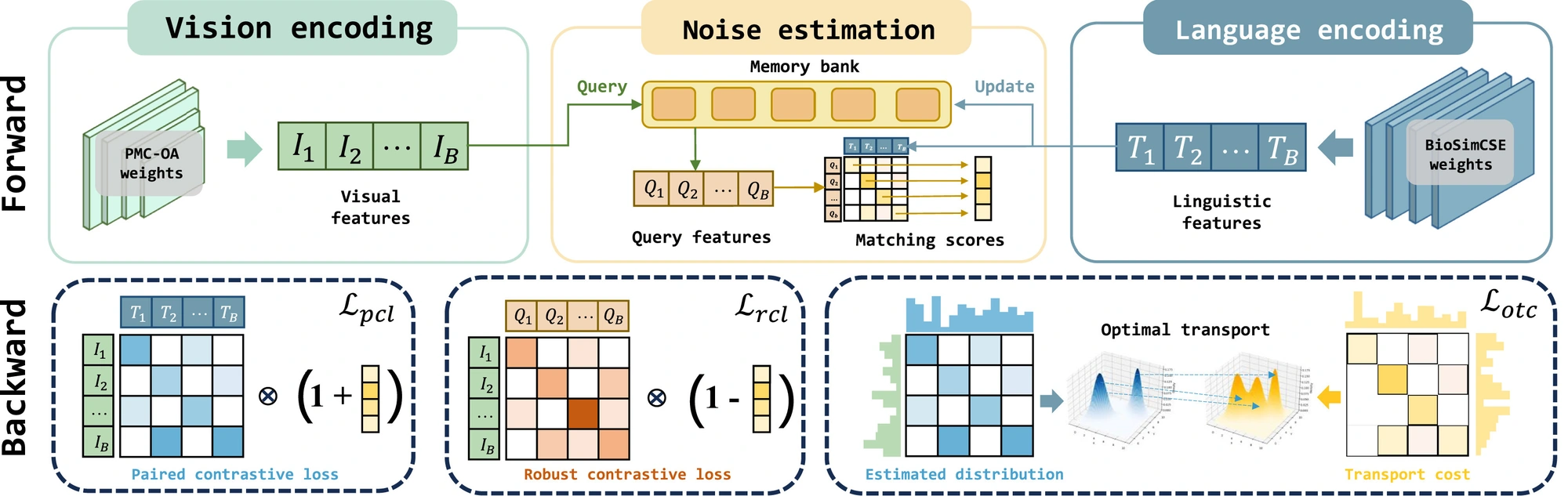
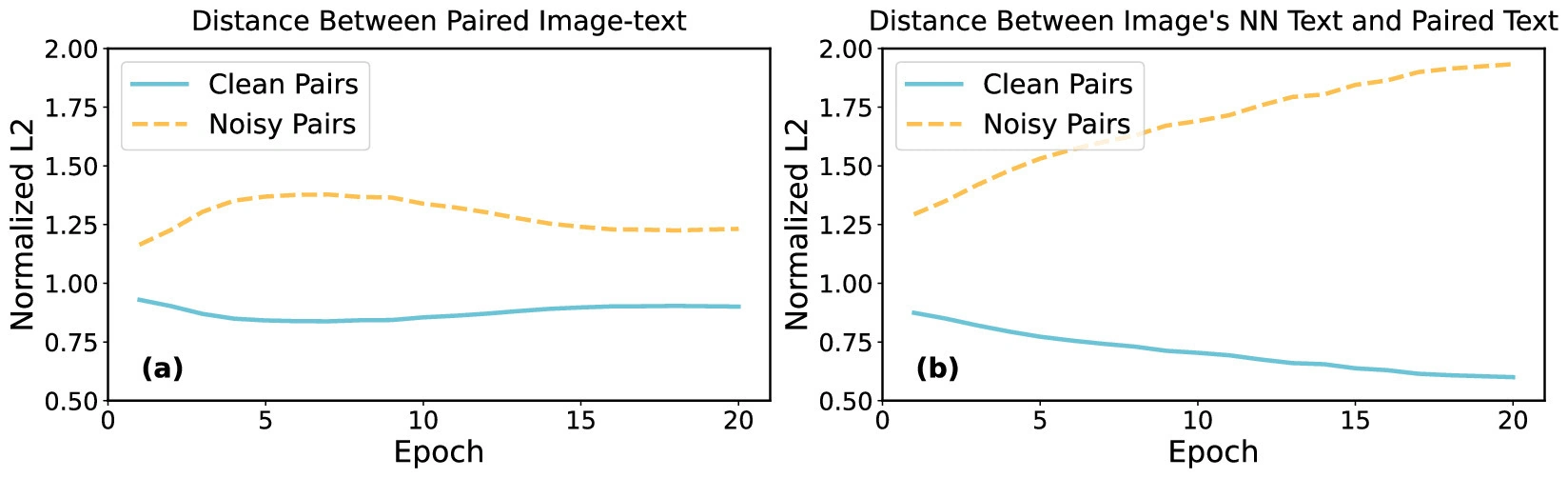
MIRAGE: Medical image-text pre-training for robustness against noisy environments

Pujin Cheng, Yijin Huang, Li Lin, Junyan Lyu, Kenneth K. Y. Wong, Xiaoying Tang

MIRAGE addresses mismatched image–report pairs and clinically related samples treated as negatives in contrastive pretraining. Optimal transport estimates pairwise correspondence using cross-modal neighbors, and adaptive gradient balancing limits the effect of noisy supervision. Transfer is evaluated on six tasks across 14 datasets.
Medical Image Analysis 2026 (JIF 14.0)PaperCode
Fig. 1 · Source

Mask-Conditioned Latent Diffusion · Cross-Phase Alignment · Liver Tumor Segmentation

Diff4MMLiTS: Advanced Multimodal Liver Tumor Segmentation via Diffusion-Based Image Synthesis and Alignment

Shiyun Chen*, Li Lin*, Pujin Cheng, Zhicheng Jin, Jianjian Chen, Haidong Zhu, Kenneth K. Y. Wong, Xiaoying Tang Co-first author

Diff4MMLiTS constructs voxel-aligned liver tumor supervision for multiphase CT. It registers the liver at organ level, inpaints existing lesions, and uses mask-conditioned latent diffusion to insert a new tumor at a common location across phases for segmentation training.

MLMI 2025 at MICCAIPaperarXiv

2025

Fig. 2 · Source

Hierarchical Prompting · Teacher–Student Consistency · Multi-Granularity Segmentation

UniOCTSeg: Towards Universal OCT Retinal Layer Segmentation via Hierarchical Prompting and Progressive Consistency Learning

Jian Zhong*, Li Lin*, Chaoran Miao, Kenneth K. Y. Wong, Xiaoying Tang Co-first author

UniOCTSeg composes coarse retinal layer prompts from fine-grained labels, giving a single OCT model an explicit representation of alternative annotation schemes. An exponential-moving-average teacher progressively transfers supervision across the hierarchy, with evaluation on eight datasets spanning six annotation granularities.
MICCAI 2025 (CCF B)PaperCode
Fig. 1 · Source

Evidential Learning · Uncertainty Estimation · PET/CT Fusion

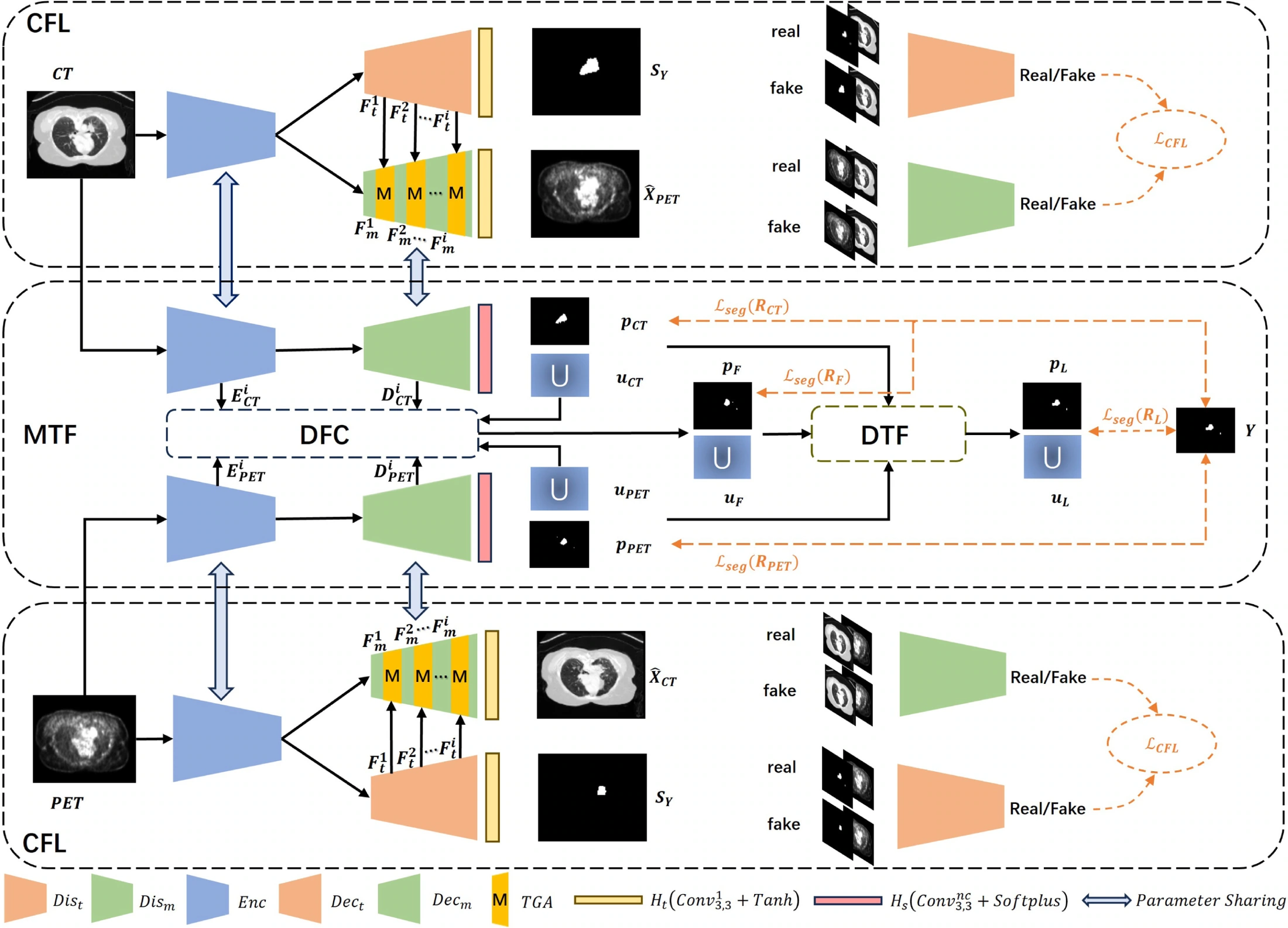
Multi-modal evidential fusion network for trustworthy PET/CT tumor segmentation

Yuxuan Qi*, Li Lin*†, Bin Zhang, Jingya Zhang, Jiajun Wang Co-first author Co-corresponding author

MEFN aligns PET and CT representations, calibrates uncertainty separately for each modality, and combines voxel-level evidence using Dempster–Shafer theory. Evaluation on AutoPET and HECKTOR assesses both delineation accuracy and the uncertainty accompanying a segmentation.

Knowledge-Based Systems 2025 (JIF 8.0)PaperarXiv Code
Fig. 2 · Fig. 4

Single-Image 3D Reconstruction · Family-Supervised Contrastive Learning · Animal Pose and Shape

AniMer: Animal Pose and Shape Estimation Using Family Aware Transformer

Jin Lyu, Tianyi Zhu, Yi Gu, Li Lin, Pujin Cheng, Yebin Liu, Xiaoying Tang, Liang An

AniMer learns a single-image 3D reconstruction model across quadruped families. Family-supervised contrastive learning structures the Transformer’s representation, and CtrlAni3D adds diffusion-generated images with pixel-aligned mesh labels. The study tests reconstruction on both annotated 3D benchmarks and out-of-domain images.

Fig. 2 · Source · IEEE copyright

Missing-Modality Learning · Cross-Modal Prompting · Non-Perfusion Segmentation

Test-Time Fluorescein Angiography-Free Non-Perfusion Area Segmentation from Fundus Image

Juntao Chen*, Li Lin*, Jiaming Qiu*, Huiyu Liang, Terry Tao Ye, Haoyu Chen†, Xiaoying Tang† Co-first author

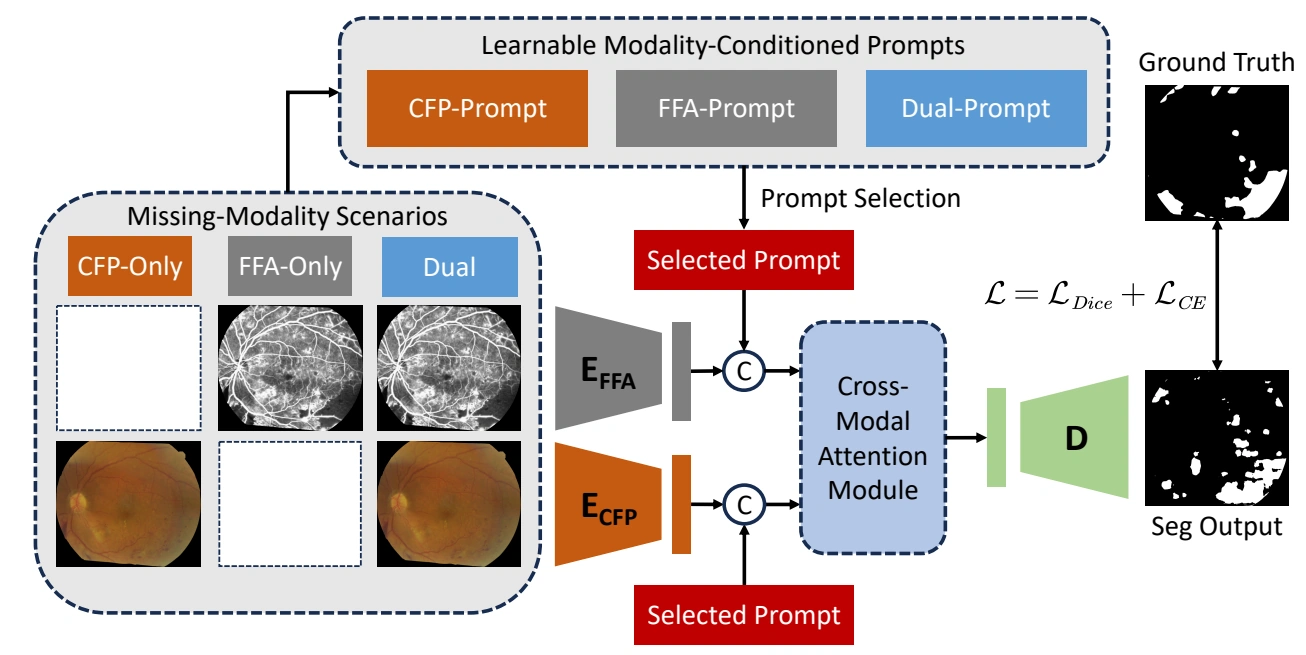
This study formulates retinal non-perfusion segmentation as a missing-modality problem. Modality-conditioned prompts and cross-attention transfer information from fluorescein angiography during training, allowing the model to delineate non-perfusion areas from color fundus photography alone at inference.

IEEE ISBI 2025Paper
Fig. 1 · Fig. 2 · IEEE copyright

Contextual Prompting · Universal 3D Segmentation · Curvilinear Structures

UniCurvSeg: Learning Contextual Prompt for Universal Vessel-Like Curvilinear Structure Segmentation

Qiuting Hu*, Li Lin*, Pujin Cheng, Xiaoying Tang† Co-first author

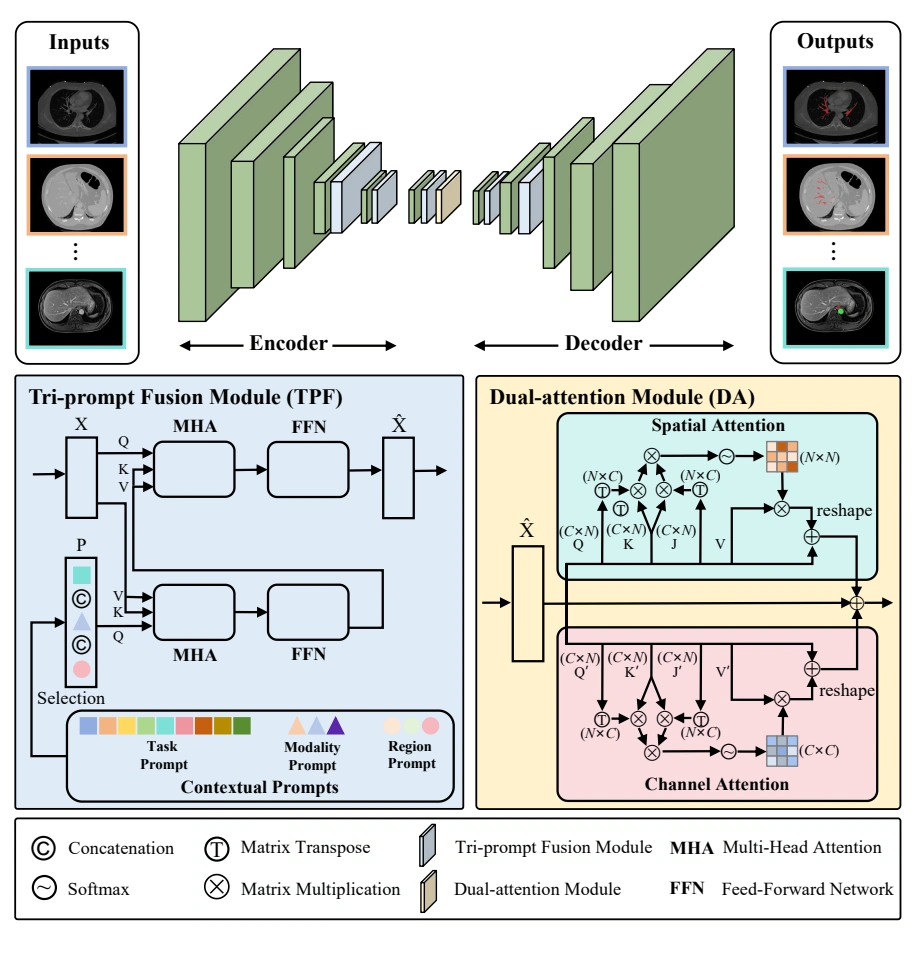
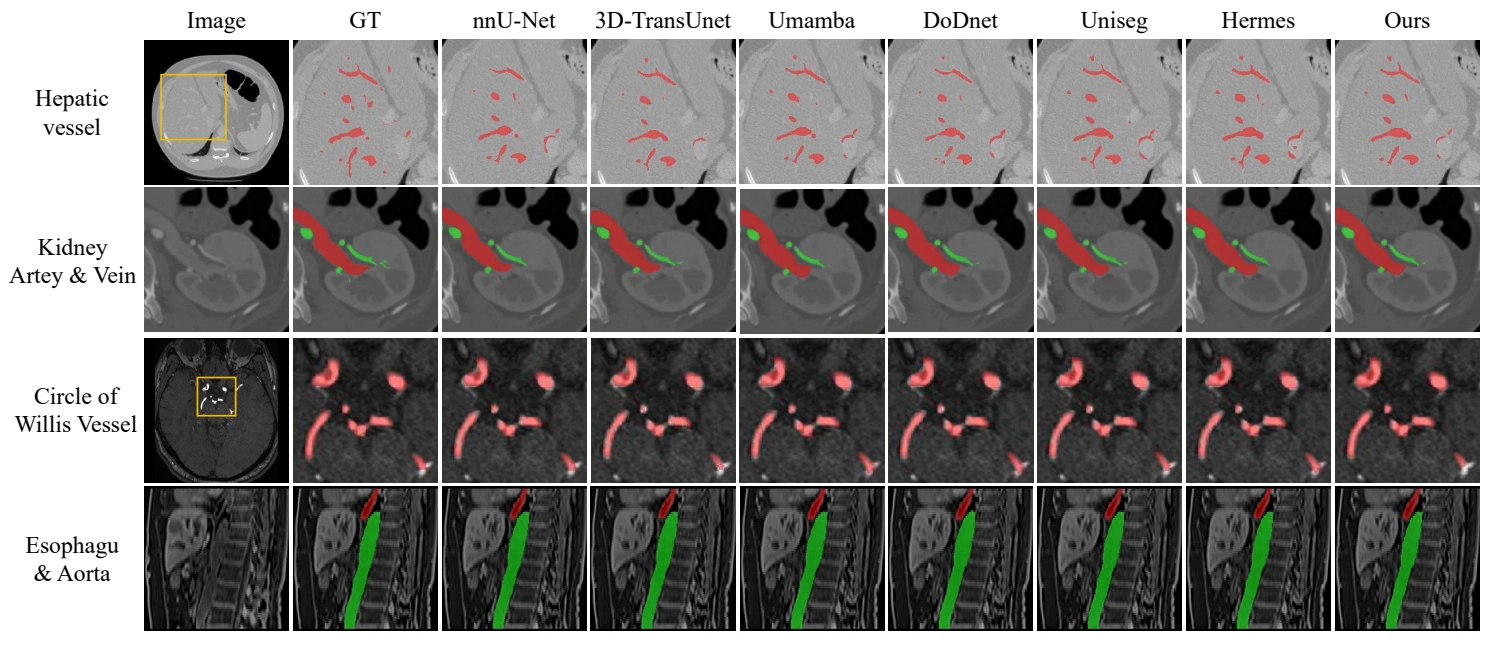
UniCurvSeg uses task, imaging modality, and anatomical region as contextual prompts for a shared 3D segmenter. Cross-attention conditions the model on these prompts, enabling cross-task learning of vessel-like structures evaluated on nine datasets spanning CT, MRI, and MR angiography.

IEEE ISBI 2025Paper
Fig. 2 · Source · IEEE copyright

Weakly Supervised Segmentation · Prototype Calibration · Pseudo-Label Noise Suppression

ProCNS: Progressive Prototype Calibration and Noise Suppression for Weakly-Supervised Medical Image Segmentation

Yixiang Liu*, Li Lin*, Kenneth K. Y. Wong, Xiaoying Tang† Co-first author

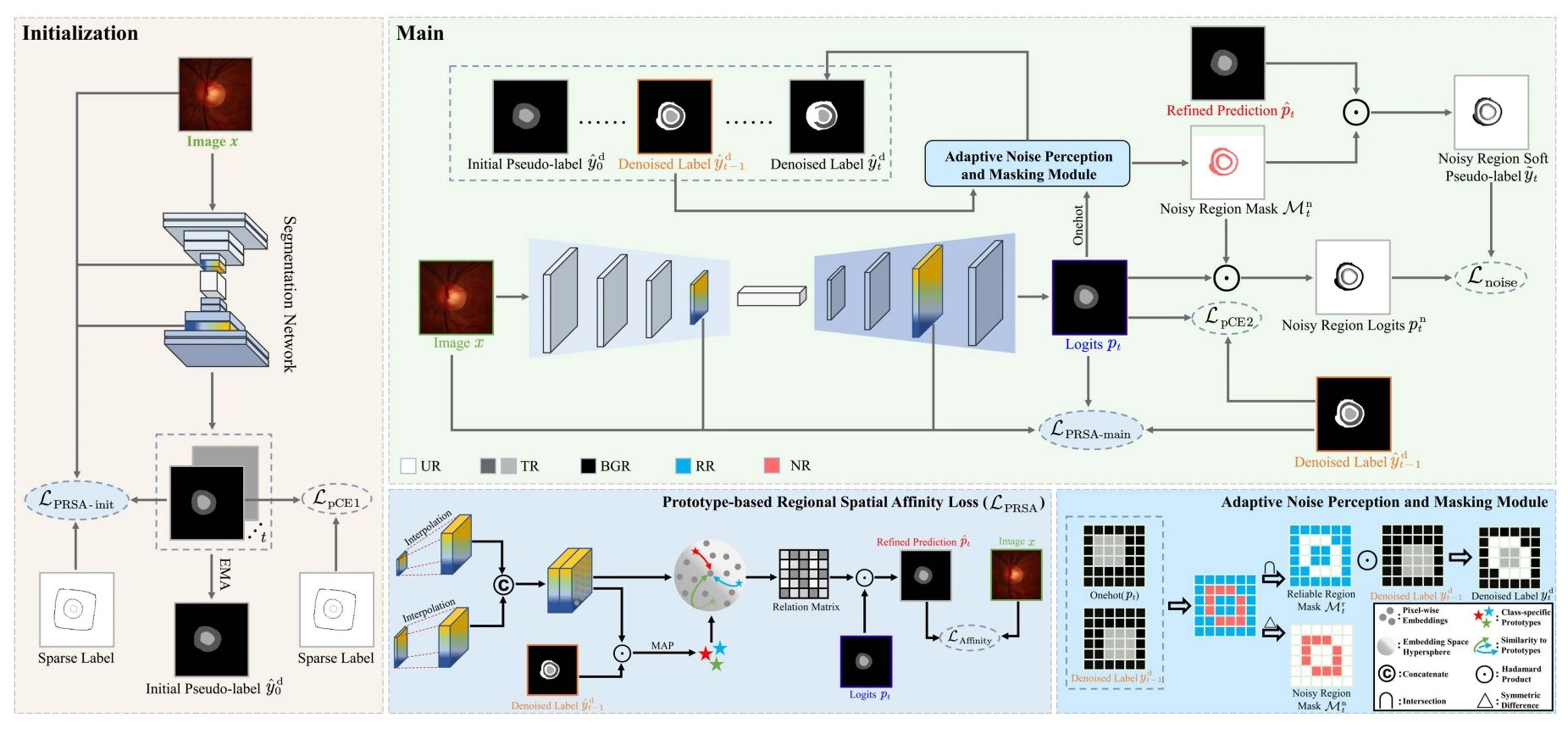
ProCNS addresses error accumulation when sparse marks are expanded into dense supervision. It encodes region-level spatial and semantic affinities from refined prototypes, excludes unreliable pixels from prototype updates, and uses targeted soft labels to retain supervision in those regions.

IEEE Journal of Biomedical and Health Informatics 2025 (JIF 7.7)PaperarXiv Code
Fig. 2 · Source · CC BY 4.0

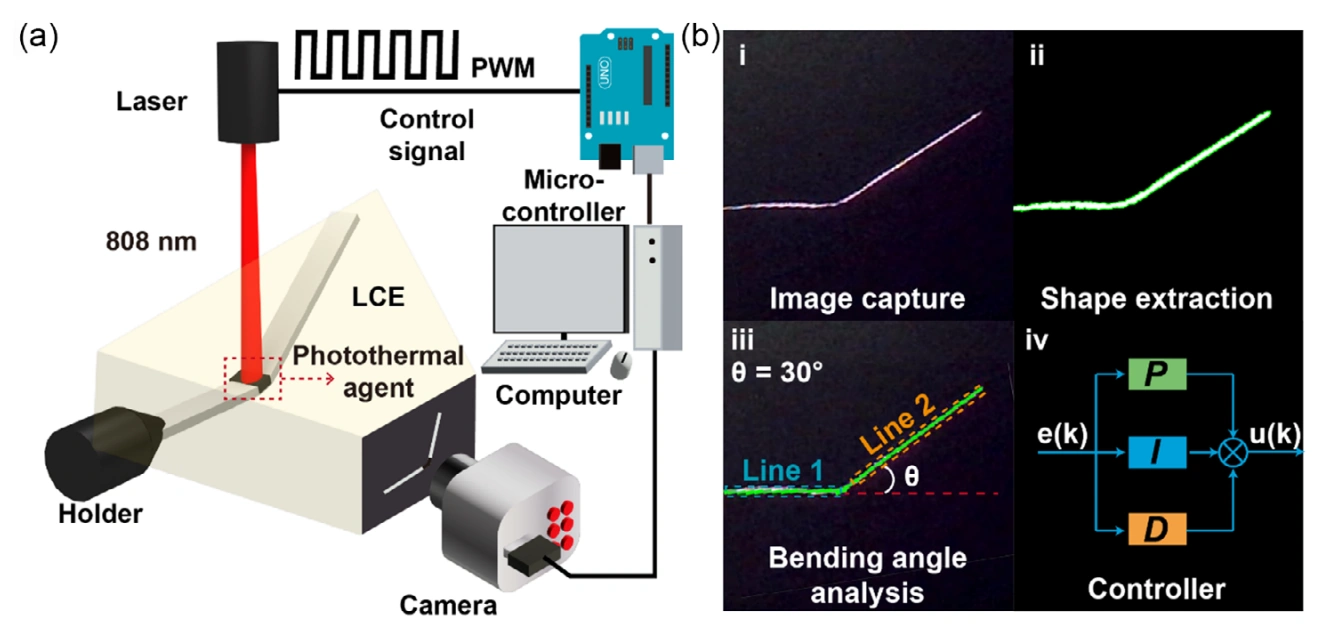
Computer Vision · Closed-Loop Control · Liquid Crystal Elastomer Actuation

Accurate and Anti‐Interference Control of Computer Vision‐Assisted Light‐Driven Liquid Crystal Elastomer Actuator

Wei Zhang, Zongxuan Wu, Li Lin, Yanjun Liu, Xiaoying Tang, Yajing Shen, Dan Luo

This work closes the control loop on light-responsive liquid crystal elastomers by estimating bending angle from video and using the measurement as feedback. Experiments examine whether the actuator holds target angles under changes in illumination, wind, and the surrounding medium.

Advanced Intelligent Systems 2025 (JIF 6.7)Paper
Fig. 2 · Fig. 5 · IEEE copyright

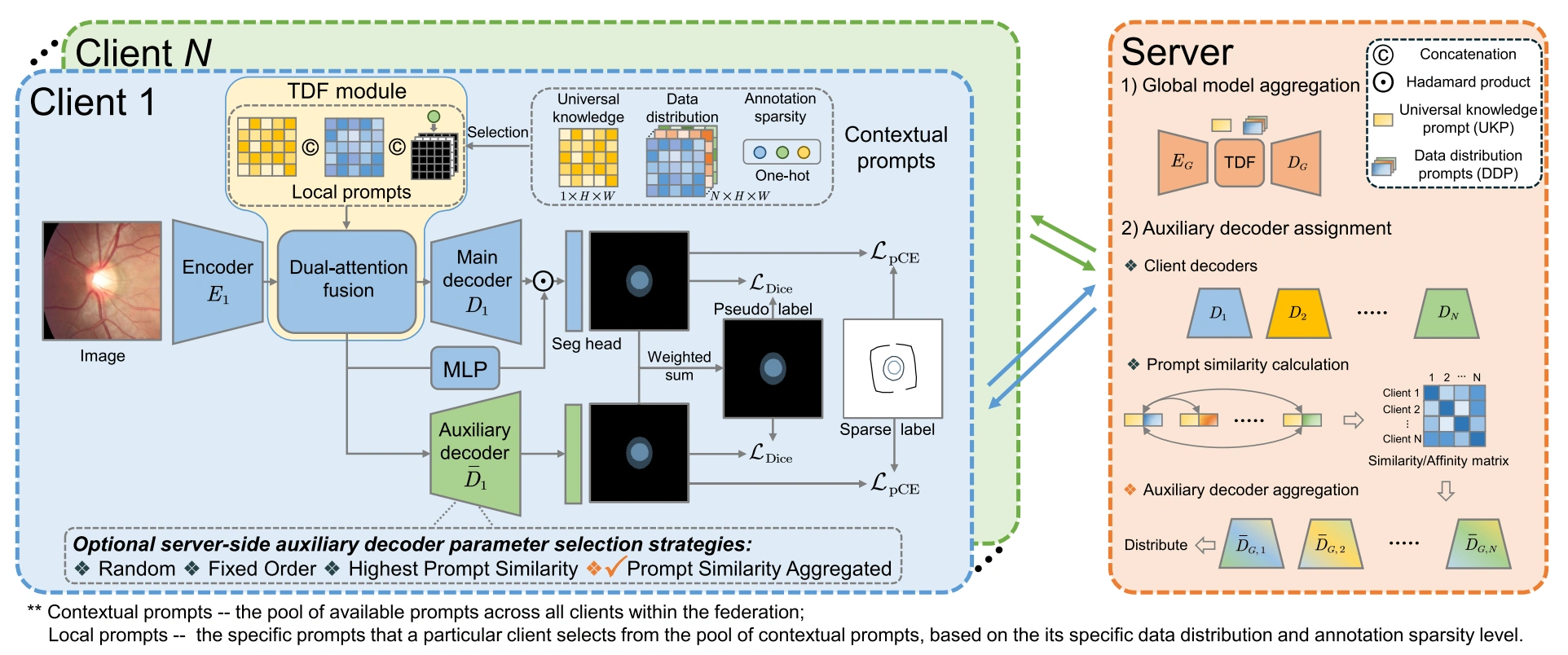
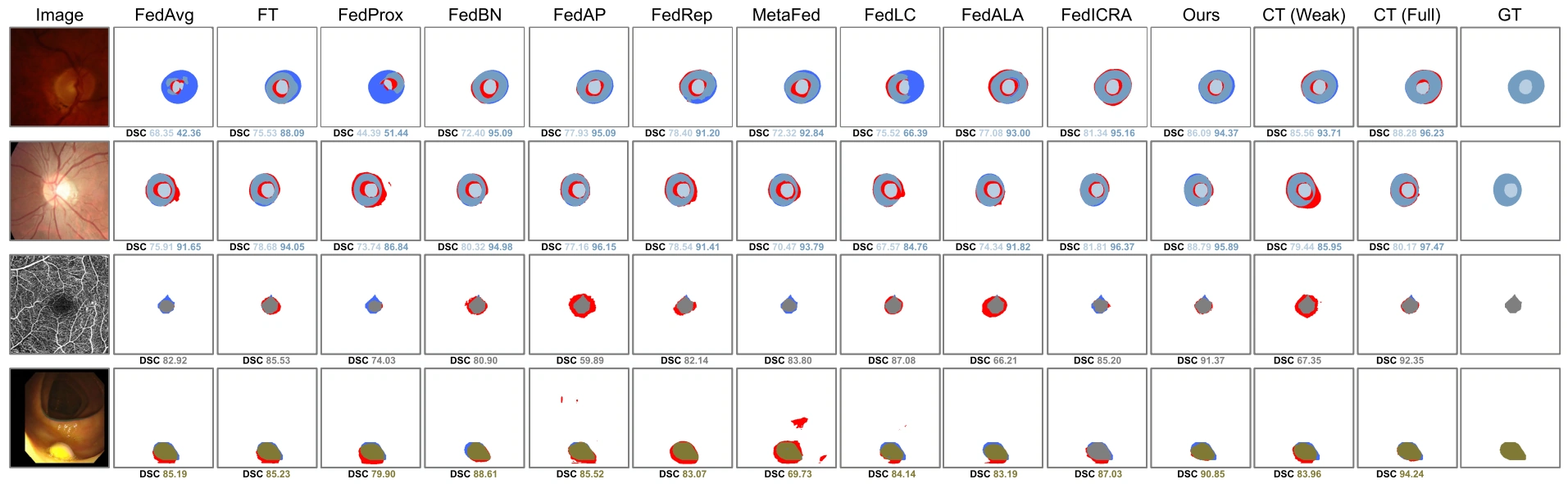
Personalized Federated Learning · Prompt Learning · Heterogeneous Weak Supervision

FedLPPA: Learning Personalized Prompt and Aggregation for Federated Weakly-Supervised Medical Image Segmentation

Li Lin*, Yixiang Liu*, Jiewei Wu*, Pujin Cheng, Zhiyuan Cai, Kenneth K. Y. Wong, Xiaoying Tang First author

FedLPPA uses distinct prompts to encode shared knowledge, site-specific imaging distributions, and annotation sparsity. Prompt similarity guides pseudo-labeling in a dual-decoder design, while parameter-wise aggregation personalizes each local decoder. Evaluation spans four segmentation tasks with heterogeneous weak supervision.

IEEE Transactions on Medical Imaging 2025 (JIF 12.4)PaperarXiv Code
Fig. 4 · Source · IEEE copyright

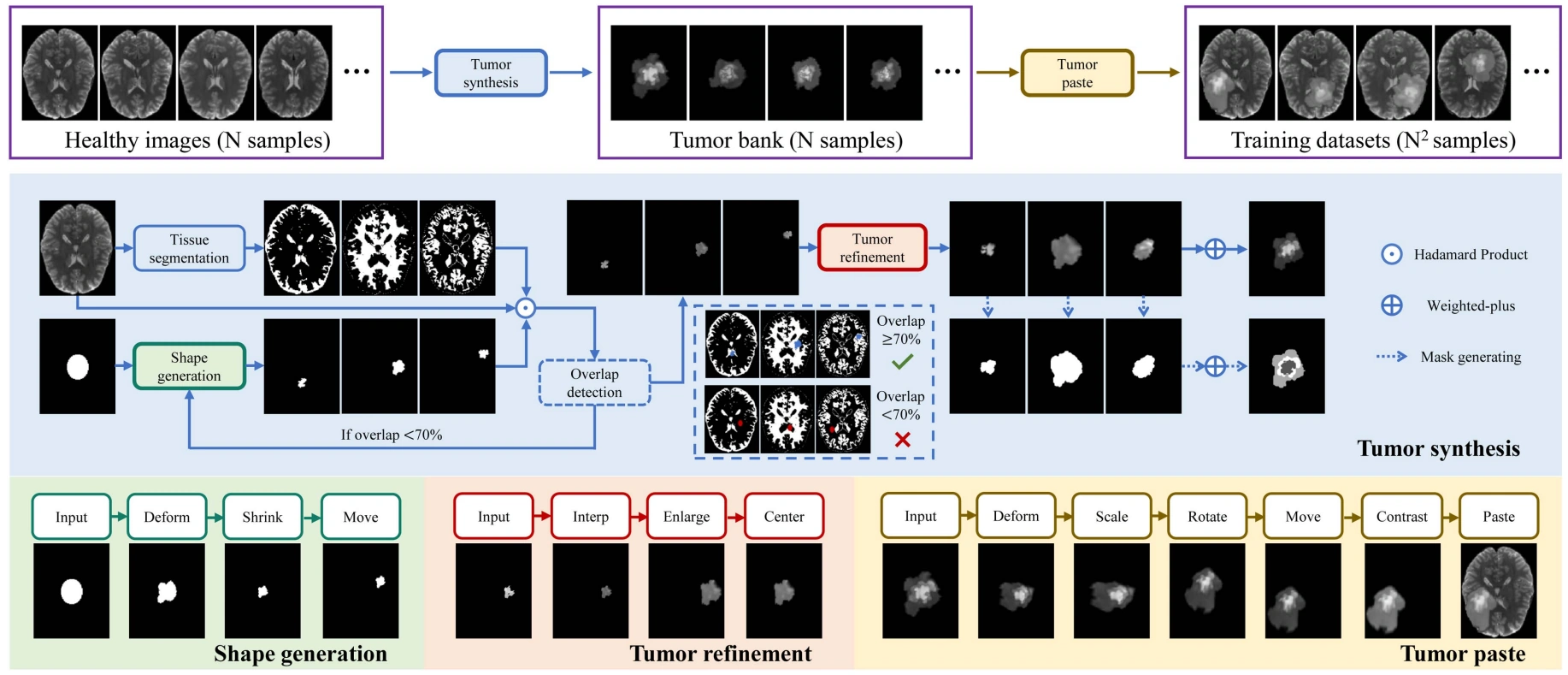
Annotation-Free Learning · Anatomy-Guided Tumor Synthesis · Joint Segmentation

LF-SynthSeg: label-free brain tissue-assisted tumor synthesis and segmentation

Pengxiao Xu, Junyan Lyu, Li Lin, Pujin Cheng, Xiaoying Tang

LF-SynthSeg uses healthy tissue intensity and anatomy to synthesize tumors in T2-weighted MRI, with joint tumor and tissue segmentation carrying the anatomical prior into training. Across five public datasets, it learns to delineate brain tumors without manually annotated tumor masks.

IEEE Journal of Biomedical and Health Informatics 2025 (JIF 7.7)PaperCode

2024

Fig. 1 · Source · IEEE copyright

Parameter-Efficient Fine-Tuning · Feature Fusion · High-Resolution Classification

Fusion side tuning: a parameter and memory efficient fine-tuning method for high-resolution medical image classification

Zhangchi Wang, Yijin Huang, Yidu Wu, Pujin Cheng, Li Lin, Qinghai Guo, Xiaoying Tang

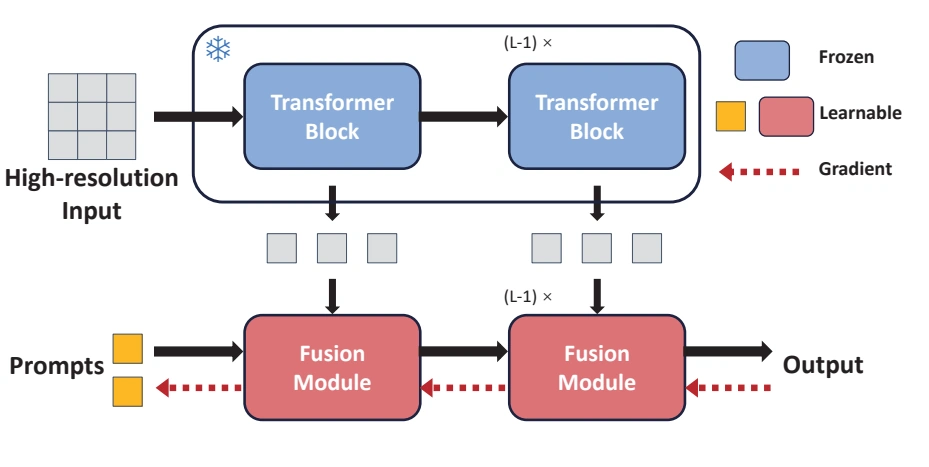
Fusion Side Tuning adapts high-resolution image classifiers through a lightweight network that fuses intermediate features from a frozen backbone. Informative-token selection further reduces training memory. At 512 × 512 resolution with ViT-B, the method uses 2% of the trainable parameters and 20% of the GPU memory required for full fine-tuning.

IEEE BIBM 2024 (CCF B)Paper
Fig. 2 · Source · IEEE copyright

Arbitrary-Scale Super-Resolution · Cross-Contrast Translation · Isotropic MRI Reconstruction

Joint super-resolution and modality translation network for multi-contrast arbitrary-scale isotropic MRI reconstruction

Kai Pan, Li Lin, Pujin Cheng, Junyan Lyu, Xiaoying Tang

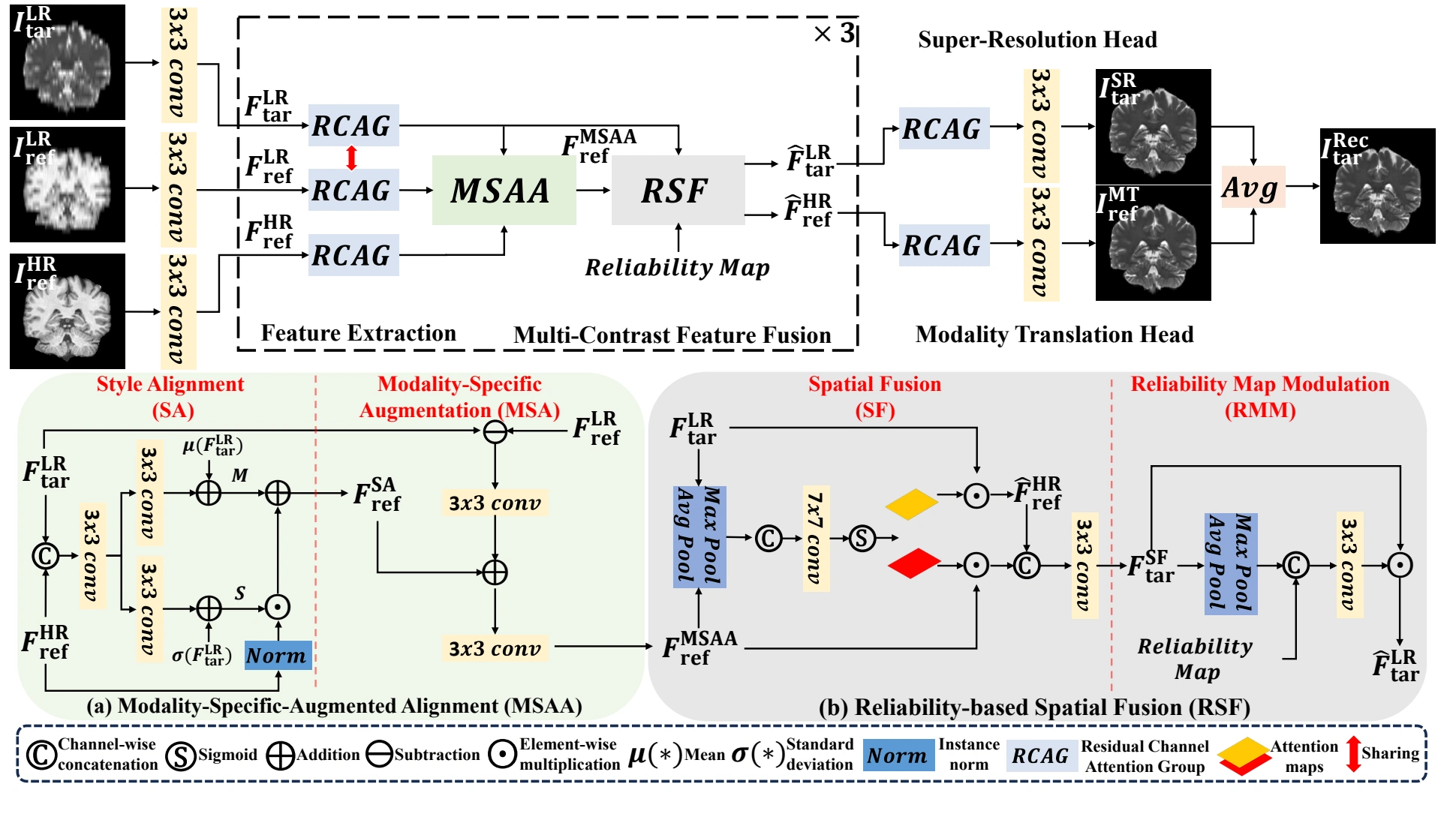
SMNet reconstructs isotropic MRI at variable upsampling scales from anisotropic scans and a high-resolution reference contrast. Separate branches handle cross-contrast alignment and spatial restoration, with reliability-weighted fusion controlling how reference features contribute to the reconstruction.

IEEE BIBM 2024 (CCF B)Paper
Fig. 2 · Source · IEEE copyright

Masked Modeling · Self-Supervised Pretraining · Multimodal MRI Segmentation

Masked Modality Complementary Modeling for Brain Tumor Segmentation

Jianwen Liang*, Li Lin*, Junyan Lyu*, Xiaoying Tang† Co-first author

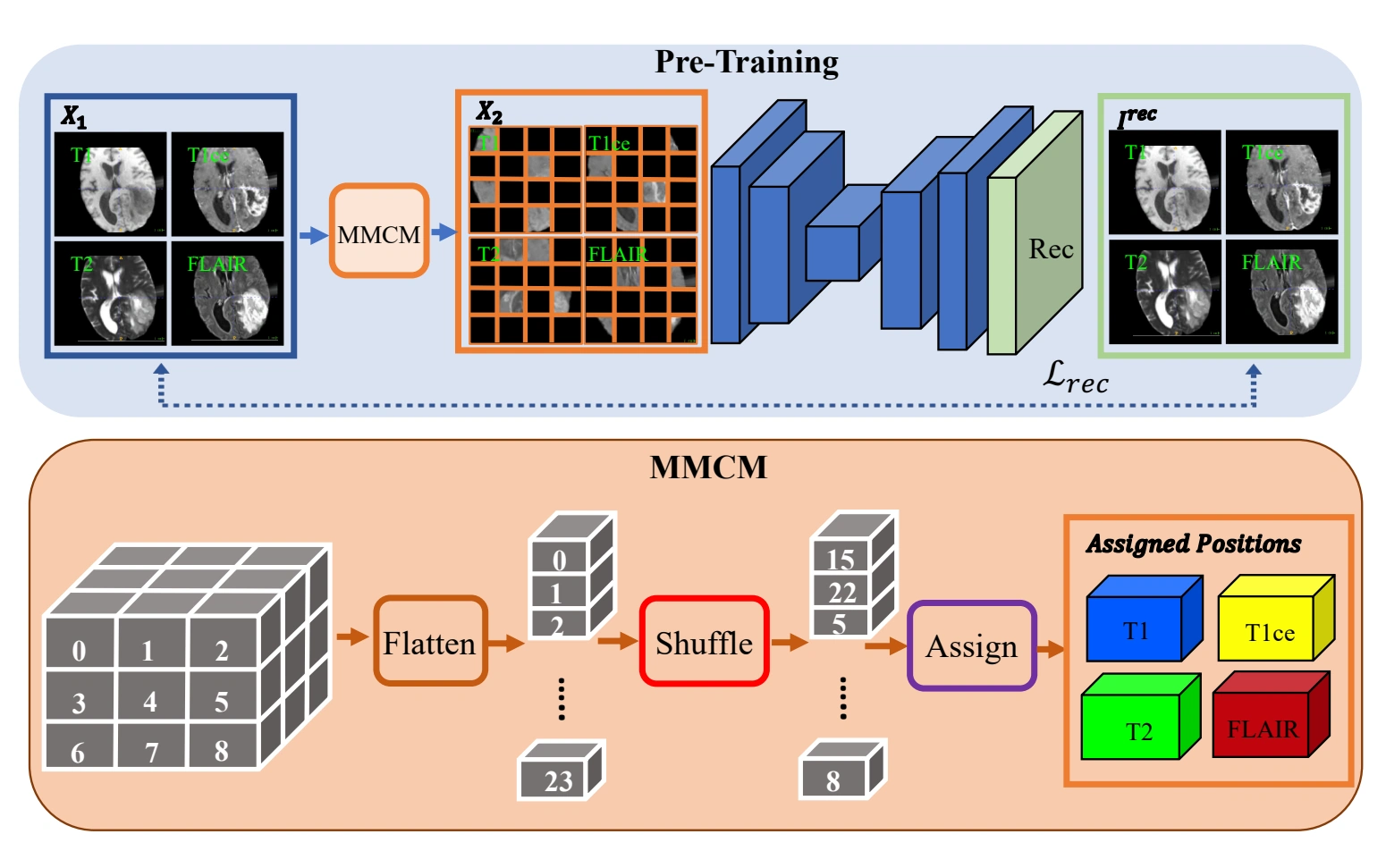
MMCM gives different MRI sequences complementary masks, so recovering a missing region requires features from other sequences. The resulting self-supervised encoder was tested on BraTS 2021, including limited training data and single-sequence inputs.

IEEE BIBM 2024 (CCF B)Paper
Fig. 2 · Source

Hybrid Supervision · Cross-Supervision · Label Denoising

CSSD: Cross-Supervision and Self-denoising for Hybrid-Supervised Hepatic Vessel Segmentation

Qiuting Hu, Li Lin, Pujin Cheng, Xiaoying Tang

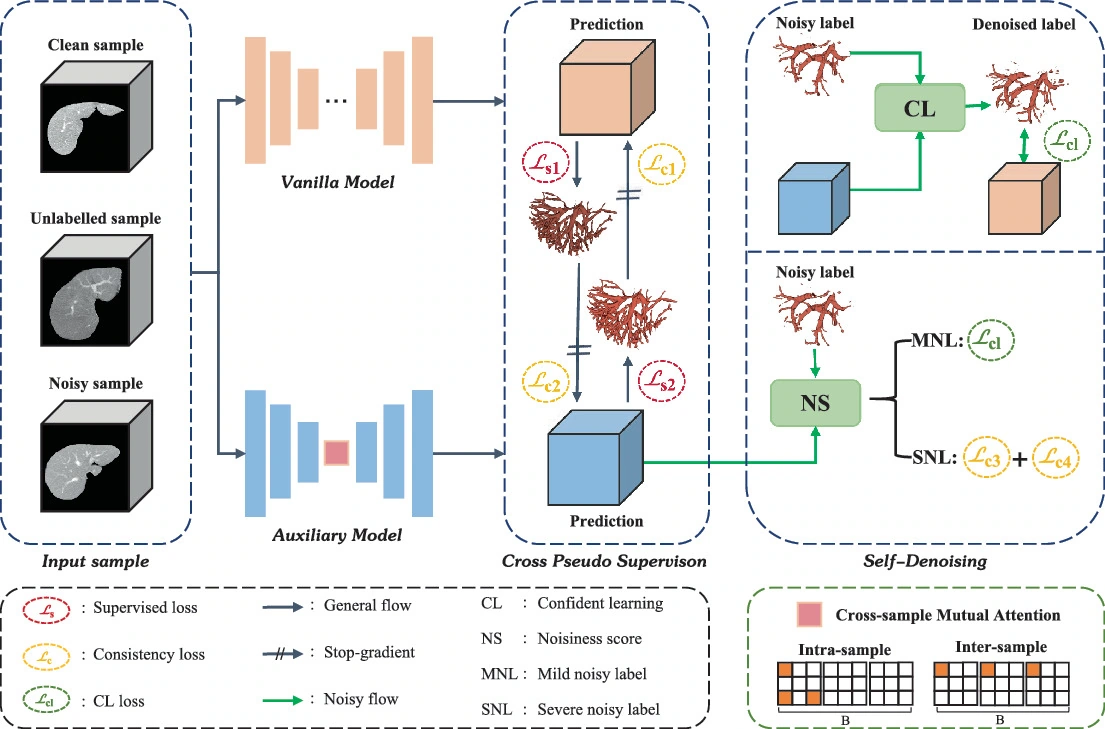
CSSD learns hepatic vessel segmentation jointly from a small set of high-quality CT annotations, a larger set of noisy labels, and unlabeled scans. Cross-sample attention transfers cues from cleaner labels, while dual-network consistency and self-denoising exploit the other two sources.

MLMI at MICCAI 2024Paper
Fig. 2 · Source

Long-Tailed Recognition · Balanced Parametric Contrastive Learning · Logit Compensation

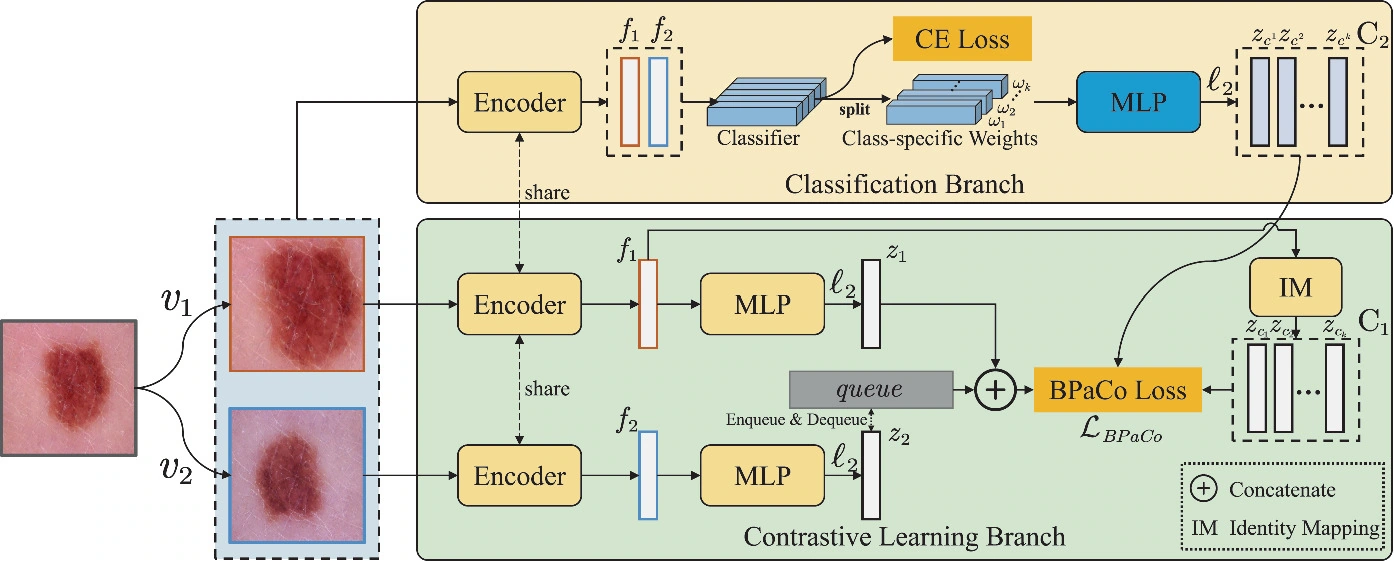
Bpaco: Balanced parametric contrastive learning for long-tailed medical image classification

Zhiyuan Cai, Tianyunxi Wei, Li Lin, Hao Chen, Xiaoying Tang

BPaCo tackles class imbalance in the representation space by balancing negative-class gradients across batches and using class complements to keep rare classes represented in each batch. Logit compensation addresses class skew at the classifier, complementing the balanced contrastive objective.

MICCAI 2024 (CCF B)Paper
Fig. 1 · Source · IEEE copyright

Unsupervised Diffeomorphic Registration · Patch-Based Learning · Topology Preservation

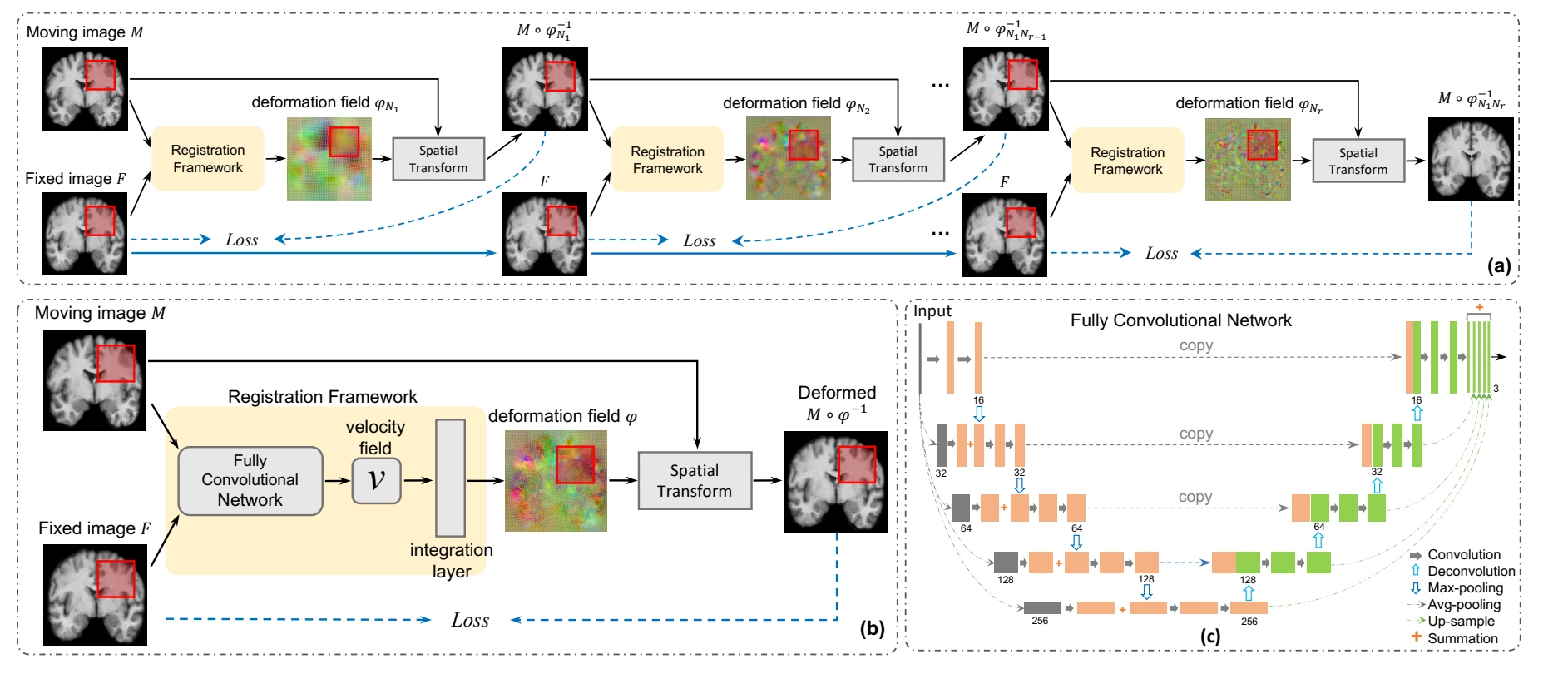
Fast diffeomorphic image registration using patch based fully convolutional networks

Jiong Wu, Shuang Zhou, Li Lin, Xin Wang, Wenxue Tan

This unsupervised registration method estimates local deformations from MRI patches with a fully convolutional network. A differential operator regularizes the velocity fields in a coarse-to-fine registration scheme. Experiments on three T1-weighted MRI datasets assess alignment accuracy and topology preservation.

IEEE EMBC 2024 (CAAI B)Paper
Fig. 1 · Source · IEEE copyright

Semi-Supervised Segmentation · Foundation Model Adaptation · Dual-Teacher Learning

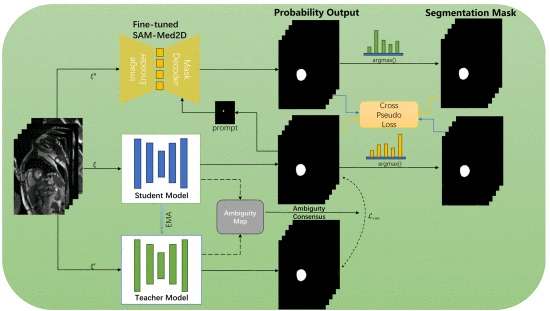
S-ACMT: Enhancing semi-supervised medical image segmentation with SAM as a cross-supervised secondary teacher

Can Lin, Yuanzhe Liu, Dahao Wang, Li Lin† Corresponding author

S-ACMT uses a fine-tuned SAM-Med2D as a second teacher in semi-supervised medical segmentation. Its pseudo-labels complement those from a task-specific teacher, giving the student distinct sources of supervision for unlabeled scans.

IEEE ICSIP 2024Paper
Fig. 1 · Source · IEEE copyright

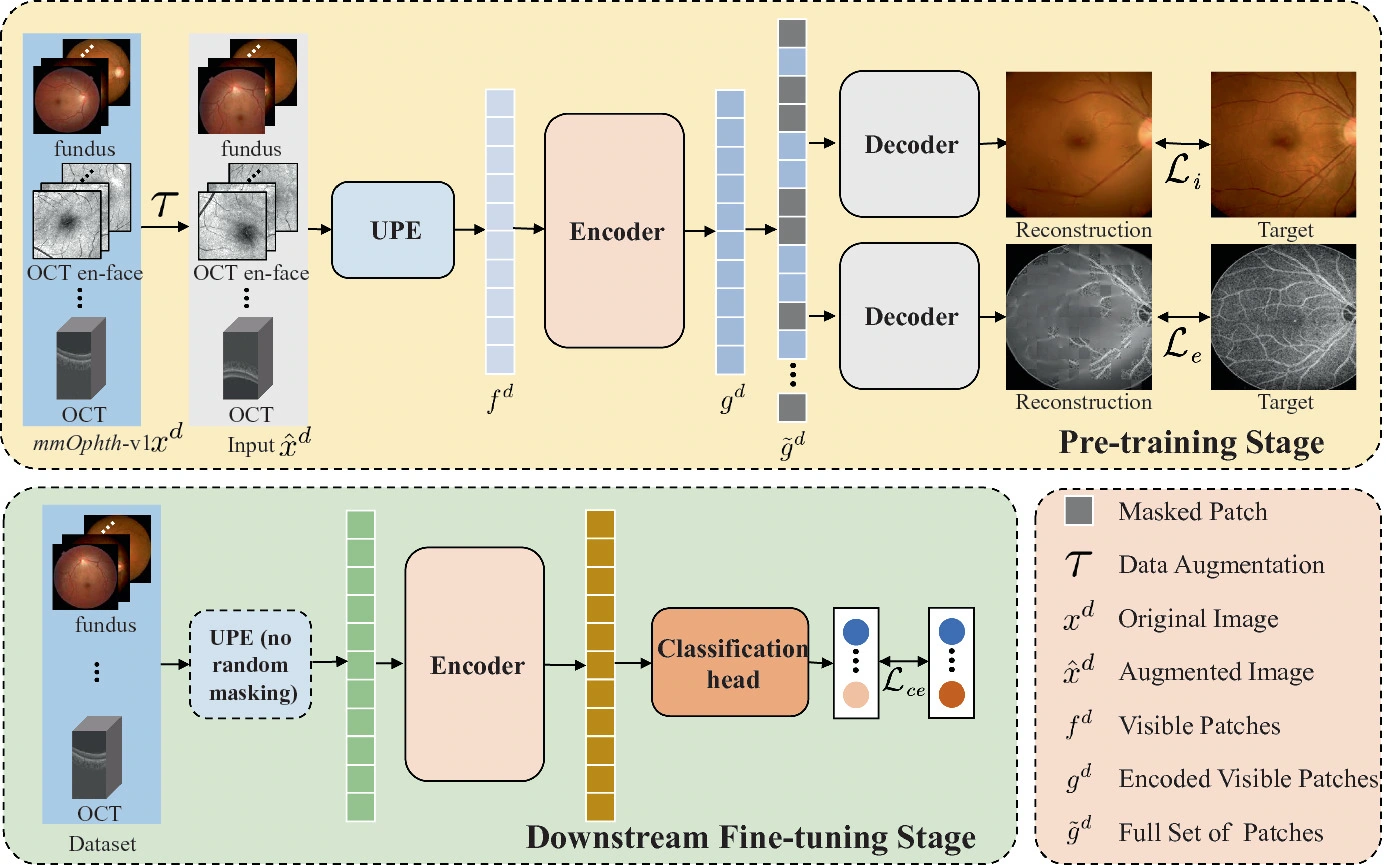
Multimodal Self-Supervised Pretraining · Entropy-Guided Masking · 2D and 3D Ophthalmic Imaging

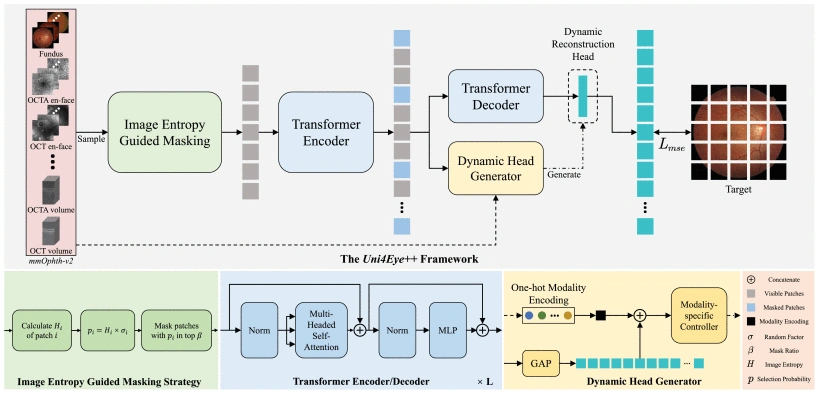
Uni4Eye++: A General Masked Image Modeling Multi-Modal Pre-Training Framework for Ophthalmic Image Classification and Segmentation

Zhiyuan Cai, Li Lin, Huaqing He, Pujin Cheng, Xiaoying Tang†

Uni4Eye++ pools unlabeled 2D ophthalmic images and 3D volumes for masked pretraining. Entropy-guided masking targets informative regions, and dynamic reconstruction heads account for modality-specific image characteristics. The shared encoder is then transferred to classification and segmentation.

IEEE Transactions on Medical Imaging 2024 (JIF 12.4)PaperCode
Fig. 2 · Source

Anatomical Priors · Coarse-to-Fine Refinement · Multi-Task Learning

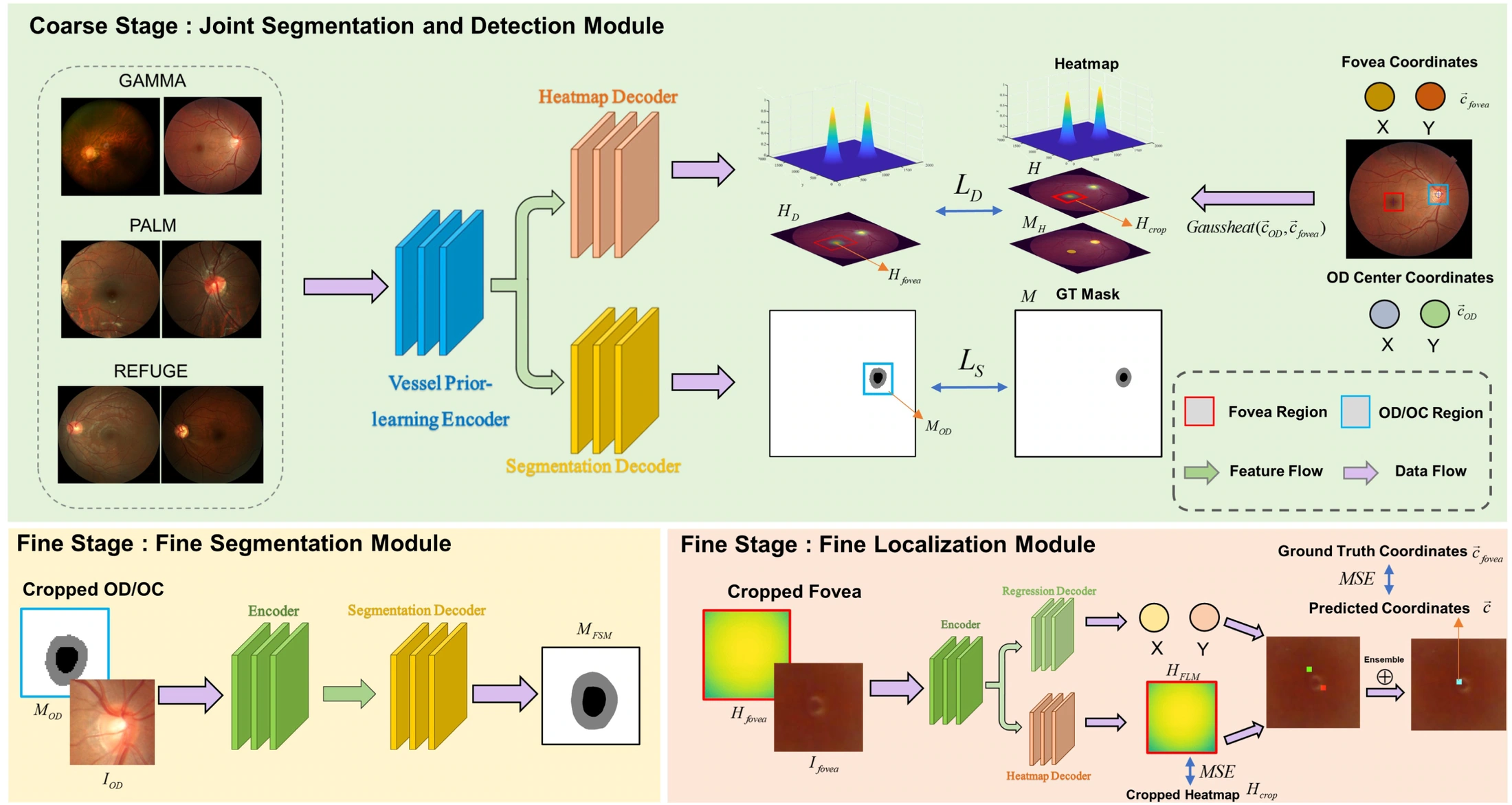
JOINEDTrans: Prior guided multi-task transformer for joint optic disc/cup segmentation and fovea detection

Huaqing He*, Jiaming Qiu*, Li Lin*, Zhiyuan Cai, Pujin Cheng, Xiaoying Tang† Co-first author

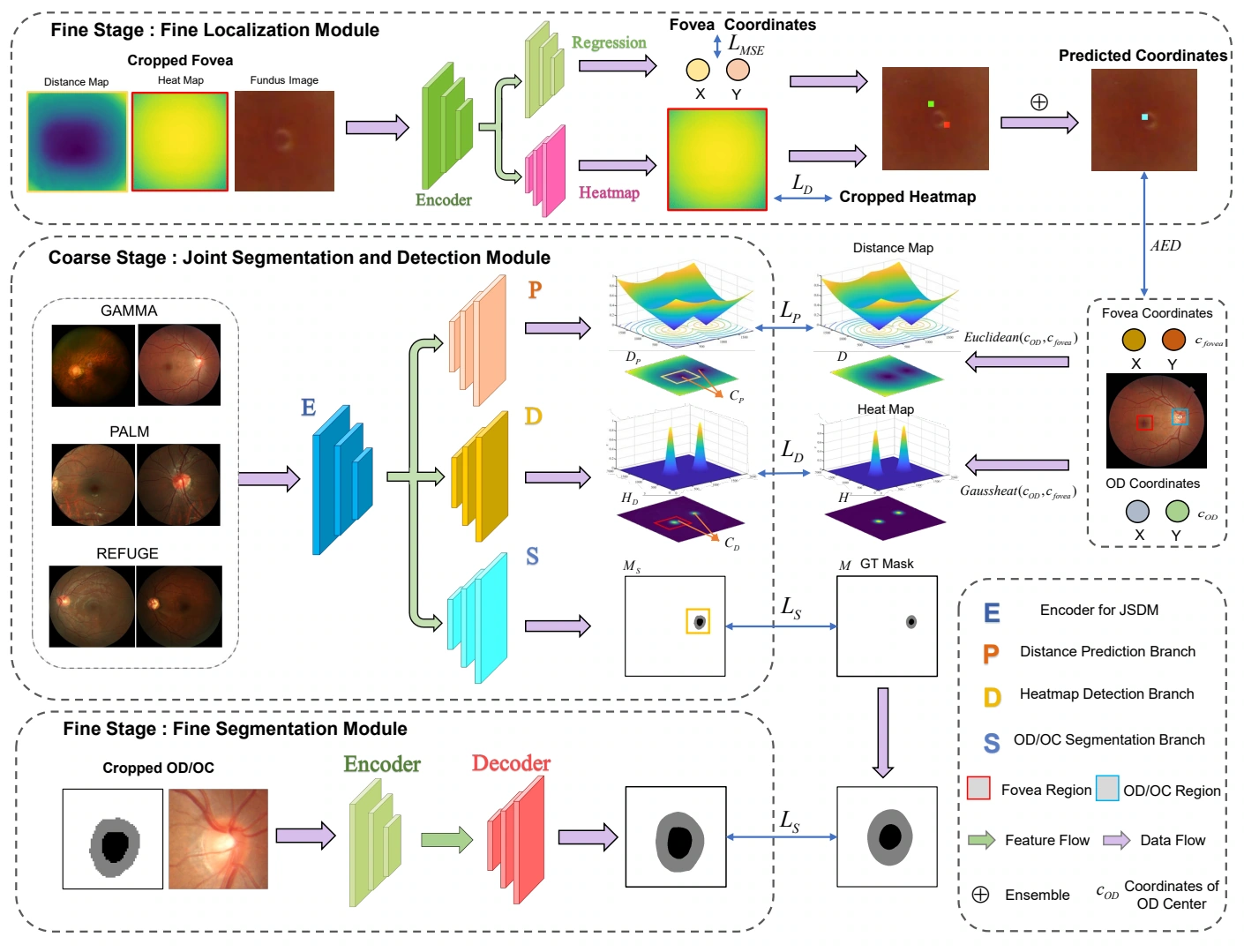
JOINEDTrans learns a spatial prior from retinal vessel segmentation and transfers it to optic disc and cup delineation and fovea localization. Its coarse-to-fine Transformer uses initial predictions to guide localized refinement, with evaluation on GAMMA, REFUGE, and PALM.

Computers in Biology and Medicine 2024 (JIF 6.3)Paper
Fig. 1 · Fig. 3 · IEEE copyright

Semi-Supervised Learning · Foundation Model Adaptation · Iterative Pseudo-Labeling

Aslseg: Adapting sam in the loop for semi-supervised liver tumor segmentation

Shiyun Chen*, Li Lin*, Pujin Cheng, Xiaoying Tang† Co-first author

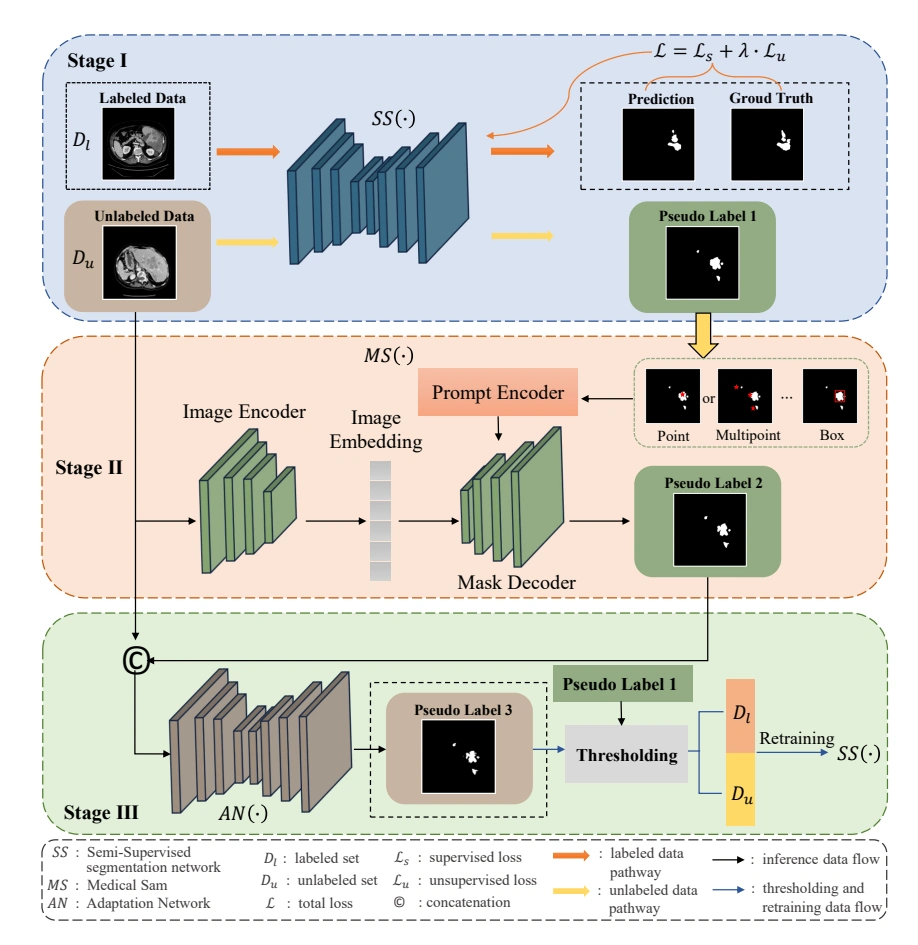
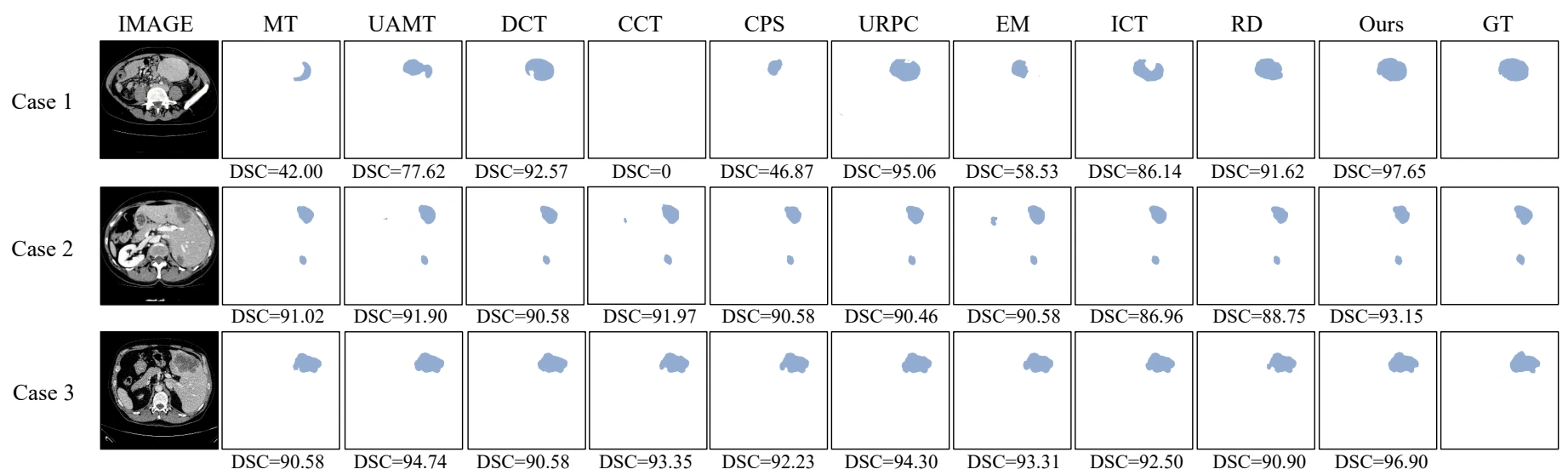
ASLSeg puts the Segment Anything Model (SAM) in an iterative training loop for semi-supervised liver tumor segmentation. A task-specific segmenter supplies prompts, an adaptation network refines SAM masks, and high-confidence refinements expand the labeled training set.

IEEE ISBI 2024Paper
Fig. 2 · Source · IEEE copyright

Long-Tailed Recognition · Saliency-Guided Mixup · Dermoscopy Classification

Saliency-guided and patch-based mixup for long-tailed skin cancer image classification

Tianyunxi Wei, Yijin Huang, Li Lin, Pujin Cheng, Sirui Li, Xiaoying Tang

SPMix addresses class imbalance in dermoscopy by using lesion saliency to select which patches to mix. The resulting tail-class examples retain discriminative lesion regions while gaining additional variation from head-class images.

IEEE ISBI 2024PaperarXiv Code
Fig. 2 · Source · IEEE copyright

Vision–Language Models · Parameter-Efficient Adaptation · Long-Tailed Recognition

Text-guided foundation model adaptation for long-tailed medical image classification

Sirui Li*, Li Lin*, Yijin Huang, Pujin Cheng, Xiaoying Tang† Co-first author

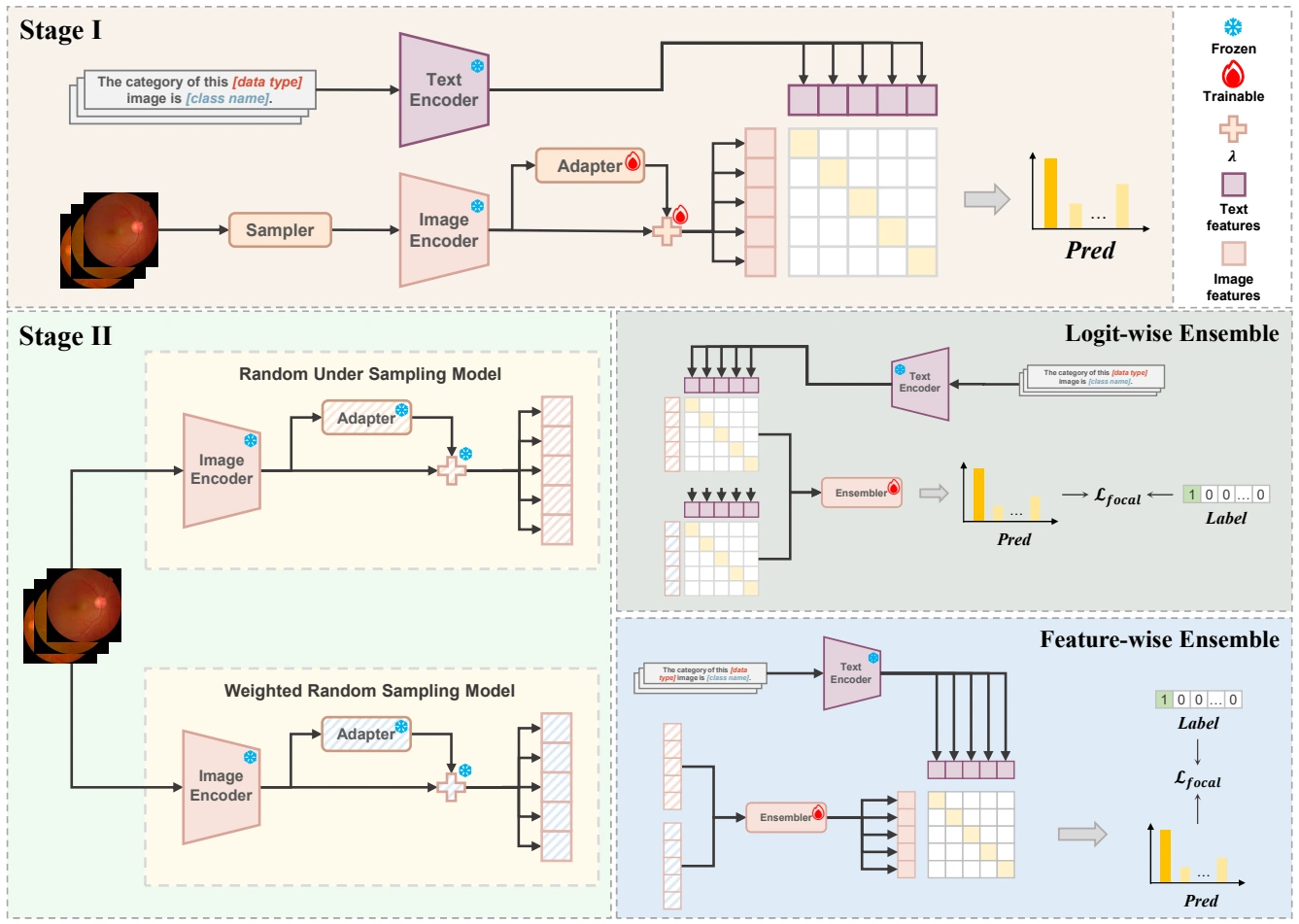
TFA-LT tests how much of a vision–language foundation model needs to be adapted for long-tailed medical classification. A two-stage procedure trains two linear adapters and an ensemble head, and experiments on two imbalanced datasets examine classification performance and memory cost.

IEEE ISBI 2024PaperarXiv
Fig. 2 · Source · IEEE copyright

Multimodal Feature Fusion · Imaging Quality · Fovea Localization

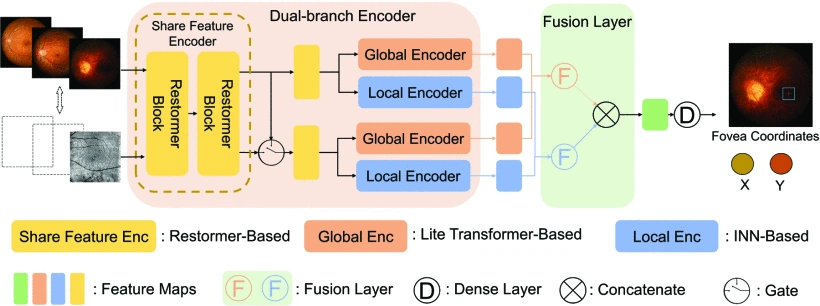
Unveiling the Power of High-Quality OCT: An Effective Fundus-based Modality Fusion Network for Fovea Localization

Huaqing He, Li Lin, Zhiyuan Cai, Pujin Cheng, Xiaoying Tang

This study asks whether OCT quality or sample quantity matters more when OCT is used to help localize the fovea in fundus images. The model combines global fundus context with local macular features. Experiments on GAMMA also test robustness to missing OCT during training.

IEEE ISBI 2024Paper
Fig. 2 · Source

Personalized Federated Learning · Similarity-Aware Distillation · Heterogeneous Weak Annotations

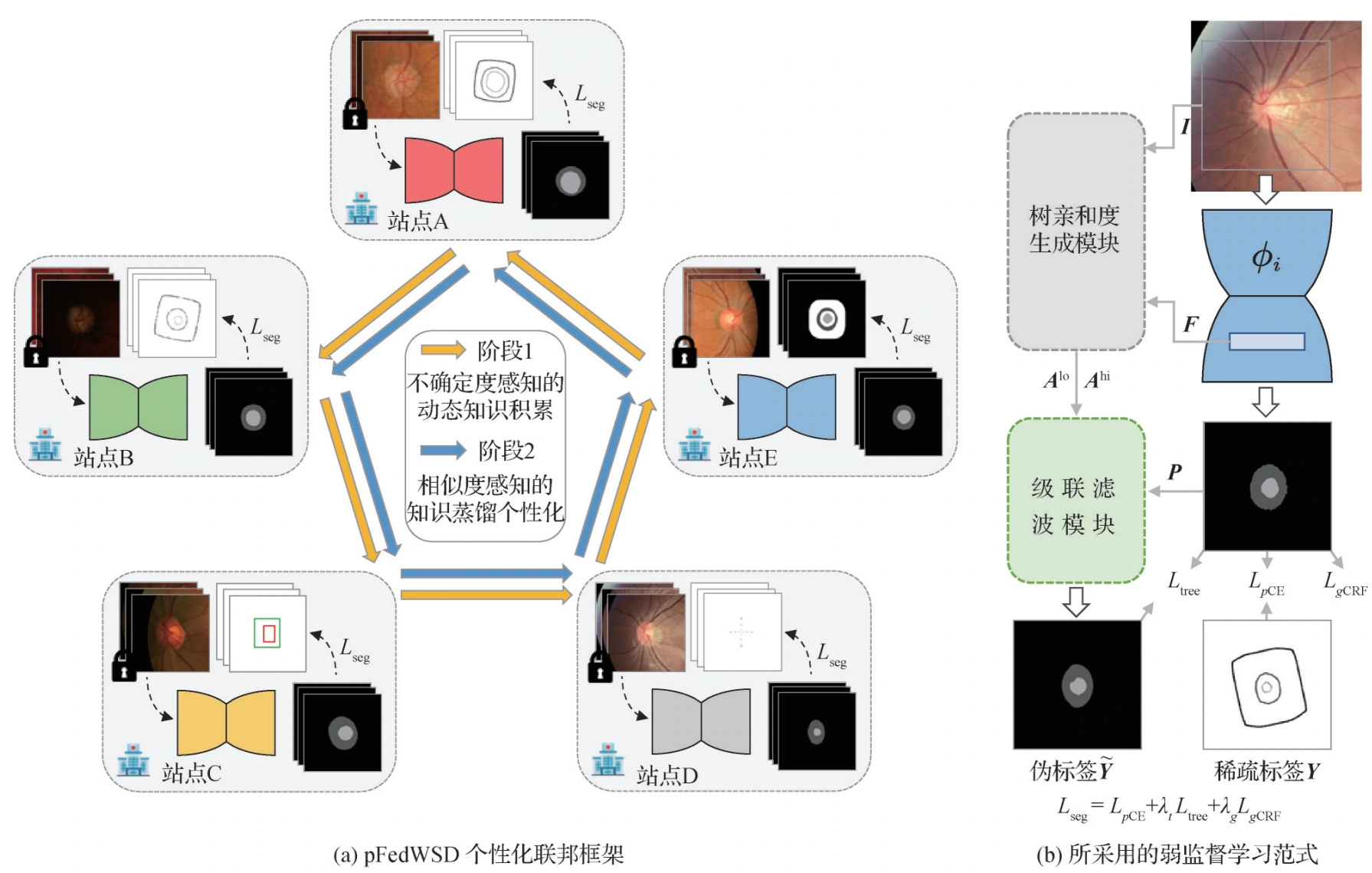
pFedWSD: unified weakly supervised personalized federated image segmentation via similarity-aware distillation

Jianshan Pan, Li Lin, Jiewei Wu, Yixiang Liu, Xiaohua Chen, Qiyou Lin, Jianye Huang, Xiaoying Tang† First student author

pFedWSD uses cyclic distillation to consolidate knowledge across sites, then estimates site similarity from batch-normalization statistics to construct personalized teachers. The framework supports federated segmentation across institutions with both different data distributions and different forms of sparse annotation.

Journal of Image and Graphics 2024 (CCF B / T2)Paper

2023

Fig. 2 · Source

Acquisition Priors · Photoacoustic Microscopy · Transformer Super-Resolution

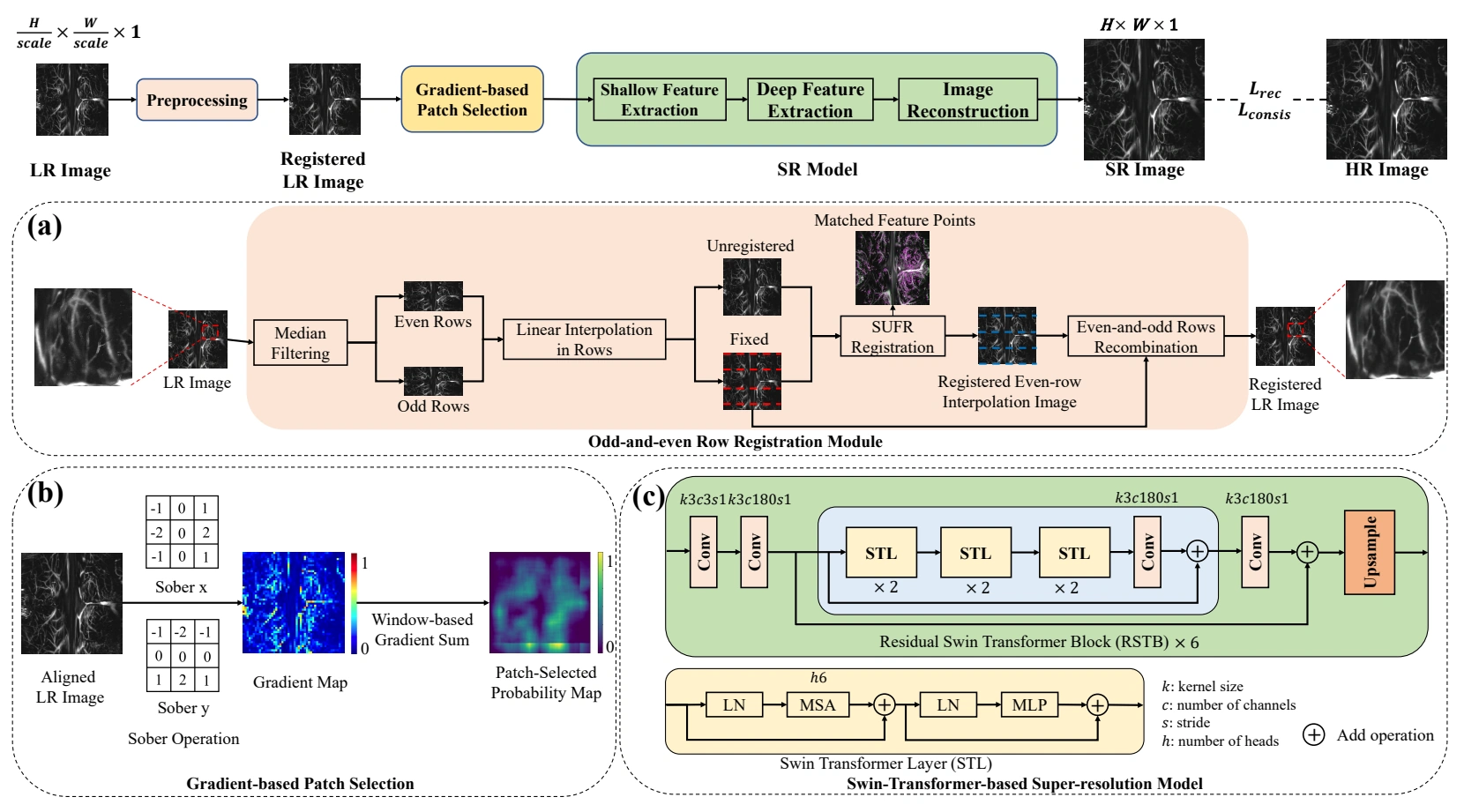
Super-resolution on rotationally scanned photoacoustic microscopy images incorporating scanning prior

K Pan, L Li, L Lin, P Cheng, J Lyu, L Xi, X Tang

This photoacoustic microscopy study incorporates rotational acquisition geometry into super-resolution. Odd–even scanline registration corrects inter-row displacement before reconstruction, while motion-aware degradations and gradient-guided patch selection train a Transformer to recover fine vascular detail.

arXiv preprint arXiv:2312.07226, 2023PreprintarXiv
Fig. 4 · Source

Multimodal Ophthalmic Imaging · Benchmark Dataset · Glaucoma Grading

GAMMA challenge: Glaucoma grAding from Multi-Modality imAges

Junde Wu, Huihui Fang, Fei Li, Huazhu Fu, et al. (including Li Lin)

The GAMMA challenge releases 300 paired fundus photographs and OCT volumes alongside a common protocol for evaluating multimodal glaucoma grading. Its analysis compares how submitted systems combine information from 2D photography and 3D scans.

Medical Image Analysis 2023 (JIF 14.0)PaperarXiv
Fig. 2 · Source

Single-Skeleton Supervision · Contrastive Image Synthesis · Curvilinear Structure Segmentation

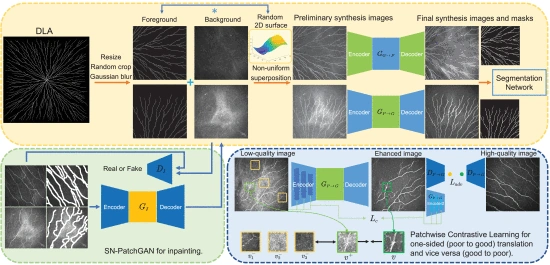
YoloCurvSeg: You only label one noisy skeleton for vessel-style curvilinear structure segmentation

Li Lin, Linkai Peng, Huaqing He, Pujin Cheng, Jiewei Wu, Kenneth K. Y. Wong, Xiaoying Tang First author

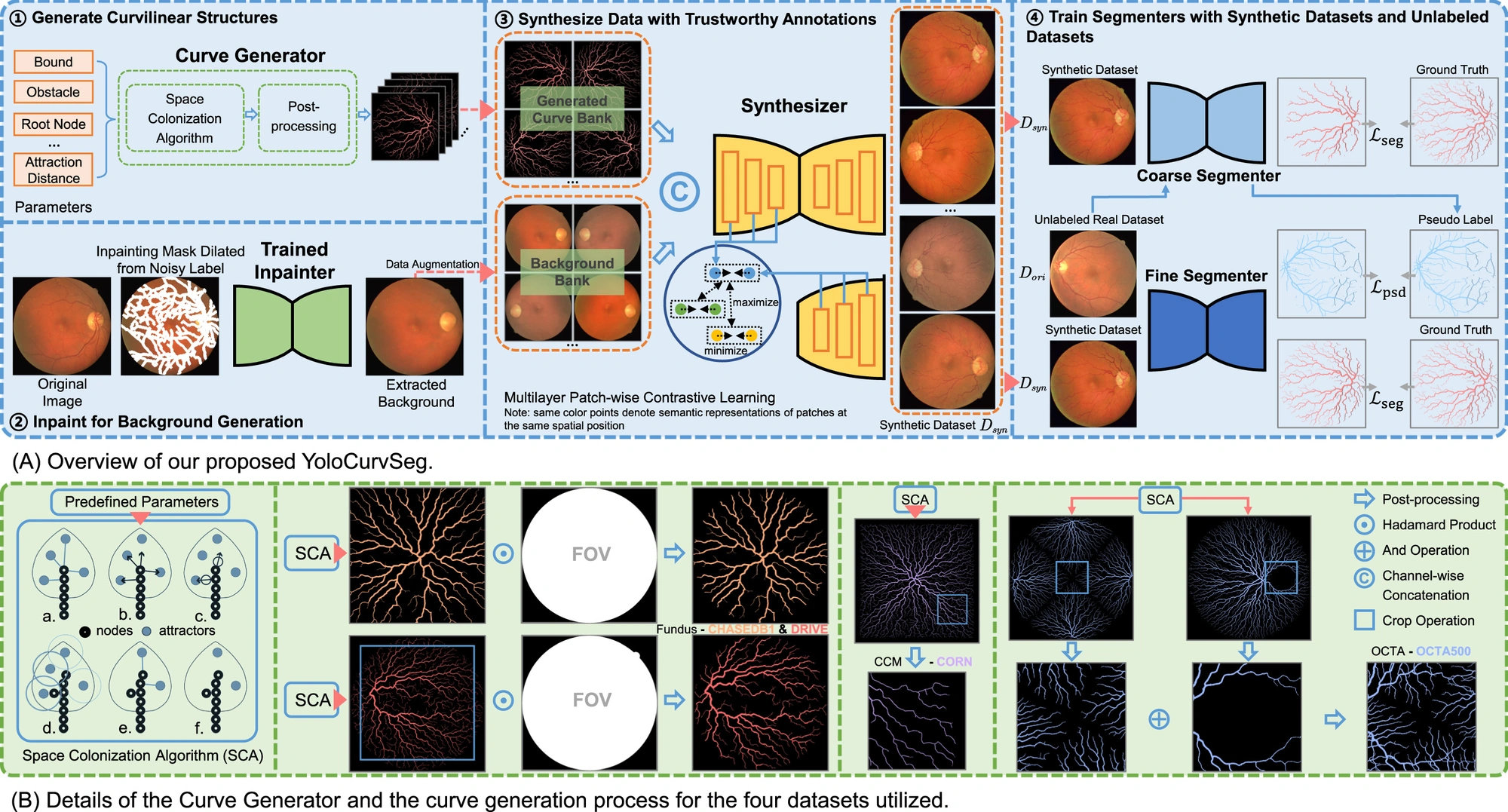
YoloCurvSeg uses one noisy skeleton annotation to build dense supervision for vessels and other curvilinear structures. A patchwise contrastive synthesizer combines simulated curves with inpainted image backgrounds. With this annotation budget, it retains over 97% of fully supervised performance on each of four public datasets.

Medical Image Analysis 2023 (JIF 14.0)PaperarXiv Code
Fig. 2 · Source

Long-Tailed Recognition · Curriculum Learning · Class-Wise Mixup

Ccmix: Curriculum of class-wise mixup for long-tailed medical image classification

Sirui Li, Fuheng Zhang, Tianyunxi Wei, Li Lin, Yijin Huang, Pujin Cheng, Xiaoying Tang

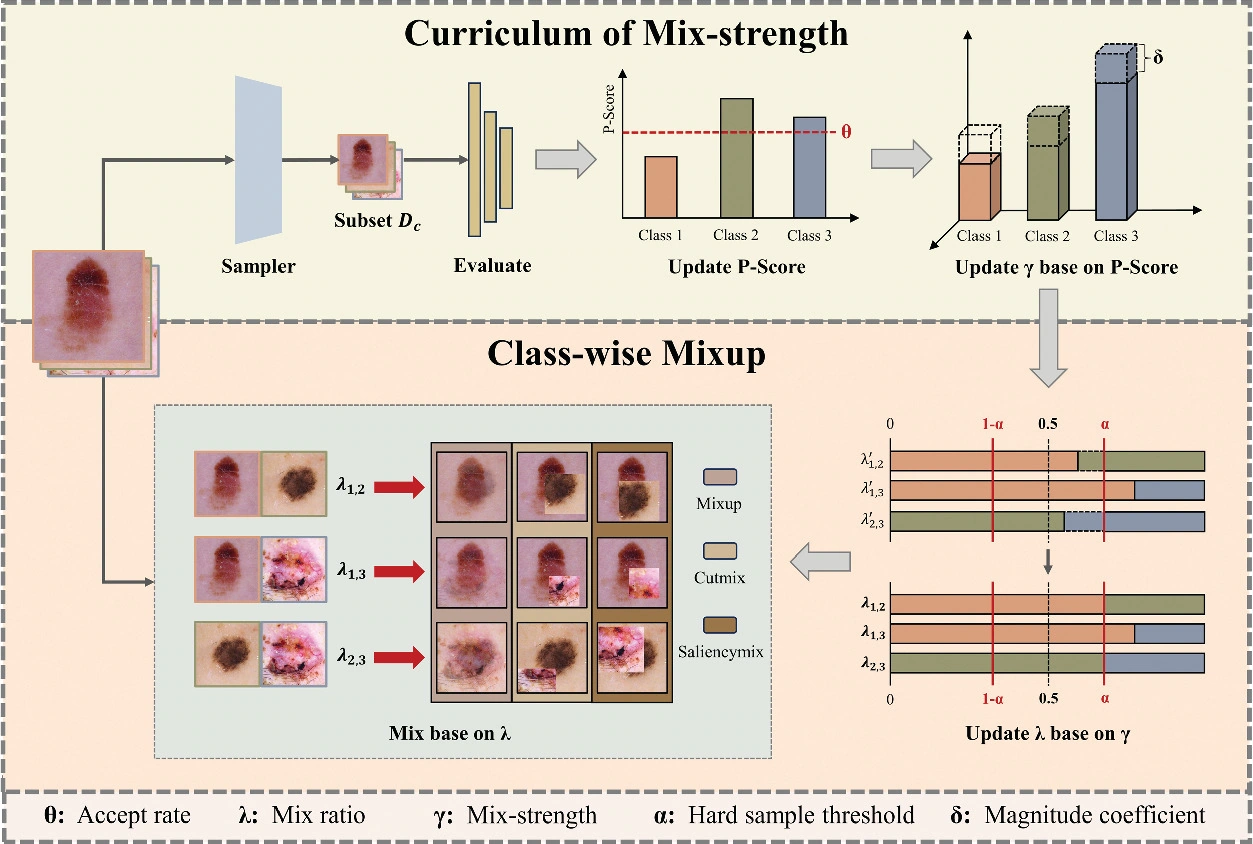
CCMix learns a class-wise augmentation curriculum that adjusts mixup strength according to classification performance for each class. This lets tail-class examples borrow information from other classes in amounts matched to the learning difficulty observed during training.

MLMI at MICCAI 2023Paper
Fig. 1 · Source

Multi-Expert Distillation · Decoupled Knowledge Transfer · Long-Tailed Recognition

Medkd: Enhancing medical image classification with multiple expert decoupled knowledge distillation for long-tail data

Fuheng Zhang, Sirui Li, Tianyunxi Wei, Li Lin, Yijin Huang, Pujin Cheng, Xiaoying Tang

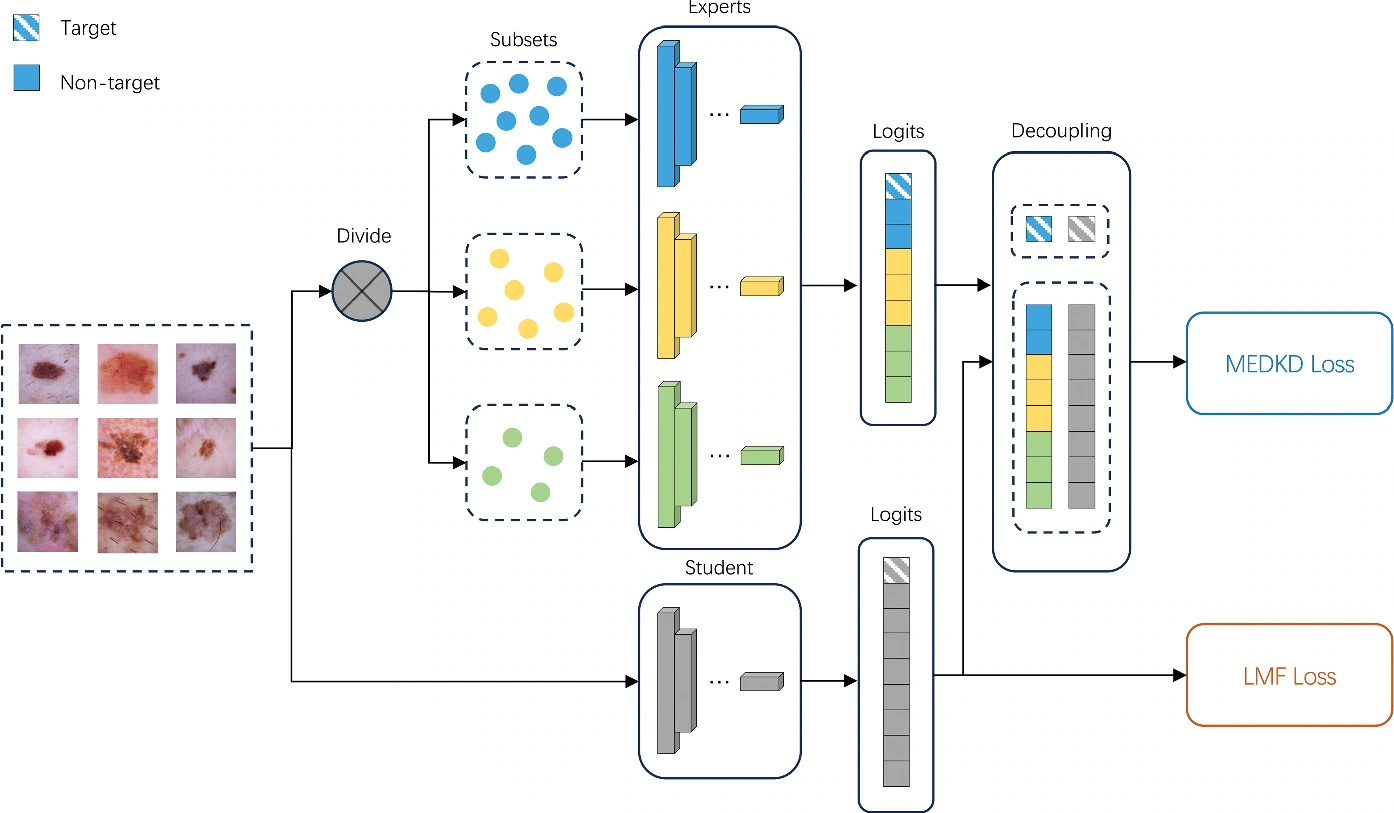
MEDKD addresses long-tailed medical classification by distilling several teachers, each trained on a different data subset, into a single classifier. The distillation objective handles target-class and non-target-class probabilities separately so different kinds of teacher information can be transferred.

MLMI at MICCAI 2023Paper
Fig. 2 · Source

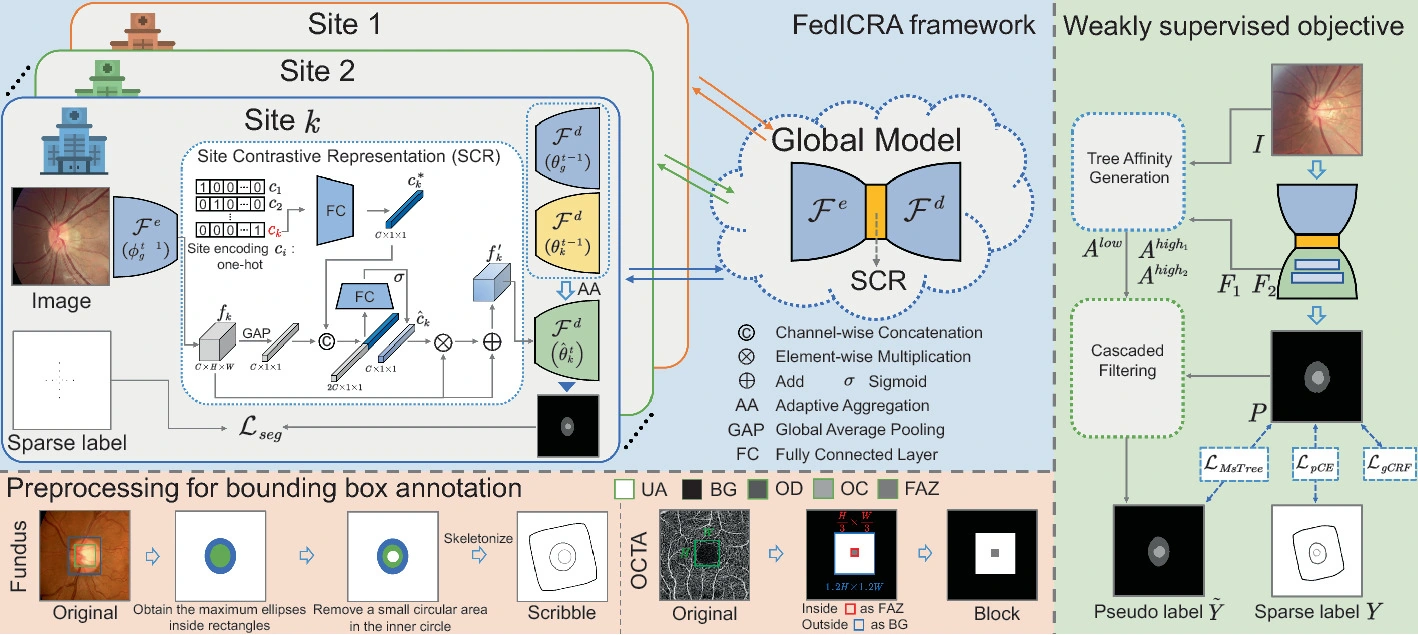
Personalized Federated Learning · Site-Contrastive Representation Learning · Adaptive Aggregation

Unifying and Personalizing Weakly-Supervised Federated Medical Image Segmentation via Adaptive Representation and Aggregation

Li Lin, Jiewei Wu, Yixiang Liu, Kenneth K. Y. Wong, Xiaoying Tang First author

FedICRA personalizes segmentation across institutions with different sparse labels and image distributions. Site-contrastive learning organizes selected feature channels around institution-specific structure, and element-wise aggregation blends local parameters with shared knowledge.

MLMI at MICCAI 2023PaperCode
Fig. 2 · Fig. 4

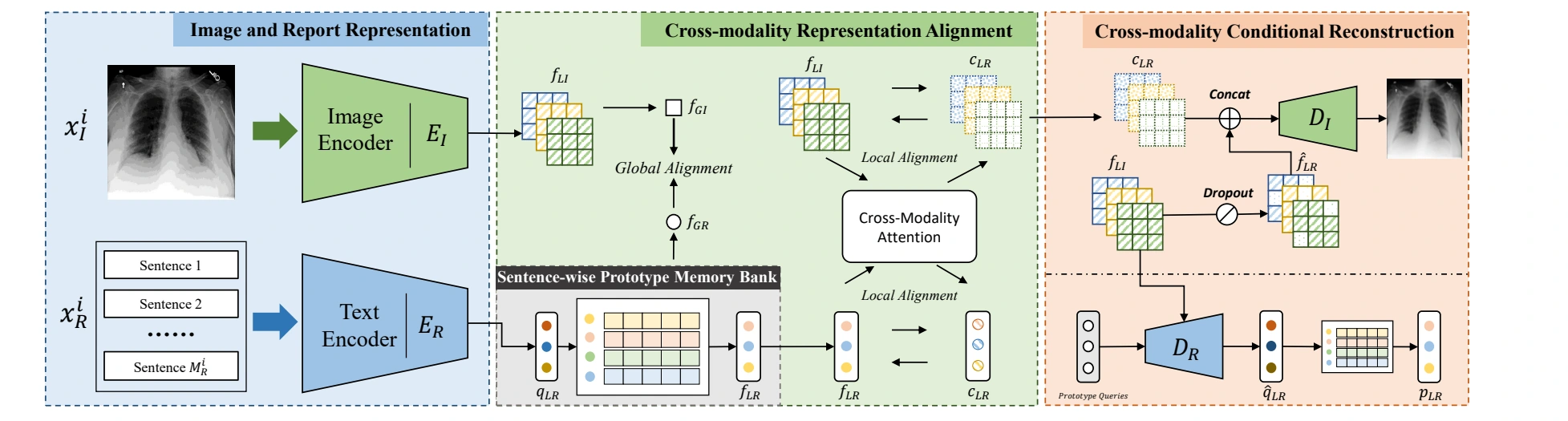
Medical Vision–Language Pretraining · Prototype Learning · Local and Global Alignment

PRIOR: Prototype Representation Joint Learning from Medical Images and Reports

Pujin Cheng, Li Lin, Junyan Lyu, Yijin Huang, Wenhan Luo, Xiaoying Tang

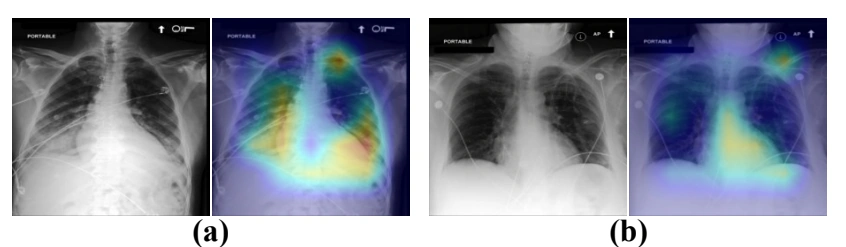
PRIOR aligns medical images and reports at image and region scales. Cross-modal reconstruction and a bank of sentence prototypes help the shared representation retain localized imaging cues and clinical language. Evaluation spans five transfer tasks, including zero-shot classification, image–text retrieval, and dense prediction.

Fig. 2 · Source · CC BY 4.0

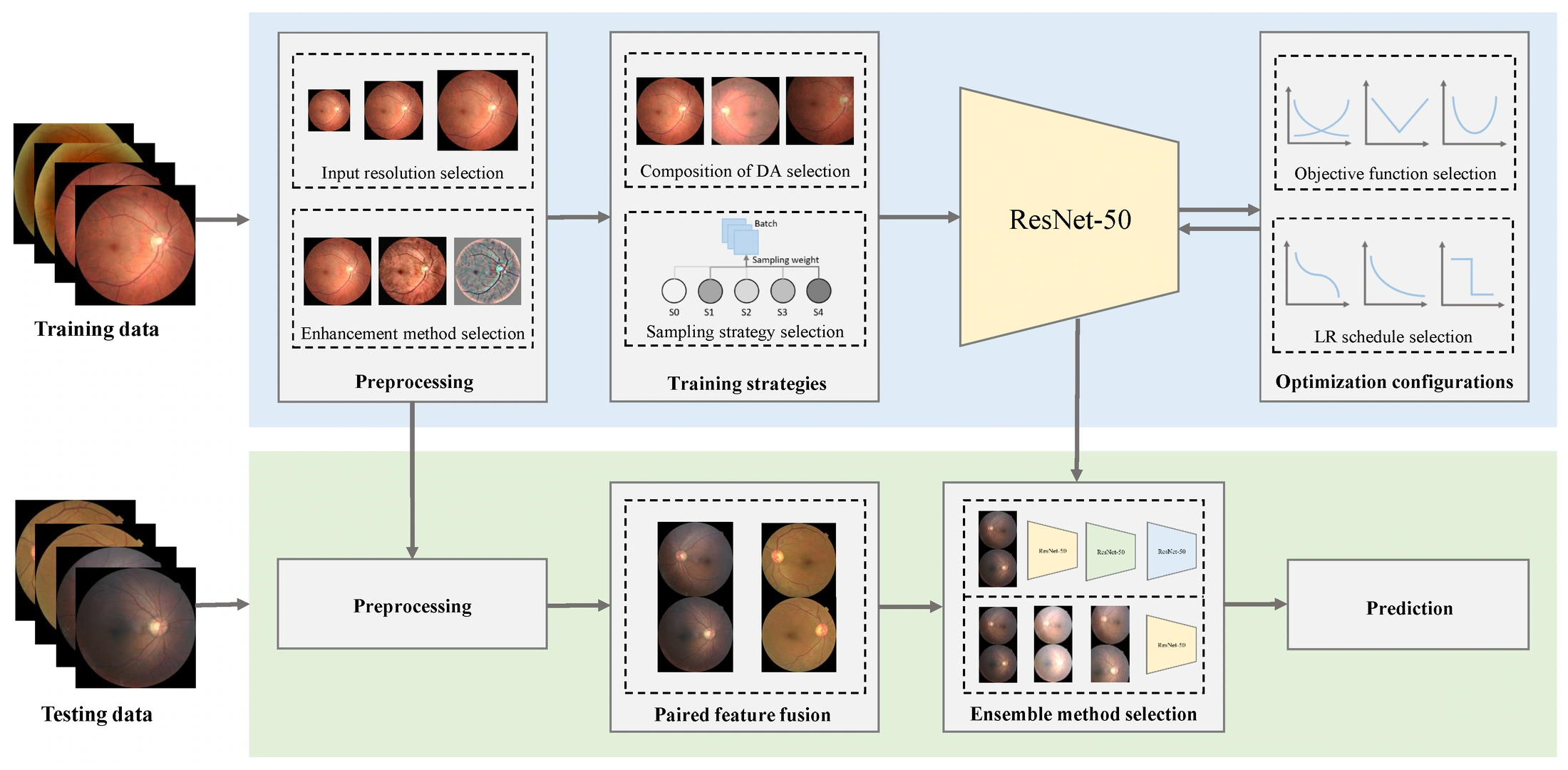
Controlled Ablation · Generalization Across Datasets · Diabetic Retinopathy Grading

Identifying the key components in resnet-50 for diabetic retinopathy grading from fundus images: a systematic investigation

Y Huang, L Lin, P Cheng, J Lyu, R Tam, X Tang

This controlled ResNet-50 study isolates training choices that affect diabetic retinopathy grading, including resolution, loss design, augmentation, and bilateral image pairing. The combined configuration reaches 0.8631 quadratic weighted kappa on EyePACS, with transfer assessed across datasets and architectures.

Diagnostics 2023 (JIF 3.8)Paper
Fig. 2 · Source · IEEE copyright

Unsupervised Anomaly Modeling · Test-Time Clustering · OCTA Quality Assessment

Uno-qa: an unsupervised anomaly-aware framework with test-time clustering for octa image quality assessment

Juntao Chen, Li Lin, Pujin Cheng, Yijin Huang, Xiaoying Tang†

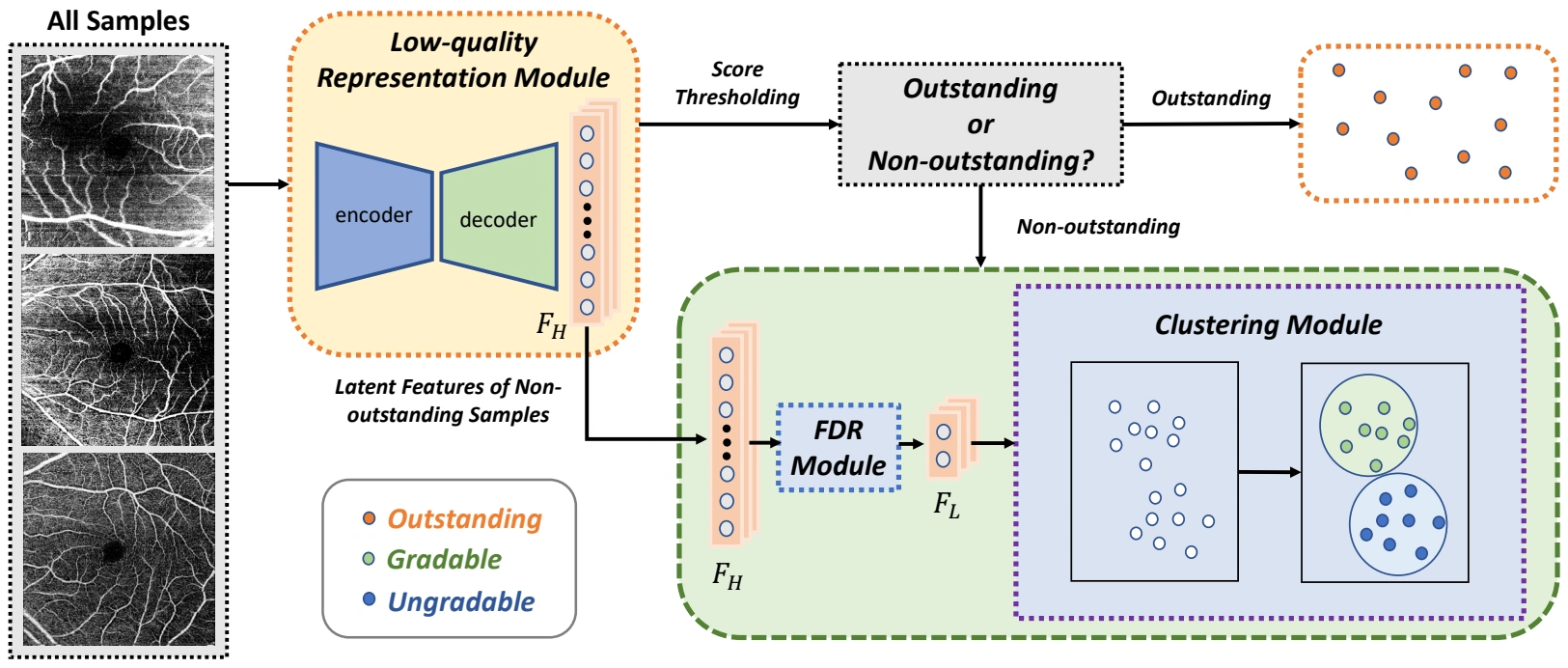
UNO-QA learns an anomaly representation using only high-quality OCT angiograms at training time. At inference, clustering multiscale features separates low-quality images that remain gradable from those that cannot support grading.

IEEE ISBI 2023PaperarXiv
Fig. 2 · Source

Degradation Learning · Conditional Diffusion · Fundus Image Enhancement

Learning enhancement from degradation: A diffusion model for fundus image enhancement

P Cheng, L Lin, Y Huang, H He, W Luo, X Tang

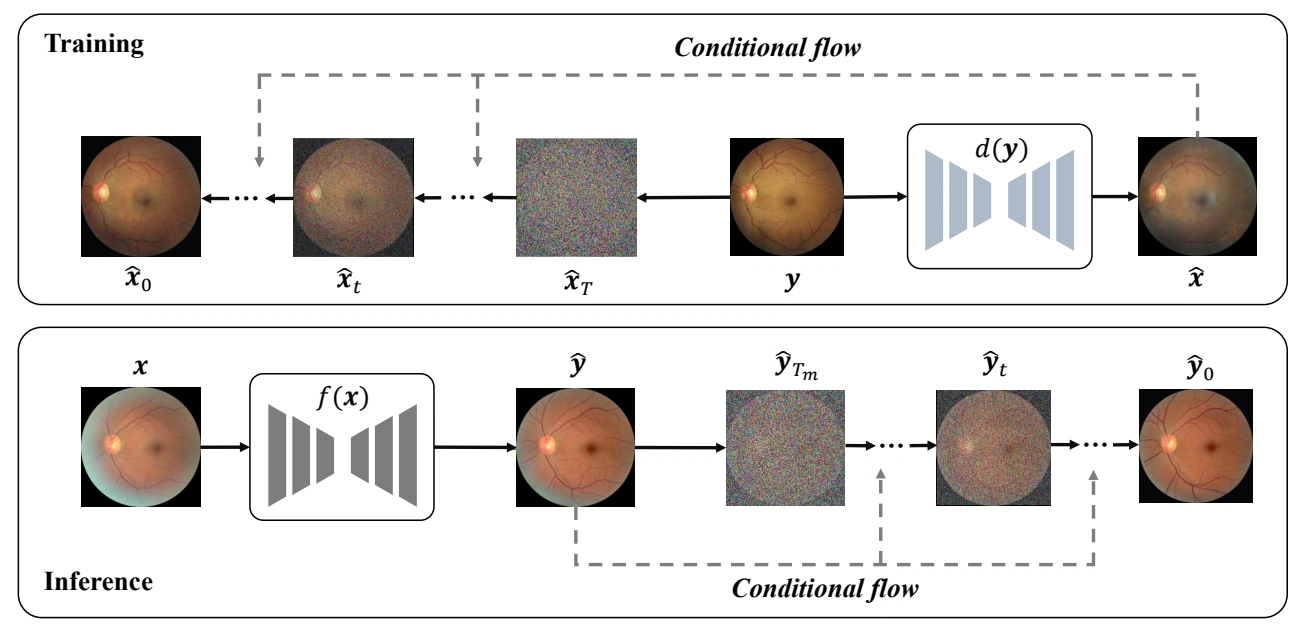
LED treats fundus enhancement as the inverse of a learned degradation process. It first estimates how image quality changes from unpaired scans, then uses the resulting synthetic training pairs to fit a conditional diffusion model. Downstream evaluations probe preservation of diagnostically relevant structures.

arXiv preprint arXiv:2303.04603, 2023PreprintarXiv

2022

Fig. 1 · Source

Multi-Target Domain Adaptation · Dual-Teacher Distillation · Retinal Vessel Segmentation

Student Becomes Decathlon Master in Retinal Vessel Segmentation via Dual-Teacher Multi-target Domain Adaptation

Linkai Peng*, Li Lin*, Pujin Cheng, Huaqing He, Xiaoying Tang Co-first author

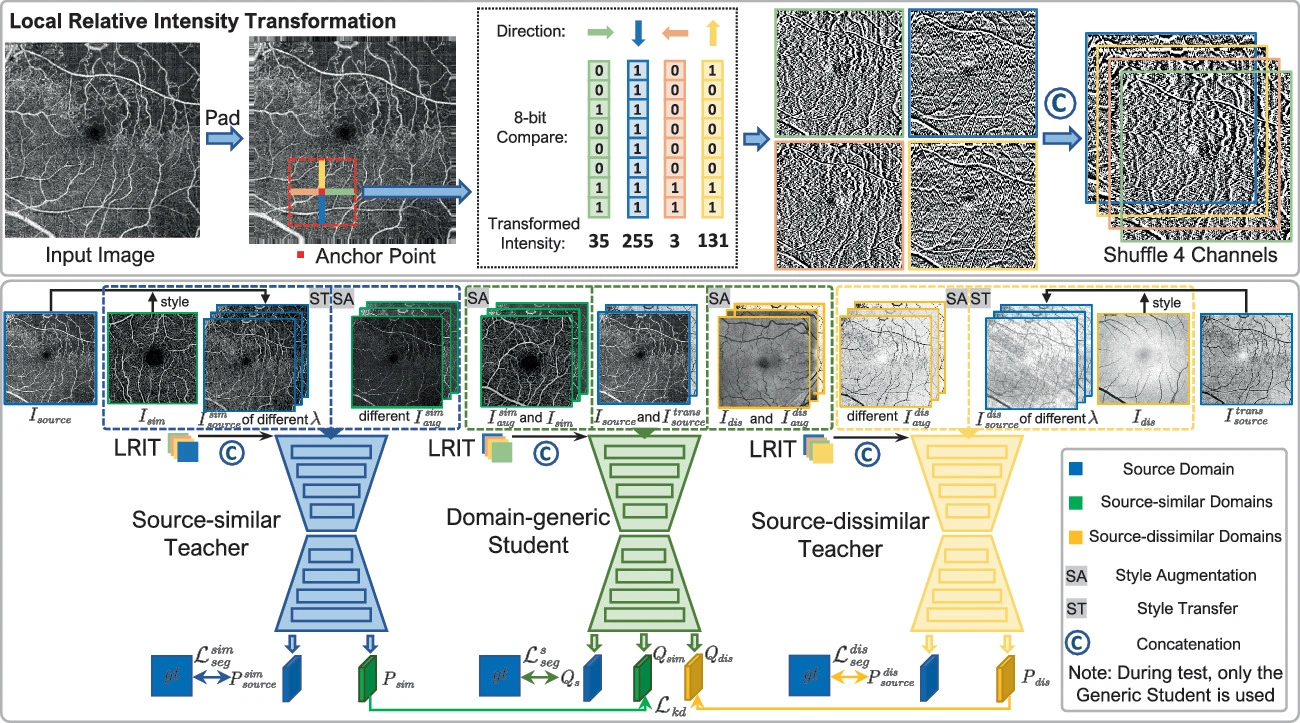
RVms trains separate teachers for domains with appearance close to or far from the labeled source, then distills their complementary knowledge into one segmenter. Style augmentation and relative-intensity encoding support adaptation across several unlabeled targets from different centers and modalities.

MLMI at MICCAI 2022Paper
Fig. 1 · Source · CC BY 4.0

Anatomical Priors · Landmark Localization · Multi-Task Segmentation

JOINED: Prior Guided Multi-task Learning for Joint Optic Disc/Cup Segmentation and Fovea Detection

Huaqing He*, Li Lin*, Zhiyuan Cai, Xiaoying Tang Co-first author

JOINED uses pixel-to-landmark distances as auxiliary supervision for joint optic disc and cup segmentation and fovea localization. Initial masks and heatmaps locate regions of interest, which a second stage refines at higher spatial detail.

MIDL 2022Paper
Fig. 2 · Fig. 3 · IEEE copyright

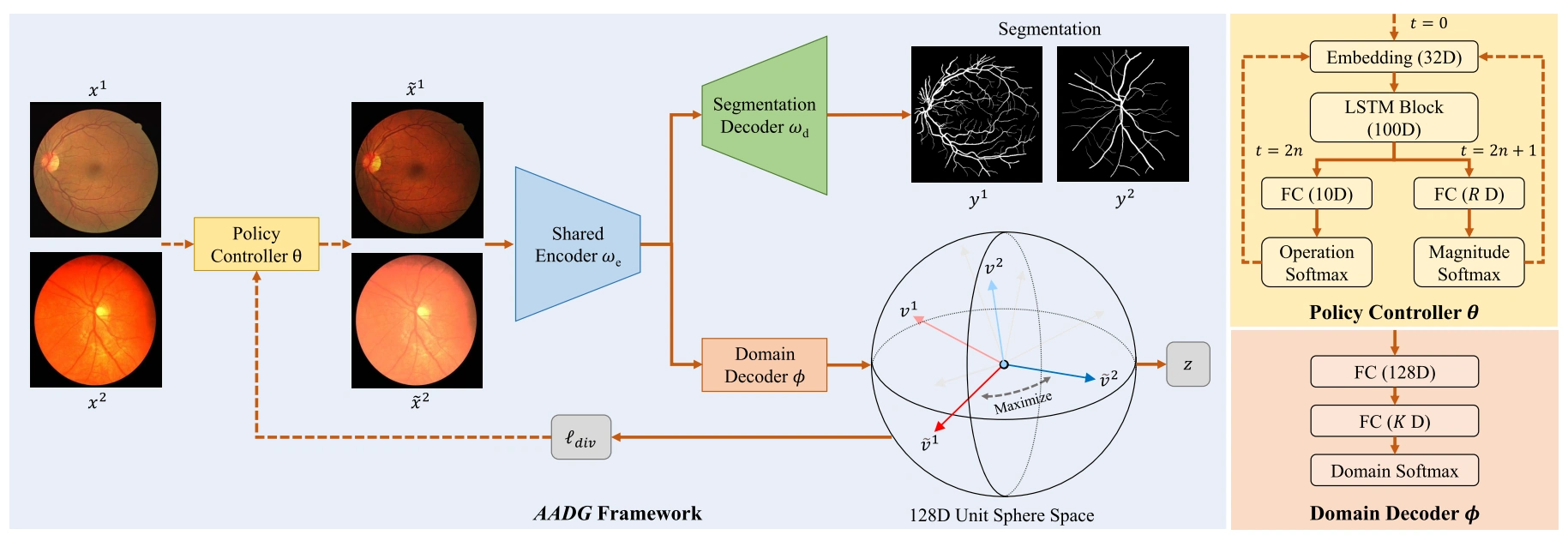
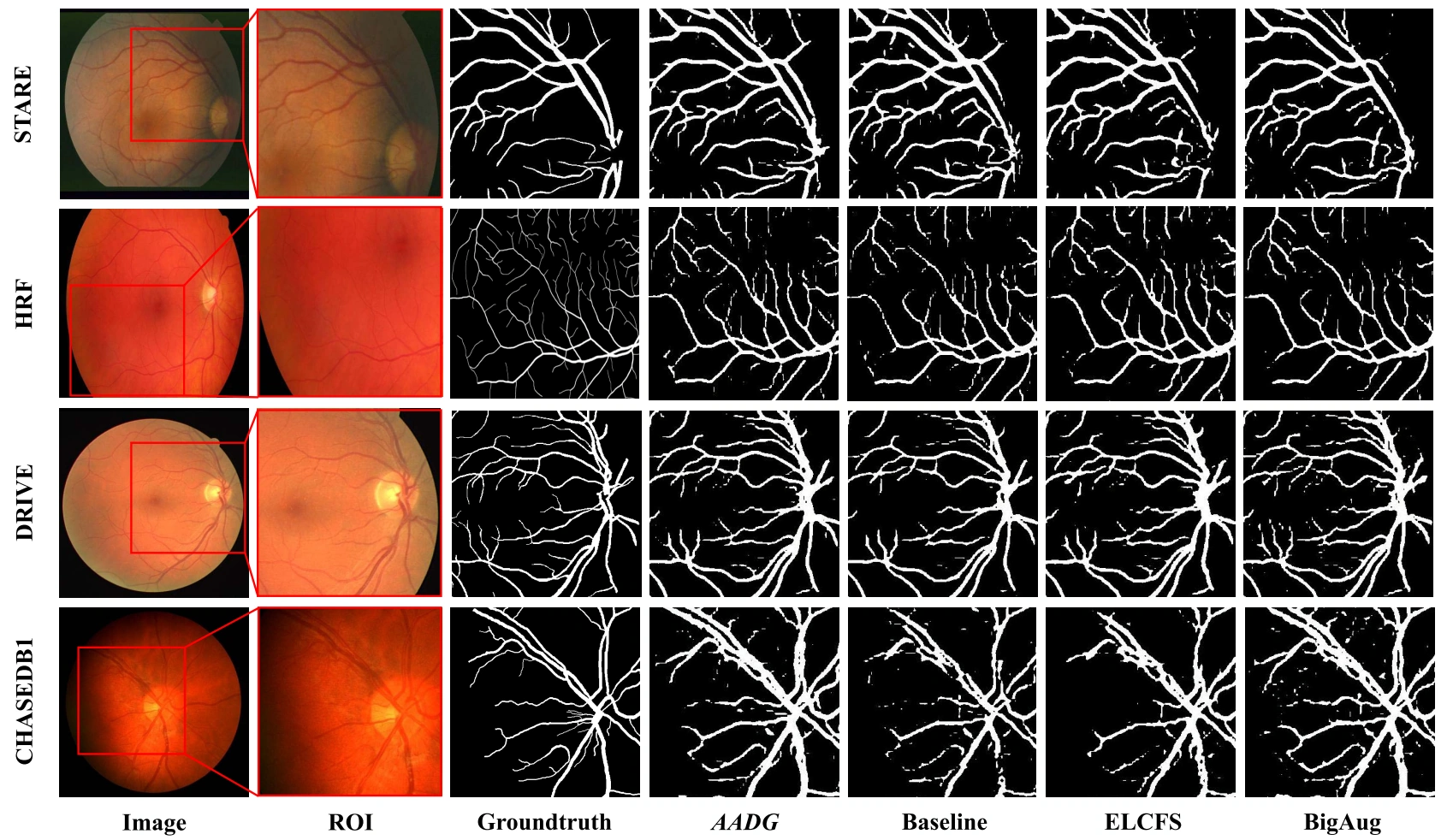
Domain Generalization · Augmentation Policy Search · Optimal Transport

AADG: Automatic Augmentation for Domain Generalization on Retinal Image Segmentation

Junyan Lyu, Yiqi Zhang, Yijin Huang, Li Lin, Pujin Cheng, Xiaoying Tang†

AADG learns data augmentation policies by maximizing Sinkhorn distances between augmented training domains in feature space. The learned policies are evaluated on 11 fundus datasets and two OCT angiography datasets, testing generalization to unseen datasets and a different imaging modality.

IEEE Transactions on Medical Imaging 2022 (JIF 12.4)PaperarXiv Code
Fig. 1 · Source

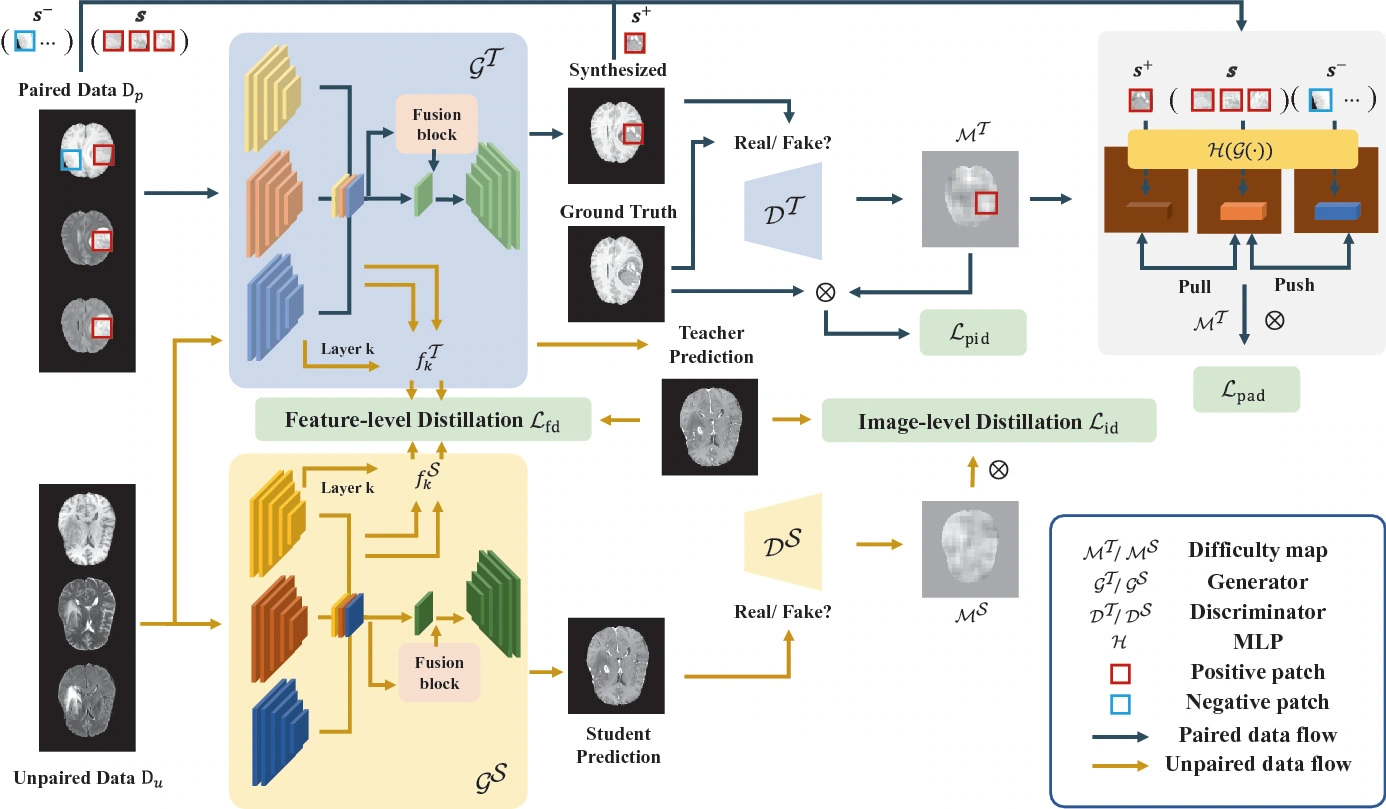
Difficulty-Aware Learning · Semi-Supervised Synthesis · Contrast-Enhanced MRI

DS³-Net: Difficulty-Perceived Common-to-T1ce Semi-supervised Multimodal MRI Synthesis Network

Ziqi Huang, Li Lin, Pujin Cheng, Kai Pan, Xiaoying Tang

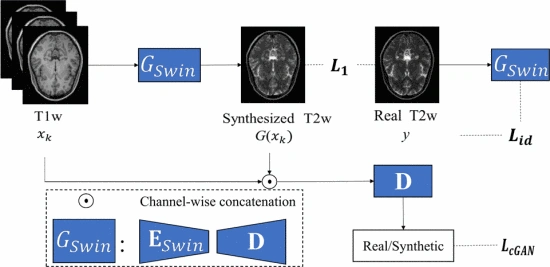
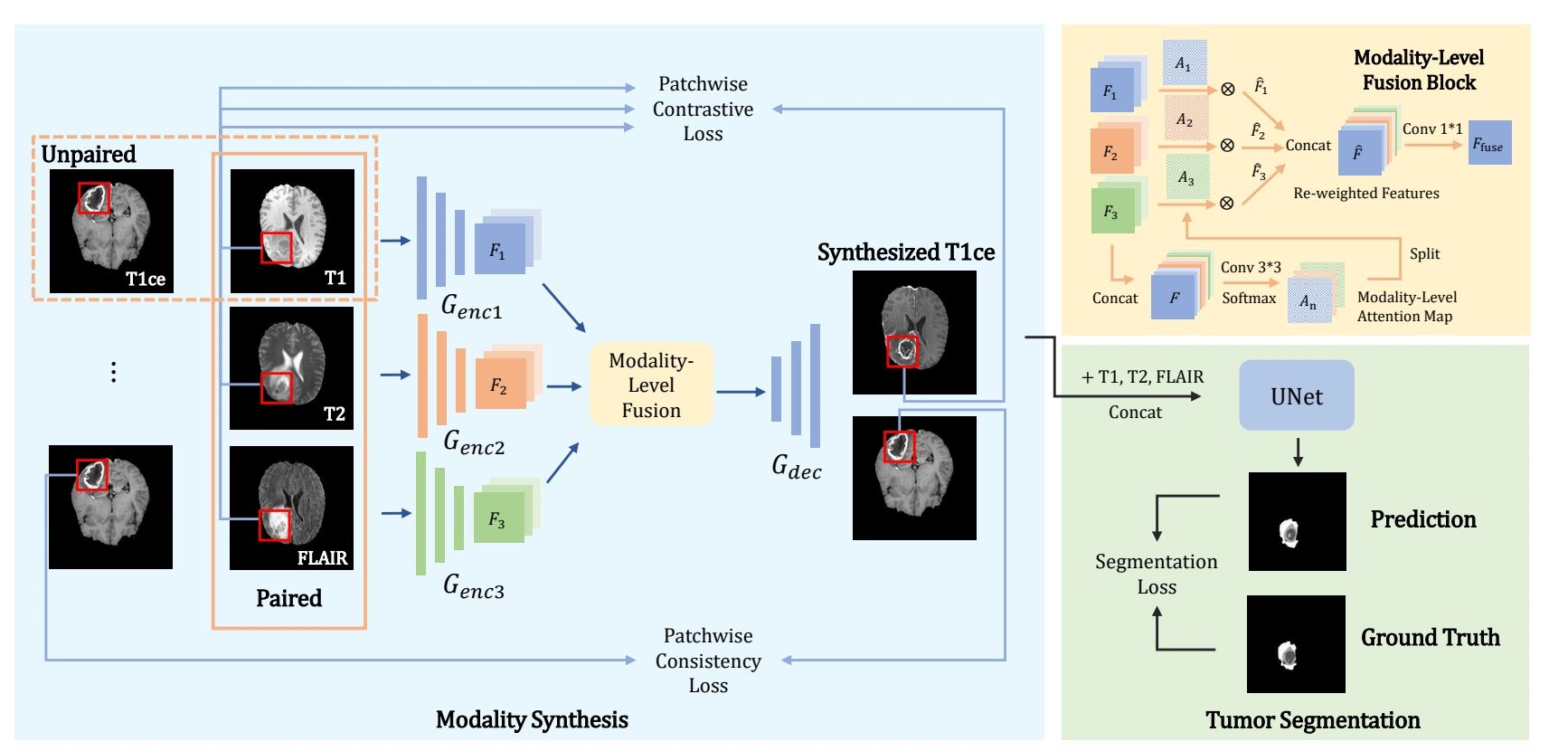
DS³-Net synthesizes contrast-enhanced T1 MRI by learning from paired and unpaired scans. A predicted difficulty map guides pixelwise and patchwise objectives toward hard-to-reconstruct regions. On BraTS 2020, the method remains competitive with fully paired translation methods using 5% paired data.

MICCAI 2022 (CCF B)Paper
Fig. 1 · Source

Multimodal Self-Supervised Pretraining · Masked Image Modeling · Ophthalmic Classification

Uni4Eye: Unified 2D and 3D Self-supervised Pre-training via Masked Image Modeling Transformer for Ophthalmic Image Classification

Zhiyuan Cai*, Li Lin*, Huaqing He, Xiaoying Tang Co-first author

Uni4Eye uses a common patch embedding to pretrain a vision Transformer jointly on 2D ophthalmic images and 3D volumes. Reconstructing both masked image intensities and gradients supplies complementary supervision, with transfer evaluated on six classification tasks.

MICCAI 2022 (CCF B)PaperarXiv
Fig. 3 · Fig. 2 · IEEE copyright

Supervised Contrastive Learning · Fundus–OCT Fusion · Glaucoma Grading

COROLLA: An Efficient Multi-Modality Fusion Framework with Supervised Contrastive Learning for Glaucoma Grading

Zhiyuan Cai*, Li Lin*, Huaqing He, Xiaoying Tang† Co-first author

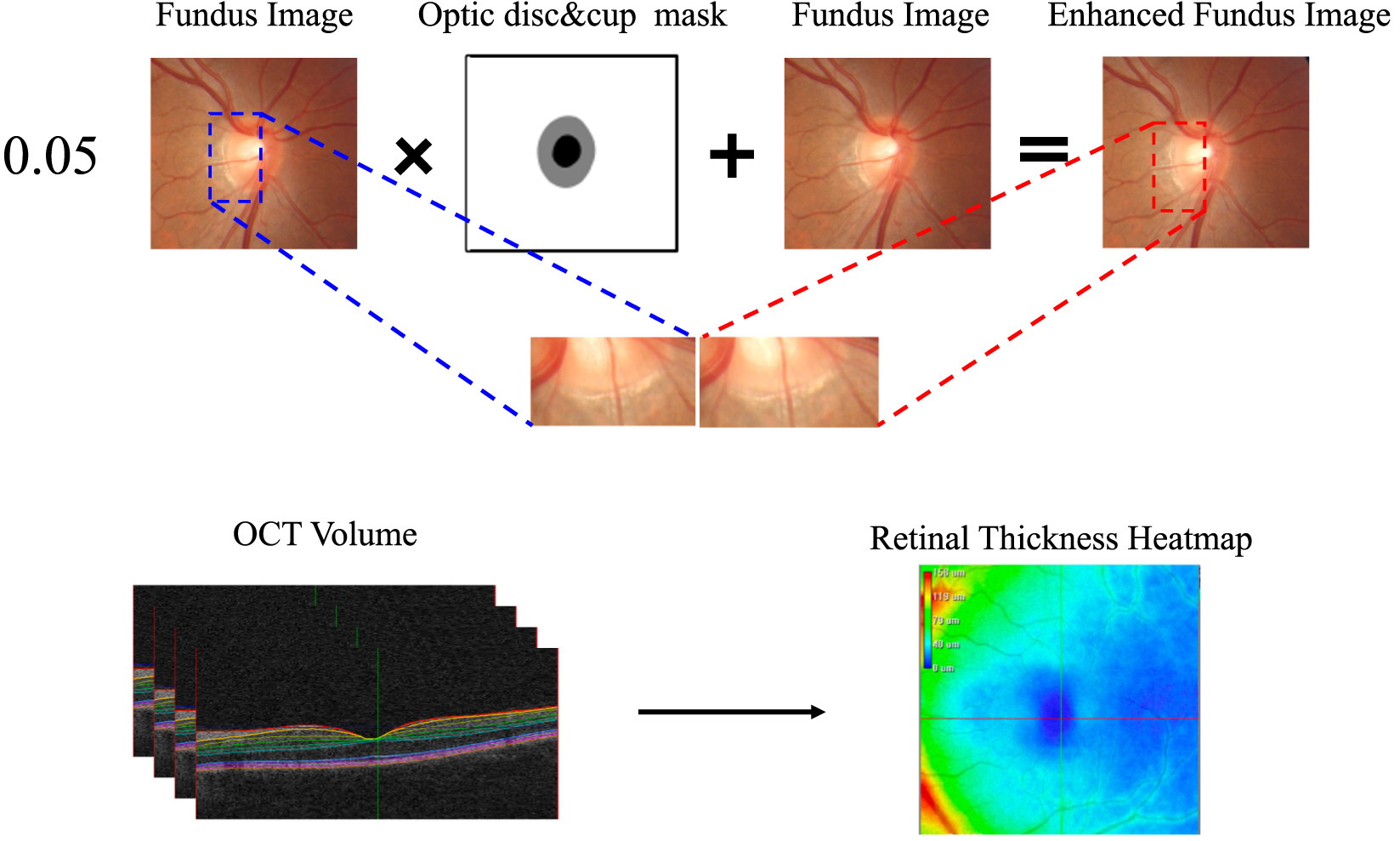
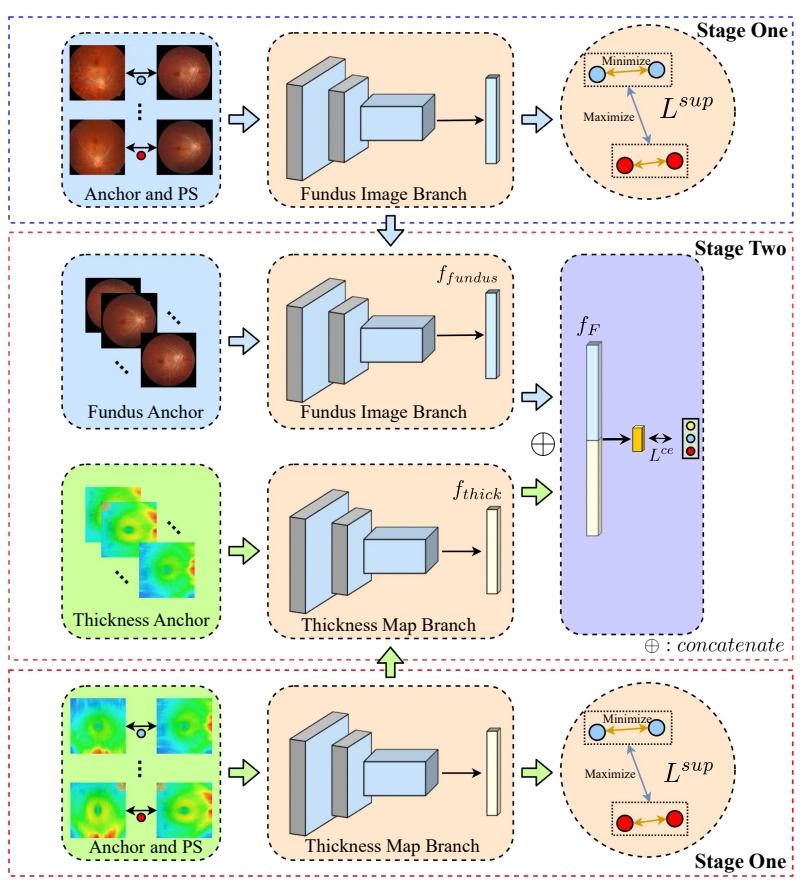
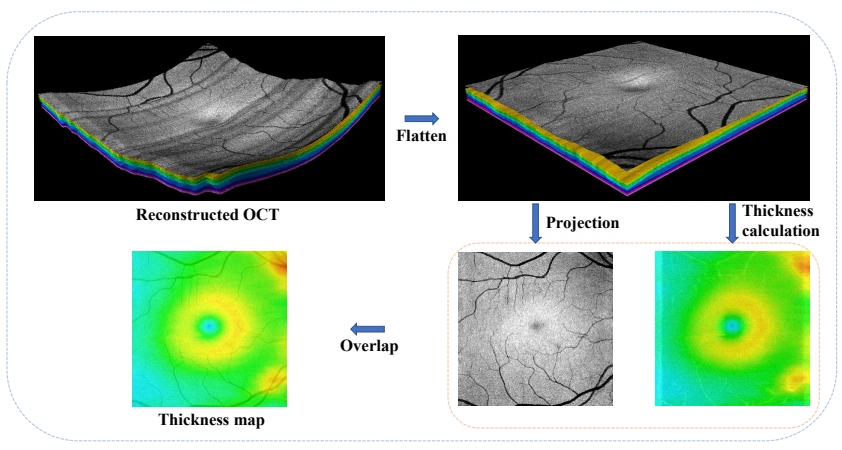
COROLLA compresses volumetric OCT into retinal thickness maps before fusing them with color fundus features. Supervised contrastive learning separates glaucoma grades in representation space, with the compact OCT representation reducing the cost of multimodal fusion.

IEEE ISBI 2022PaperarXiv
Fig. 2 · Source · IEEE copyright

Unsupervised Domain Adaptation · Disentangled Style Transfer · Cross-Modality Segmentation

Unsupervised Domain Adaptation for Cross-Modality Retinal Vessel Segmentation via Disentangling Representation Style Transfer and Collaborative Consistency Learning

Linkai Peng*, Li Lin*, Pujin Cheng, Ziqi Huang, Xiaoying Tang† Co-first author

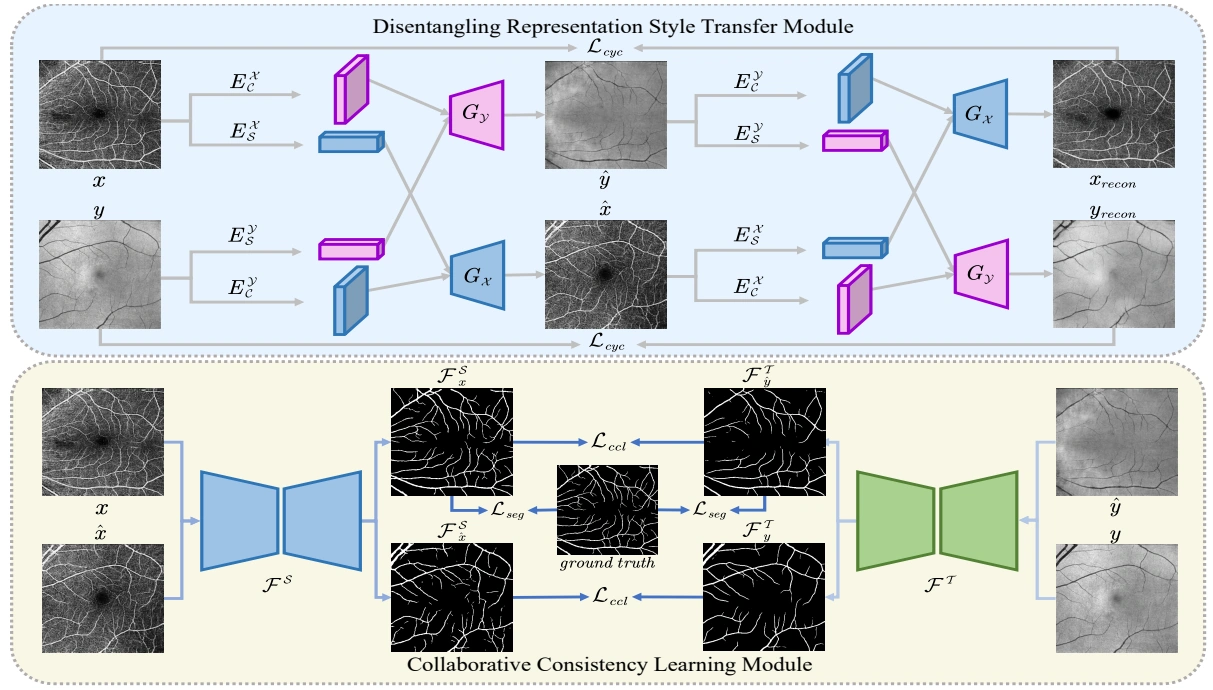
DCDA adapts retinal vessel segmentation between OCT and OCT angiography without target labels. Disentangled style transfer separates anatomy from acquisition appearance, and collaborative consistency lets source and target segmenters learn from unlabeled images in both directions.

IEEE ISBI 2022PaperarXiv Code
Fig. 1 · Source

Missing-Modality Synthesis · Modality-Level Attention · Brain Tumor Segmentation

Multi-modal brain tumor segmentation via missing modality synthesis and modality-level attention fusion

Z Huang, L Lin, P Cheng, L Peng, X Tang

MAF-Net jointly synthesizes contrast-enhanced MRI and segments gliomas from routine MRI sequences. Patch-level contrastive learning structures the shared latent space, while modality-level attention weights each available source before fusion. The preprint evaluates both synthesis and segmentation on BraTS 2020.

arXiv preprint arXiv:2203.04586, 2022PreprintarXiv

2021

Fig. 2 · Source · IEEE copyright

Adversarial Learning · Dual Attention · Vascular Topology Analysis

Generative Adversarial Training with Dual-Attention for Vascular Segmentation and Topological Analysis

Xueying Wang, Xiaoya Liu, Li Lin, Qiongyu Guo†, Xiaoying Tang†

This study links liver vessel segmentation to quantitative topology. A dual-attention U-Net trained adversarially produces vessel masks, which are skeletonized and analyzed by branch length and bifurcation order.

IEEE EMBC 2021 (CAAI B)Paper
Fig. 1 · Source · IEEE copyright

Multi-Task Learning · Foveal Avascular Zone Segmentation · OCT Angiography

Multi-task learning based ocular disease discrimination and FAZ segmentation utilizing OCTA images

Zhonghua Wang*, Li Lin*, Jiewei Wu, Xiaoying Tang† Co-first author

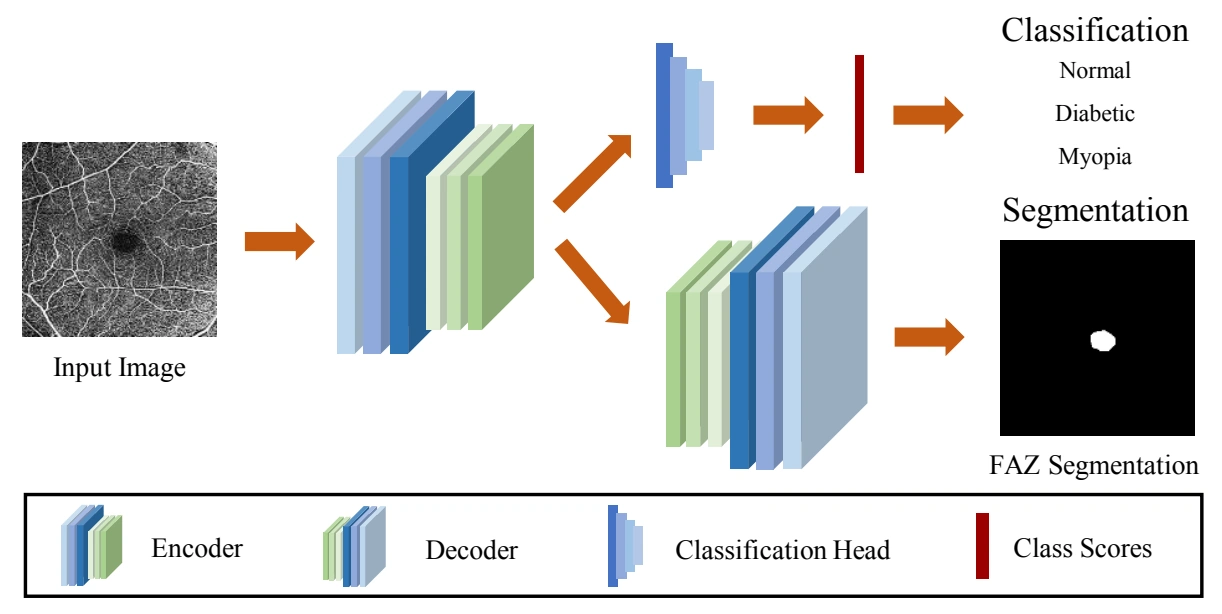
This OCT angiography study shares an encoder between foveal avascular zone segmentation and three-way classification. Evaluation on FAZID tests whether anatomical features learned from segmentation help distinguish normal, diabetic, and myopic eyes.

IEEE EMBC 2021 (CAAI B)Paper
Fig. 1 · Source

Geometry-Aware Learning · Joint Segmentation and Classification · OCT Angiography

BSDA-Net: A Boundary Shape and Distance Aware Joint Learning Framework for Segmenting and Classifying OCTA Images

Li Lin, Zhonghua Wang, Jiewei Wu, Yijin Huang, Junyan Lyu, Pujin Cheng, Jiong Wu, Xiaoying Tang First author

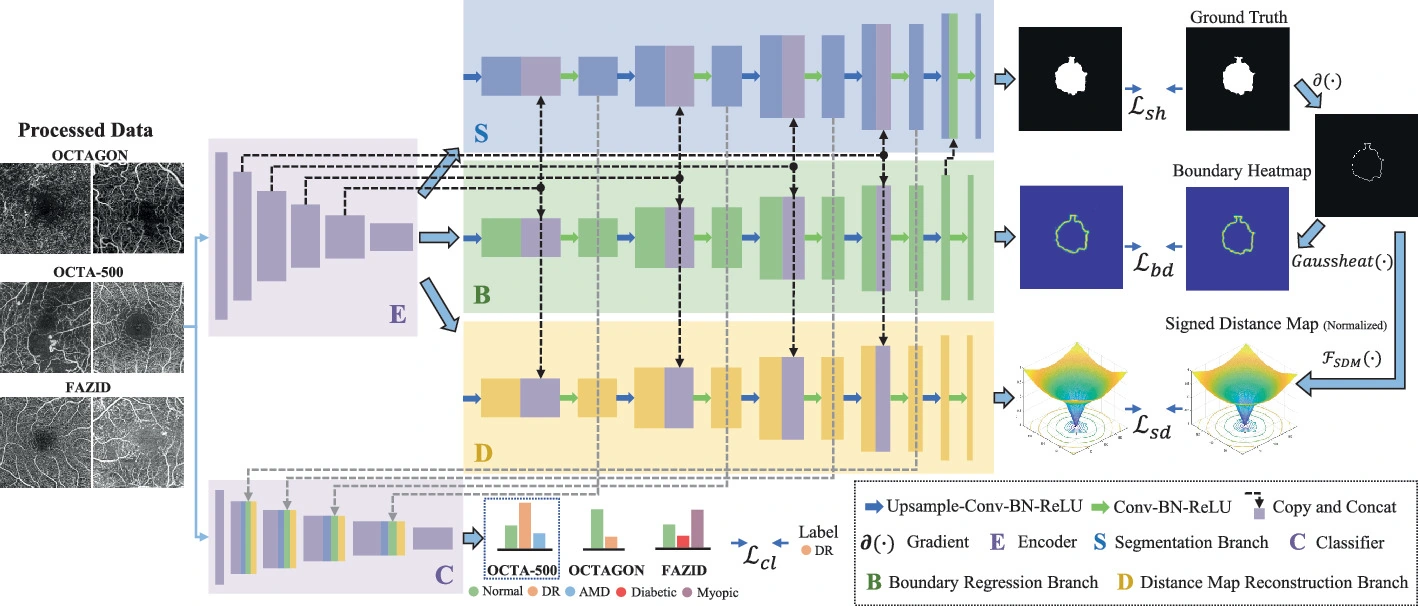
BSDA-Net learns the geometry of the foveal avascular zone by regressing boundary heatmaps and reconstructing signed distance maps alongside segmentation. A hierarchical fusion module passes the resulting structural features to a diagnostic classifier, linking geometric delineation with classification.

Fig. 1 · Source

Multi-Task Segmentation · Anatomical Context · OCT Angiography

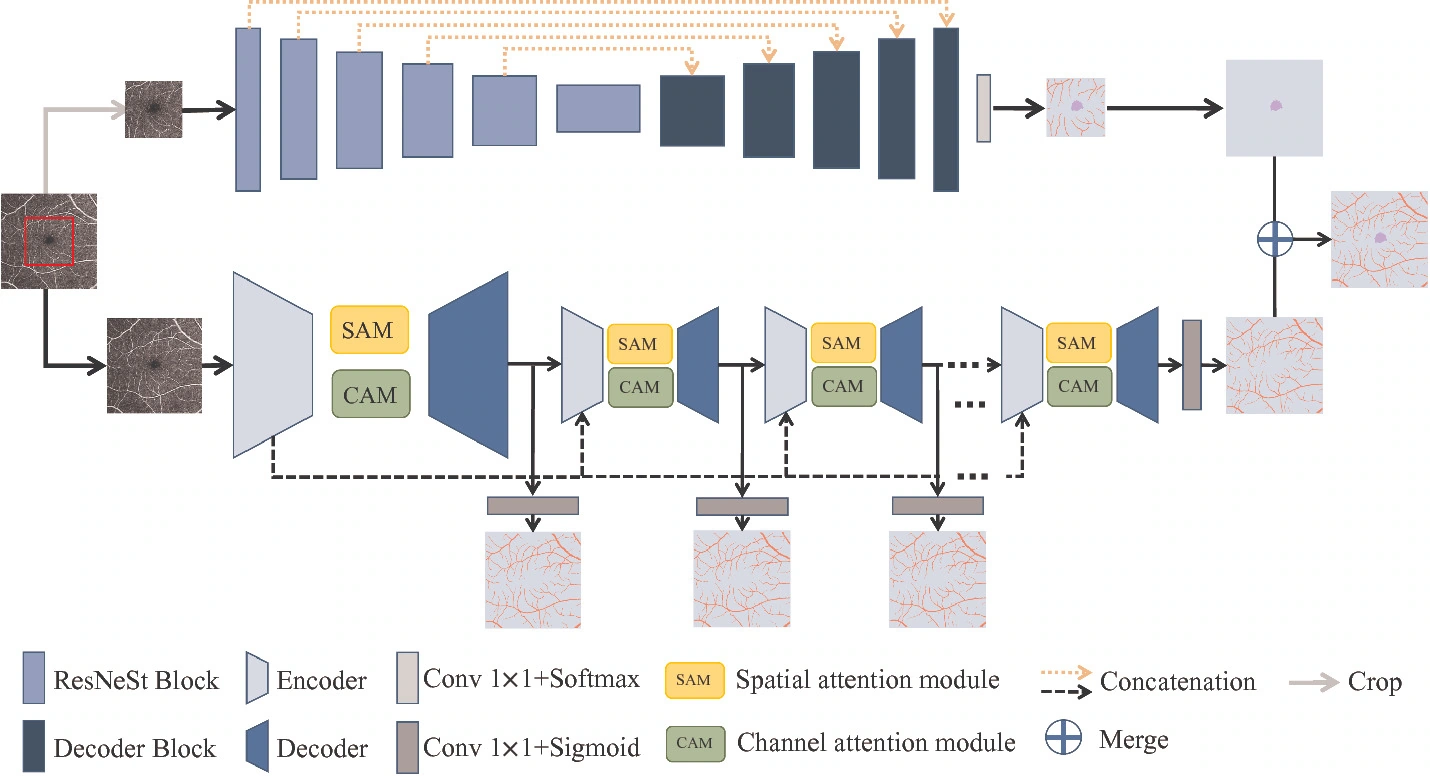
Fargo: A joint framework for faz and rv segmentation from octa images

Linkai Peng*, Li Lin*, Pujin Cheng, Zhonghua Wang, Xiaoying Tang Co-first author

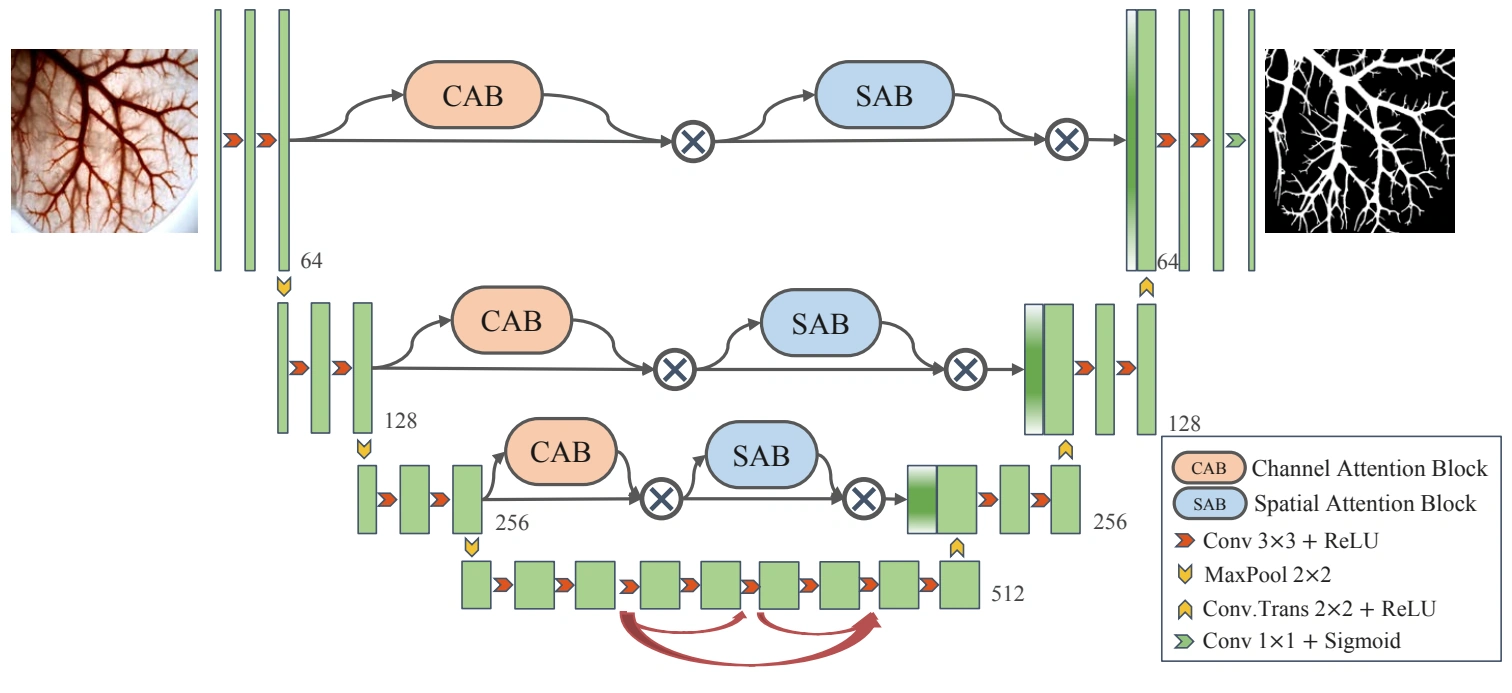
FARGO treats retinal vessels as anatomical context for delineating the foveal avascular zone in en face OCT angiograms. A separate coarse-to-fine vessel branch refines small and low-contrast structures using spatial and channel attention.

OMIA at MICCAI 2021Paper
Fig. 1 · Source

Semi-Supervised Learning · Importance-Guided Contrastive Learning · Fundus Image Enhancement

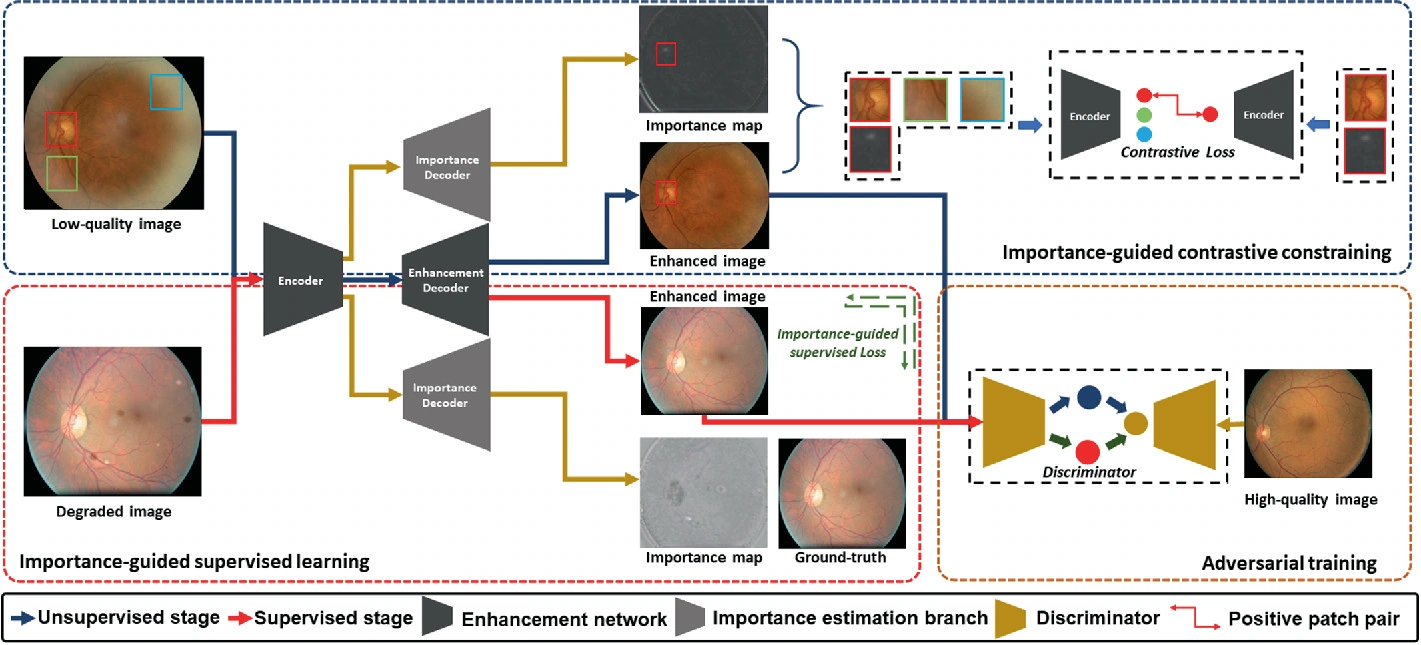
I-secret: Importance-guided fundus image enhancement via semi-supervised contrastive constraining

Pujin Cheng, Li Lin, Yijin Huang, Junyan Lyu, Xiaoying Tang

I-SECRET learns fundus image enhancement by combining paired synthetic degradations with unpaired clinical images. A pixelwise importance estimator guides supervised reconstruction and contrastive learning in the two branches.

MICCAI 2021 (CCF B)Paper
Fig. 2 · Source

Self-Supervised Contrastive Learning · Lesion-Aware Representations · Diabetic Retinopathy Grading

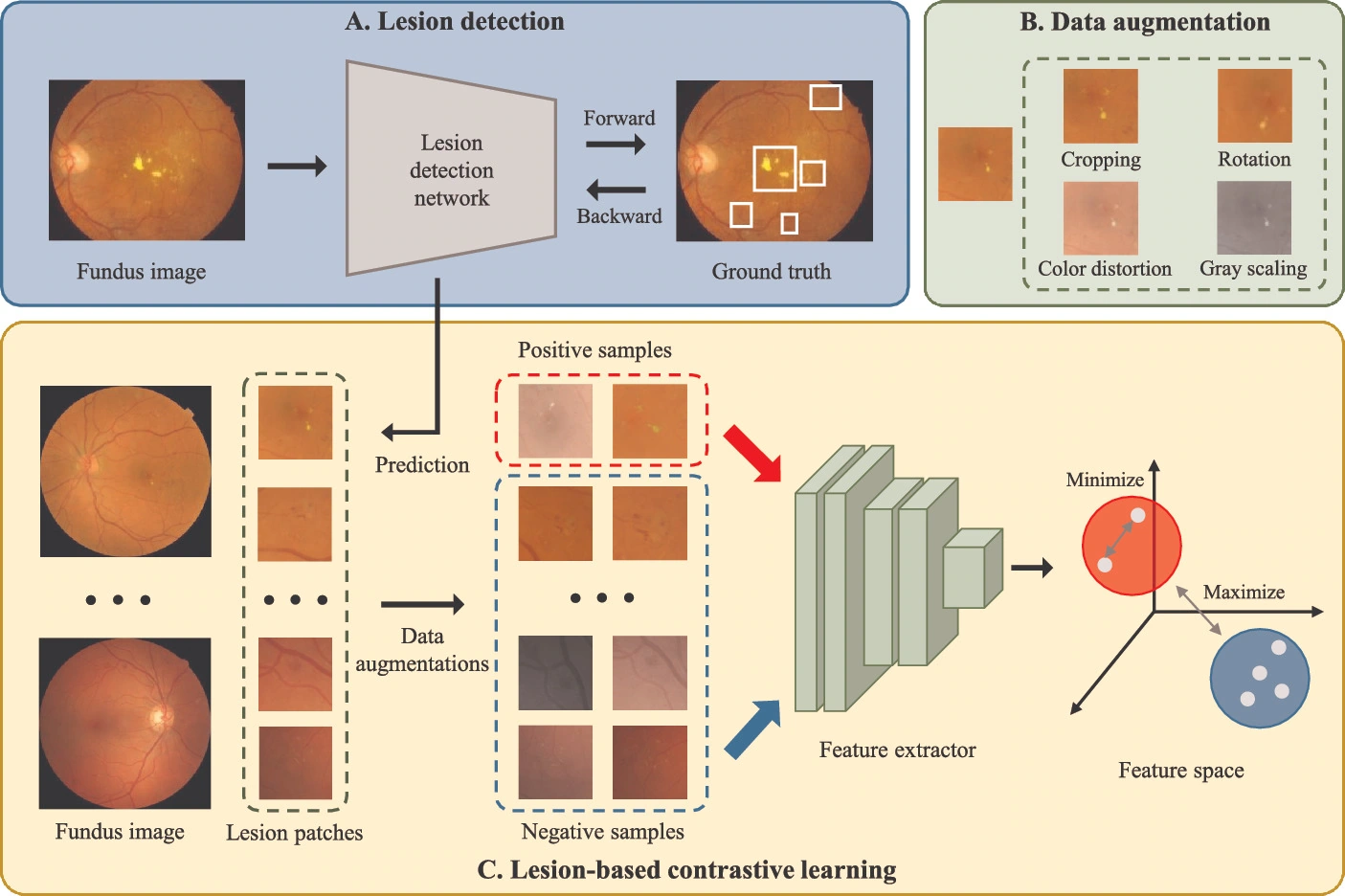
Lesion-based contrastive learning for diabetic retinopathy grading from fundus images

Yijin Huang, Li Lin, Pujin Cheng, Junyan Lyu, Xiaoying Tang

This study uses lesion-centered patches as inputs to self-supervised contrastive learning, encouraging representations sensitive to small pathological features for diabetic retinopathy grading. Linear probing and transfer experiments on EyePACS assess the learned features.

MICCAI 2021 (CCF B)Paper
Fig. 2 · Source · IEEE copyright

Contrastive Image Synthesis · Confocal Microscopy · Corneal Nerve Segmentation

Automated segmentation of corneal nerves in confocal microscopy via contrastive learning based synthesis and quality enhancement

Li Lin, Pujin Cheng, Zhonghua Wang, Meng Li, Kai Wang, Xiaoying Tang First author

This pipeline pairs image synthesis with enhancement to address unreliable labels and uneven illumination in corneal confocal microscopy. Multilayer patch contrastive learning supplies anatomically consistent training examples for corneal nerve segmentation, evaluated on two public datasets.

IEEE ISBI 2021Paper
Fig. 2 · Source · IEEE copyright

Unpaired Image Translation · Patch Contrastive Learning · Fundus Image Enhancement

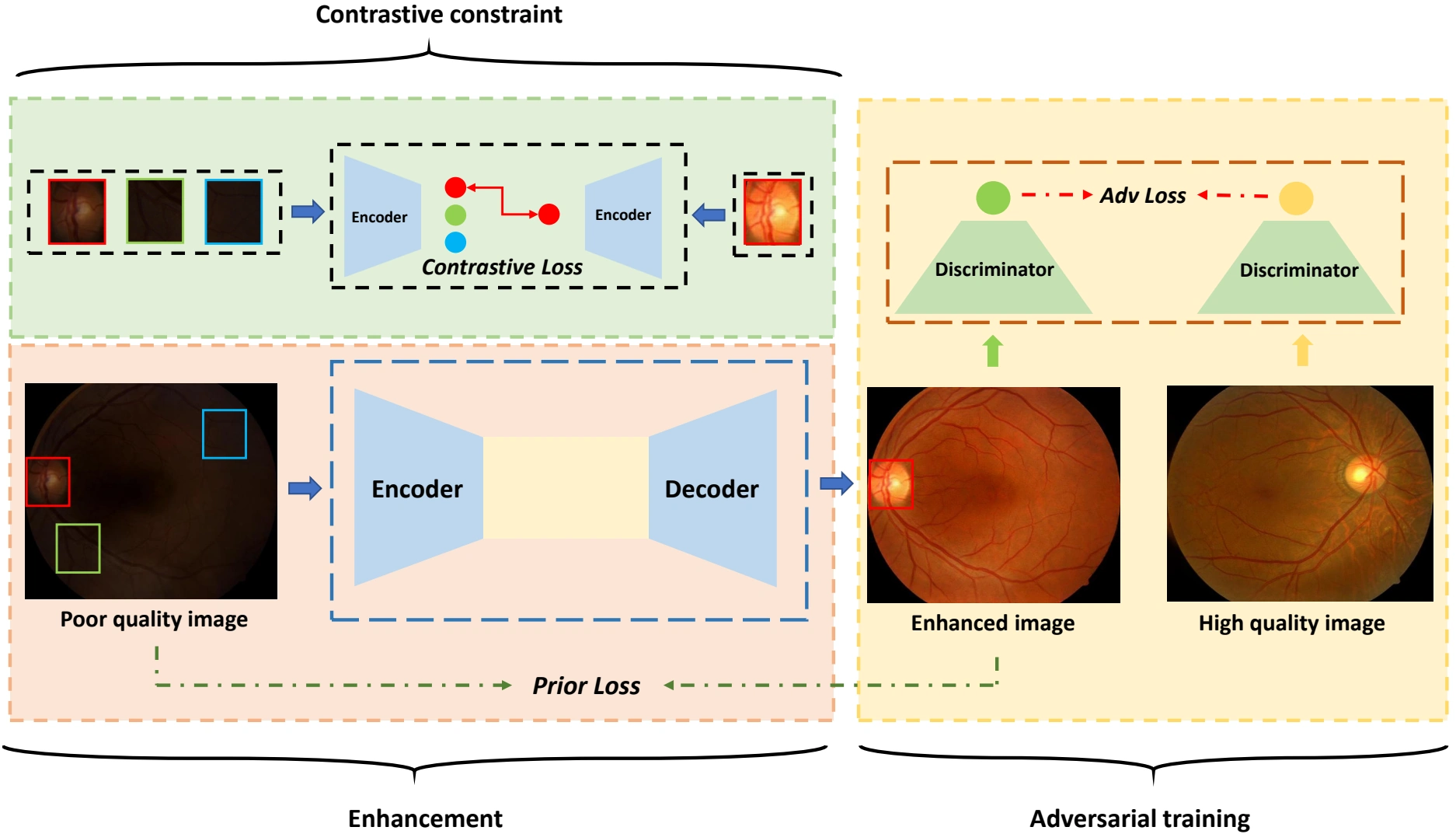
Prior guided fundus image quality enhancement via contrastive learning

Pujin Cheng, Li Lin, Yijin Huang, Junyan Lyu, Xiaoying Tang†

EPC-GAN learns fundus enhancement from unpaired images using patch-level contrastive translation. A fundus-specific prior constrains changes to vessels, the optic disc and cup, and lesions while allowing the model to correct illumination and contrast.

IEEE ISBI 2021Paper
Fig. 1 · Fig. 4

Bidirectional ConvLSTM · Adversarial Learning · Retinal Vessel Segmentation

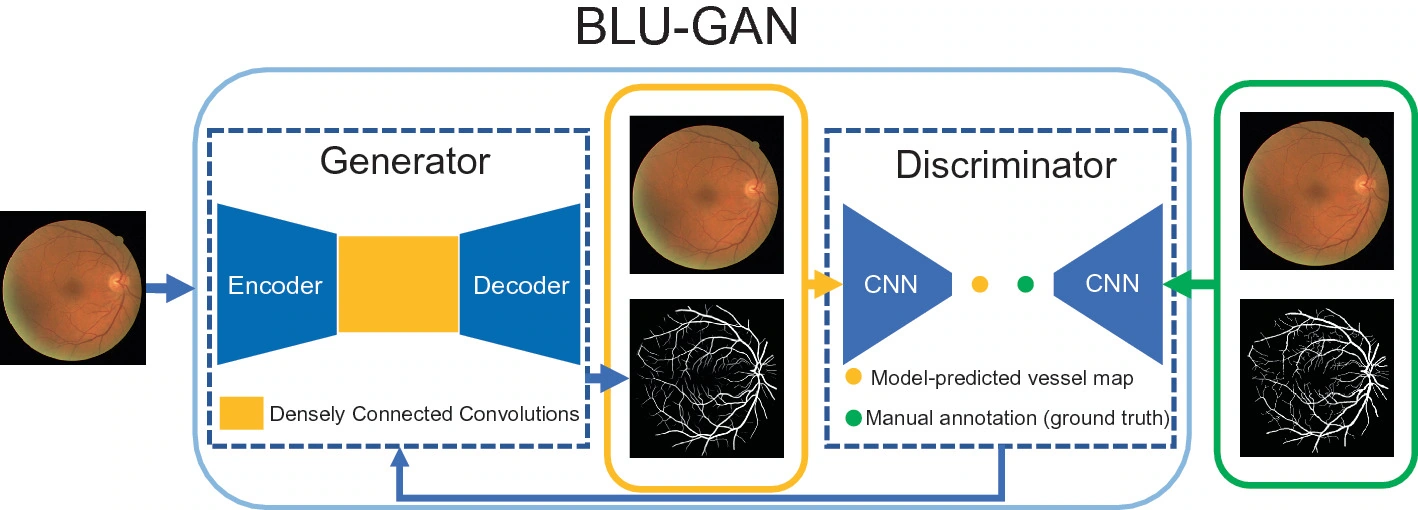
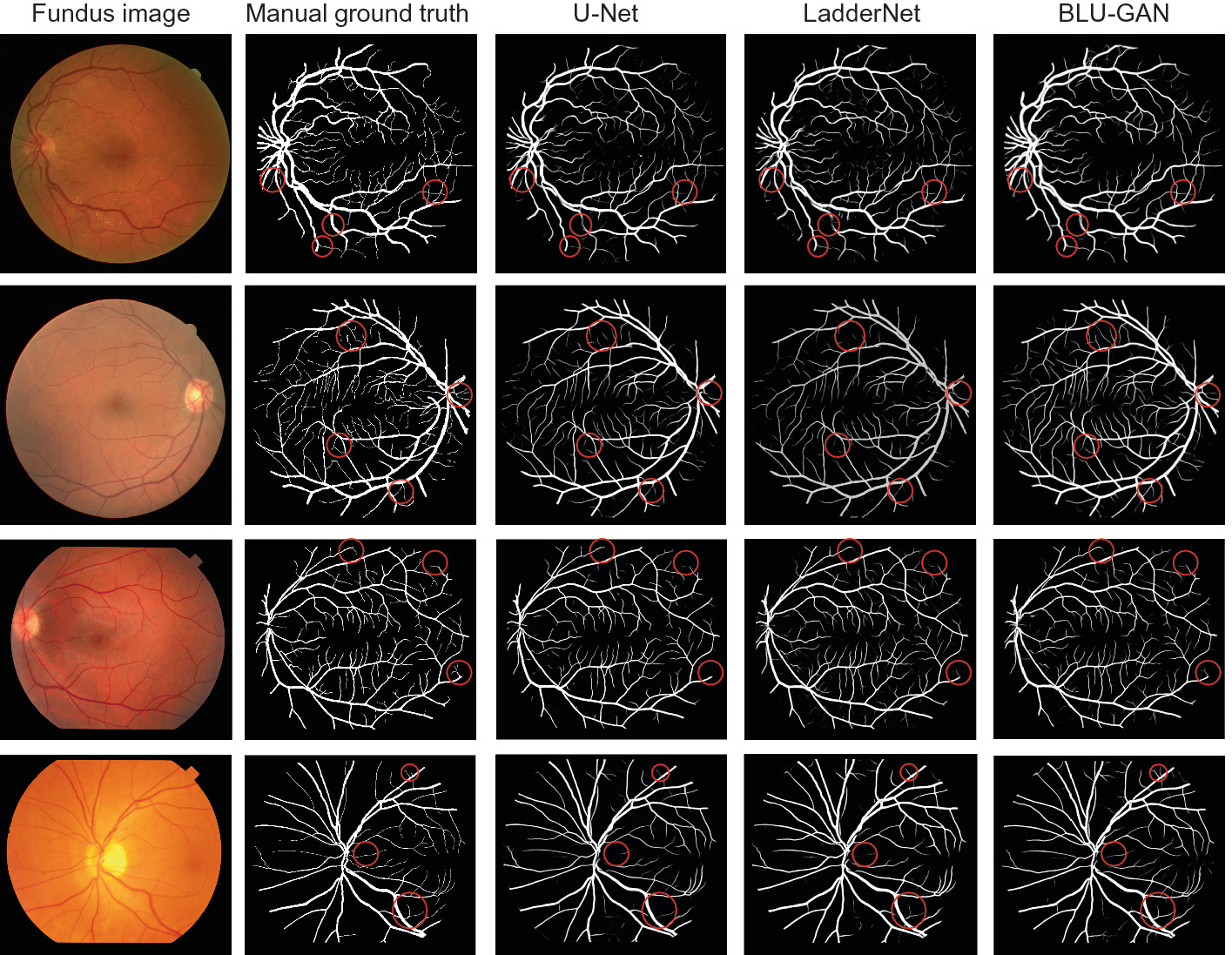
BLU-GAN: Bi-directional ConvLSTM U-Net with Generative Adversarial Training for Retinal Vessel Segmentation

Li Lin, Jiewei Wu, Pujin Cheng, Kai Wang†, Xiaoying Tang† First author

BLU-GAN replaces U-Net's direct skip connections with bidirectional convolutional LSTM units that integrate features across scales. Adversarial training and dense feature reuse complement the recurrent design for fundus vessel delineation.

BenchCouncil FICC 2020Best Paper AwardPaper
Fig. 2 · Source

Tumor Morphology · Feature Selection · Survival Prediction

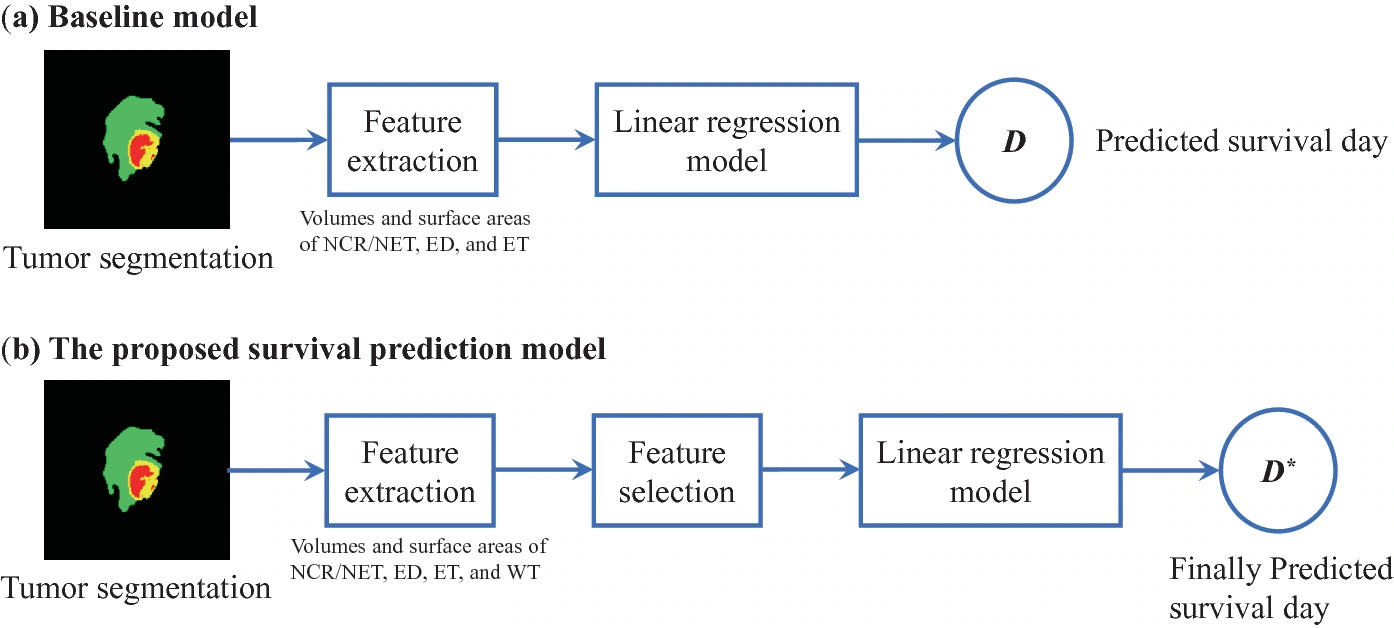
Survival Prediction of Glioma Tumors Using Feature Selection and Linear Regression

Jiewei Wu, Yue Zhang, Weikai Huang, Li Lin, Kai Wang, Xiaoying Tang

This glioma study extracts morphological descriptors from segmented tumor subregions and uses feature selection before fitting a linear survival model. It examines how imaging-derived measurements can support survival estimation.

BenchCouncil FICC 2020Paper

2020

Fig. 2 · Source · © 2020 ACM

Lesion Map Refinement · Lesion-Guided Feature Fusion · Diabetic Retinopathy Identification

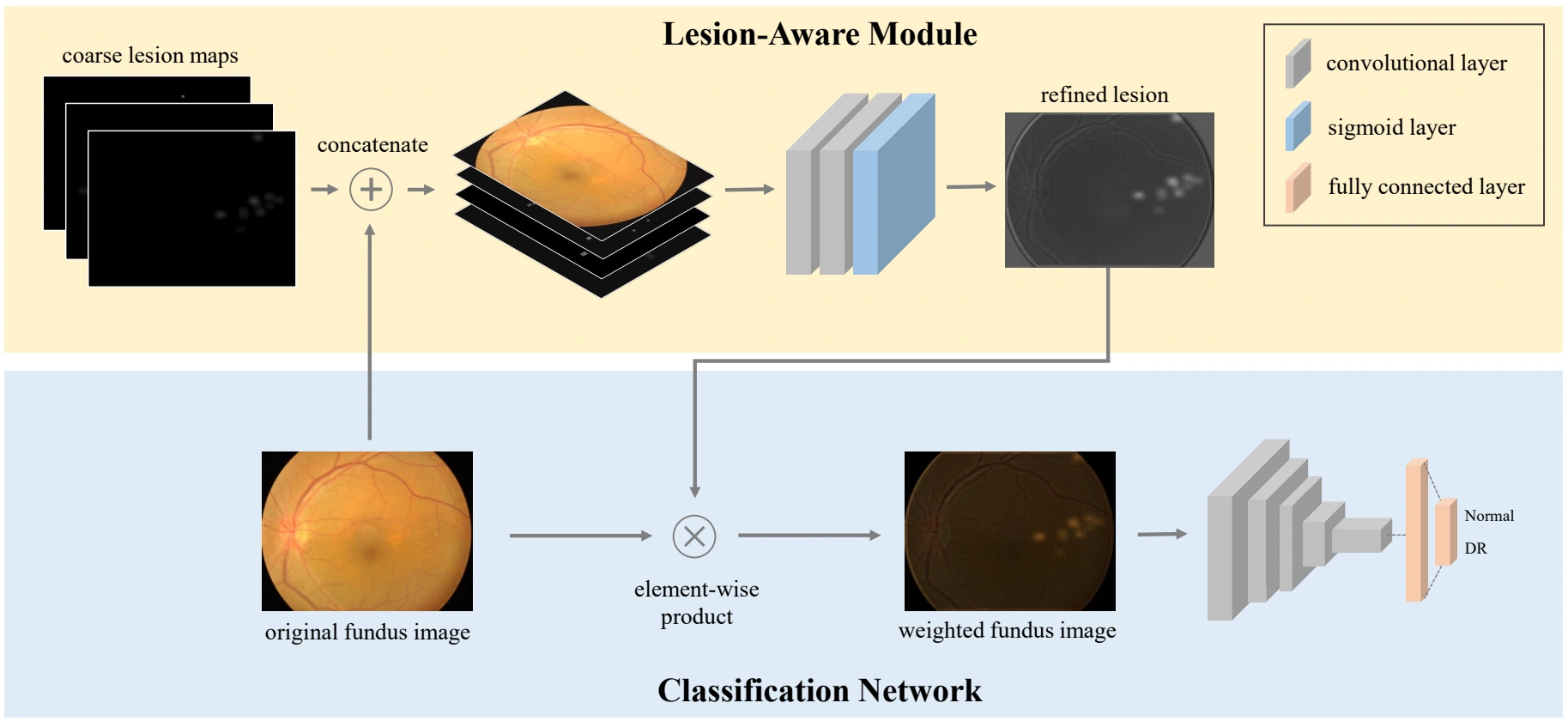
Automated Diabetic Retinopathy Identification via Lesion Guided Network

Yijin Huang, Li Lin, Meng Li, Jin Yuan, Xiaoying Tang†

The Lesion Guided Network refines coarse lesion maps before fusing them with fundus photographs for image-level diabetic retinopathy classification. On a dataset of 4,465 photographs, this refinement was evaluated against using the coarse maps directly and against an image-only classifier.

International Symposium on Image Computing and Digital Medicine (ISICDM) 2020Paper
Fig. 5 · Source · CC BY 4.0

Dataset Curation · Exudate Detection · Multi-Protocol Retinopathy Grading

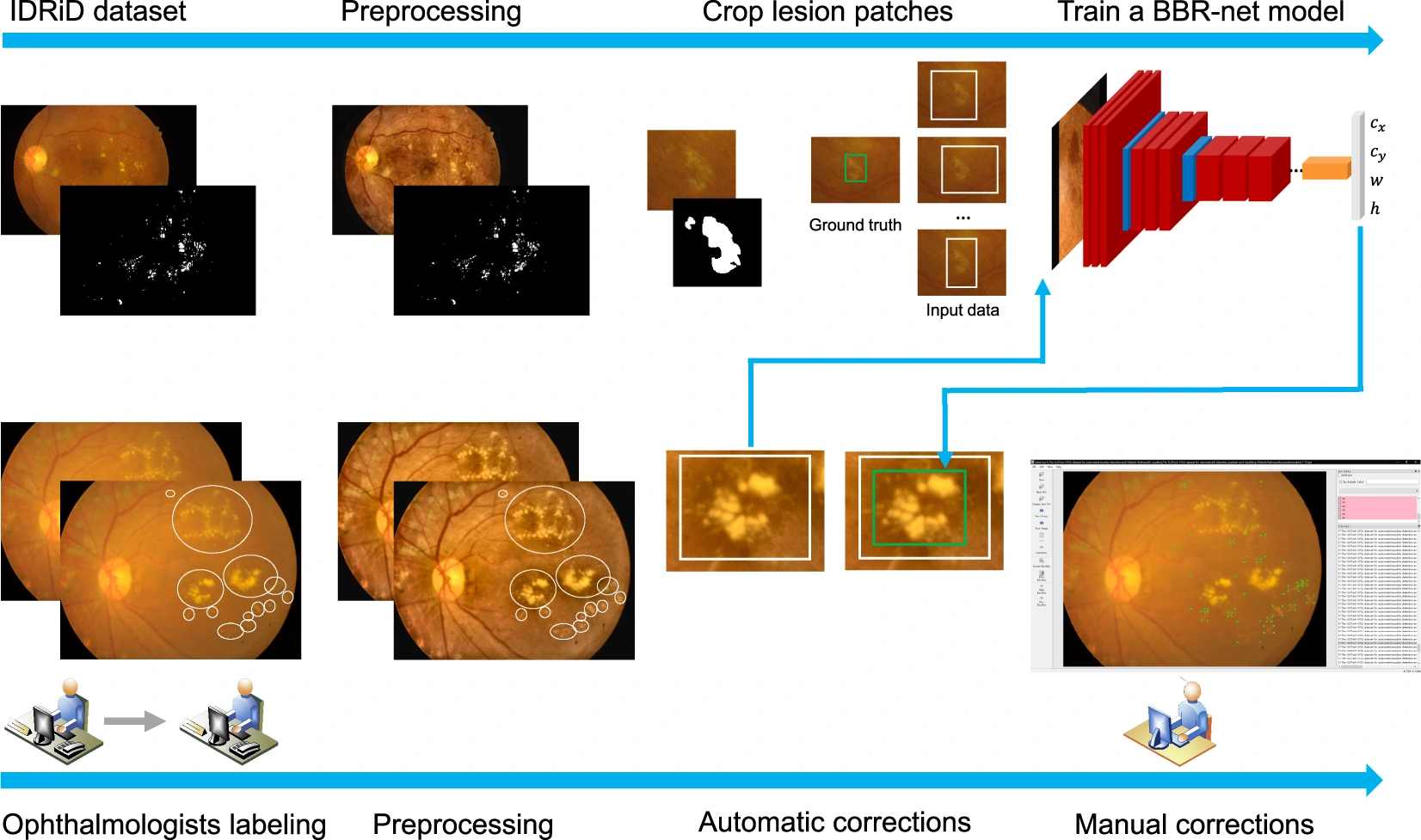
The SUSTech-SYSU dataset for automated exudate detection and diabetic retinopathy grading

Li Lin*, Meng Li*, Yijin Huang*, Pujin Cheng, Honghui Xia, Kai Wang, Jin Yuan†, Xiaoying Tang† First author

This dataset provides 1,219 fundus photographs annotated for exudates, optic disc location, and the foveal center, with diabetic retinopathy grades from three protocols. The shared annotations support lesion identification, landmark localization, and comparisons across grading conventions.

Scientific Data 2020 (JIF 7.2)PaperCode Data
Fig. 2 · Source · IEEE copyright

Weak Annotations · Bounding-Box Refinement · Hemorrhage Detection

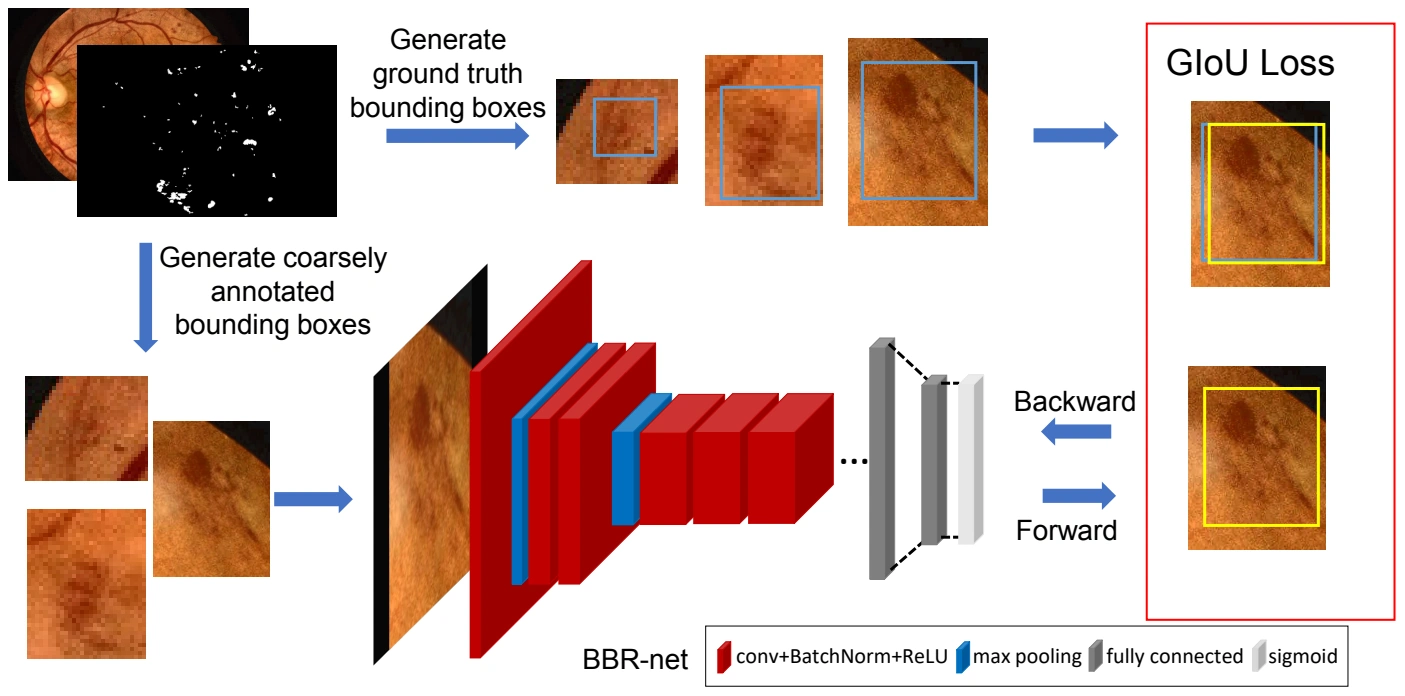
Automated hemorrhage detection from coarsely annotated fundus images in diabetic retinopathy

Yijin Huang*, Li Lin*, Meng Li, Jiewei Wu, Pujin Cheng, Kai Wang, Jin Yuan, Xiaoying Tang† Co-first author

This weakly supervised detector addresses localization noise in manually drawn hemorrhage boxes. A bounding-box regressor first refines the annotations, and a label-smoothed RetinaNet then learns lesion detection from the revised supervision.

IEEE ISBI 2020Paper

2017

Fig. 1 · Fig. 2 · Fig. 3 · Fig. 4 · Fig. 5 · Fig. 6 · IEEE copyright

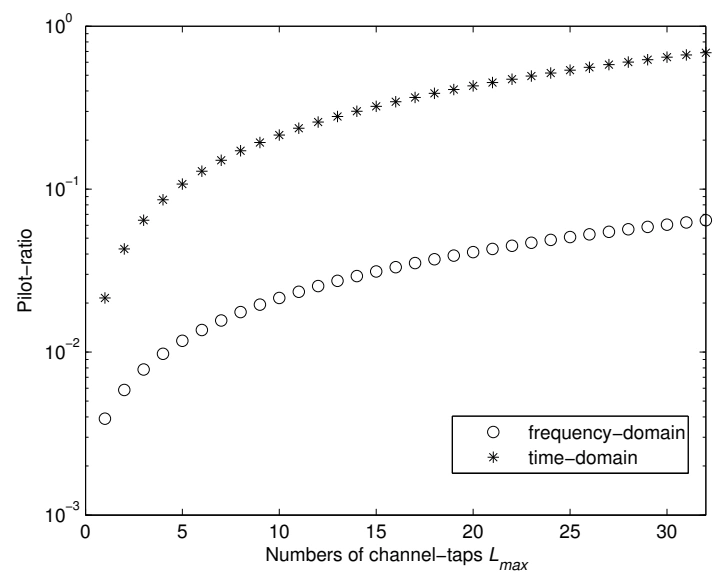
Faster-than-Nyquist Signaling · Cyclic Prefix · Frequency-Domain Channel Estimation

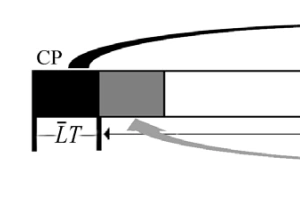
Pilot design for channel estimation in a long-tap faster-than-Nyquist signaling transmission

Shan Gao, Li Lin, Yueyu Lin, Han Zhang, Daru Pan

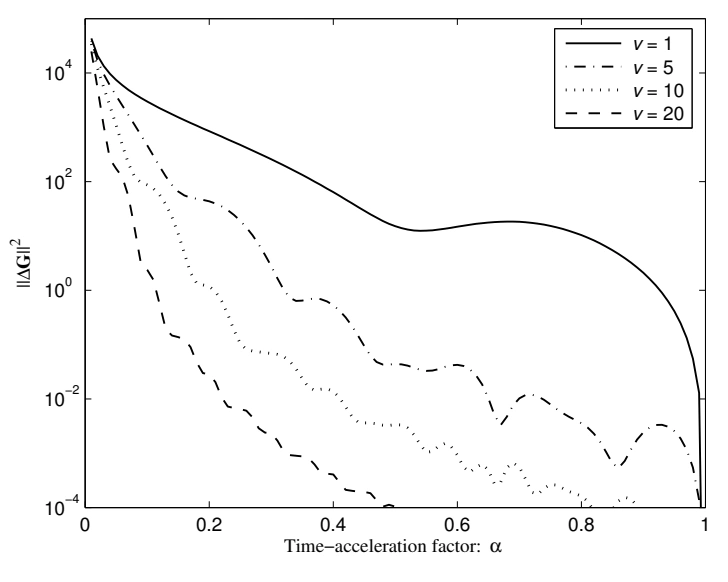
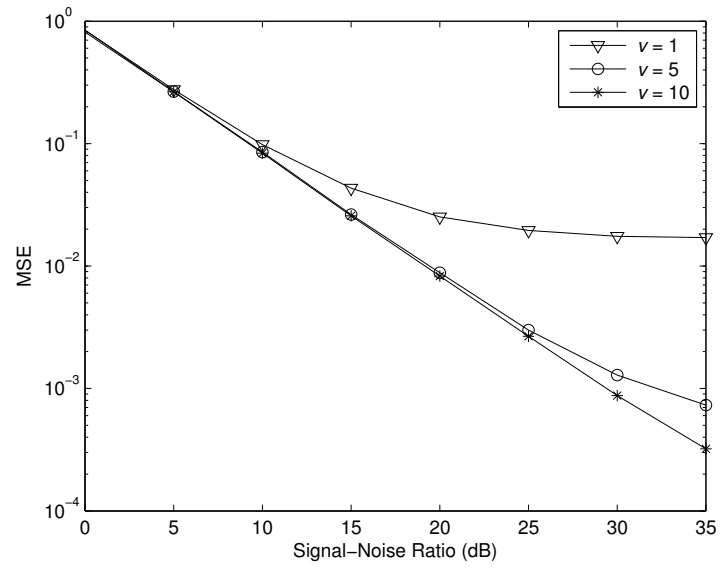
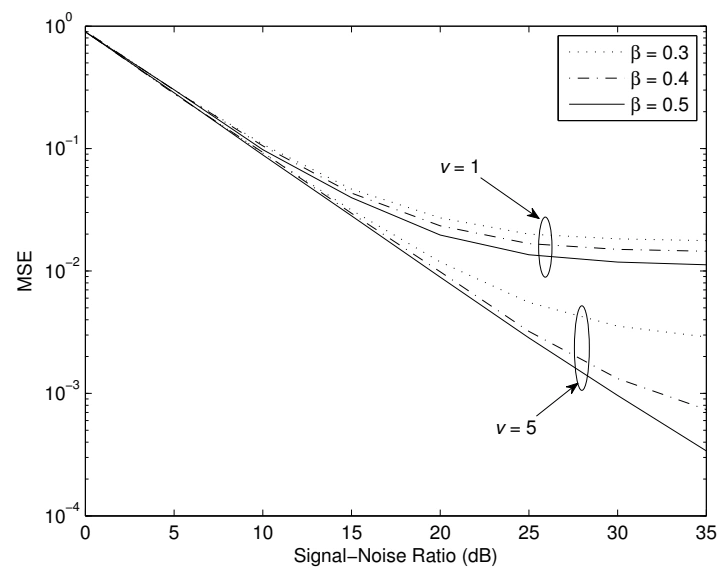
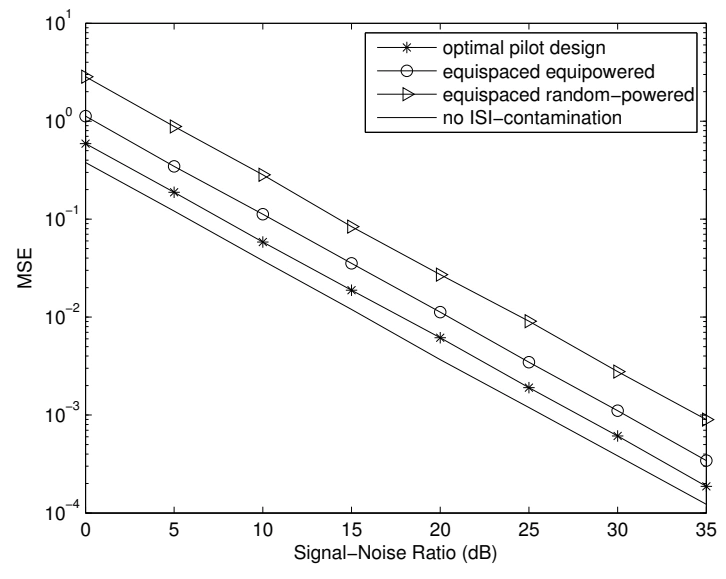
This work designs pilots for channel estimation in faster-than-Nyquist transmission with long intersymbol interference. An additional cyclic prefix yields an approximately circulant interference model, enabling frequency-domain estimation with fast Fourier transforms and a low pilot ratio.

17th IEEE International Conference on Communication Technology (ICCT) 2017Paper

Open figure source ↗